Species law
What November 2026 Marine Mammal Salvage Rules Change
Updated 10 November 2026
A final rule published by the National Marine Fisheries Service, under the Marine Mammal Protection Act and the Endangered Species Act, establishes revised procedures for marine mammal salvage and scientific investigation. The rule is identified as 91 FR 00000, signed by the agency on 10 November 2026, for publication on 12 November 2026. Its practical effect is to standardise decisions about stranded animals, carcasses, biological samples and research access rather than creating a general permission to remove marine mammals from the wild.
What do the November 2026 marine mammal salvage rules change?
The November 2026 rule replaces the existing framework for responding to dead or stranded marine mammals. Under the Marine Mammal Protection Act, NMFS may take possession of a marine mammal carcass for scientific investigation, disposal or other authorised purposes. The revised procedures are intended to give agency staff, rehabilitation facilities, universities and permitted researchers clearer requirements for taking, moving, sampling and disposing of carcasses.
The rule is not a blanket licence to collect dead whales or dolphins. A marine mammal remains subject to federal protection, and a person must follow the applicable authorisation, reporting and chain-of-custody requirements. The principal change is procedural: it clarifies when a carcass can be recovered, what information must accompany it, and how samples and specimens can be used after recovery.
The publication notice gives the instrument as Marine Mammal Salvage and Scientific Investigation; Final Rule, 91 FR 00000. The responsible signatory is the Assistant Administrator for NOAA Fisheries. The citation and publication date should be checked against the Federal Register version before legal reliance because the online copy may contain corrections or later amendments.
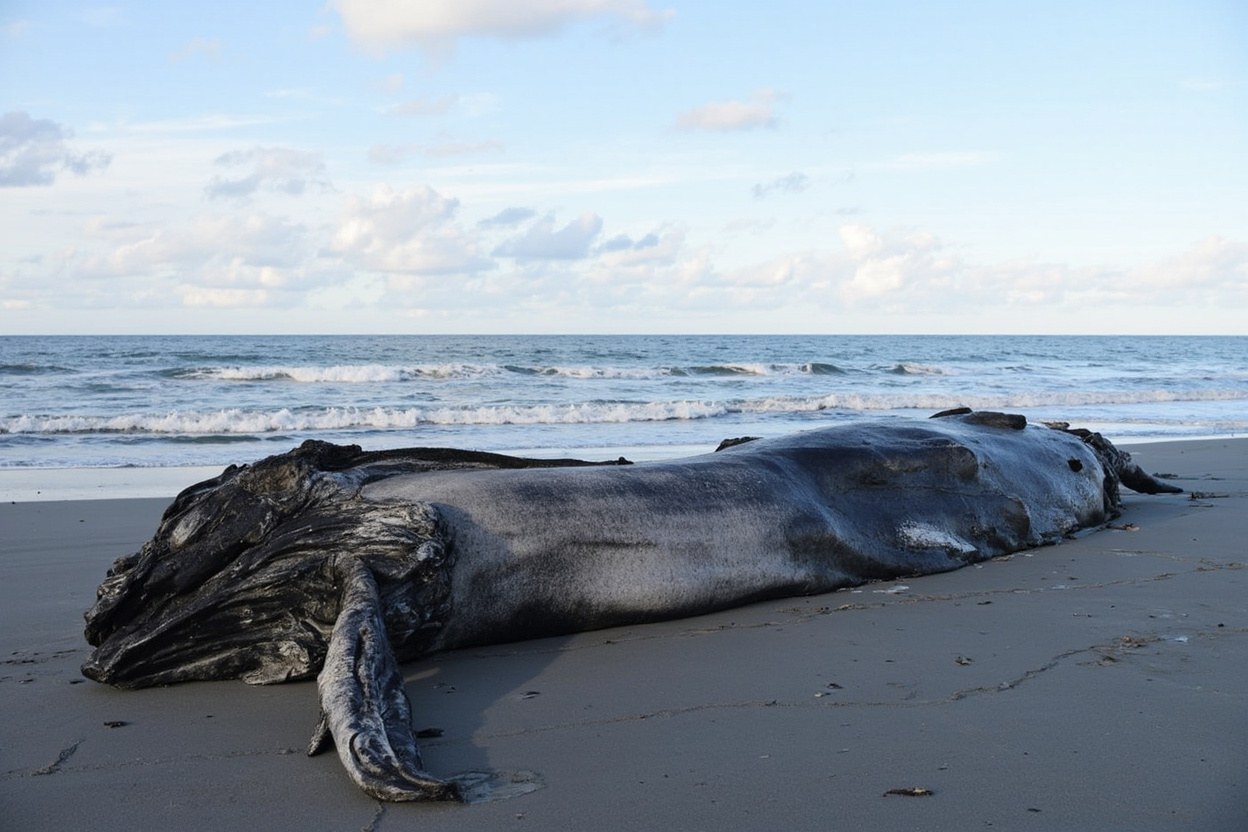
These rules matter because stranded marine mammal events are often sudden. A body found on a beach may be the only available source of information about disease, harmful algal blooms, entanglement, vessel strikes, toxic contamination or unusual mortality. A well-designed salvage system can preserve that evidence without treating the animal as ordinary waste.
Who can recover a stranded marine mammal?
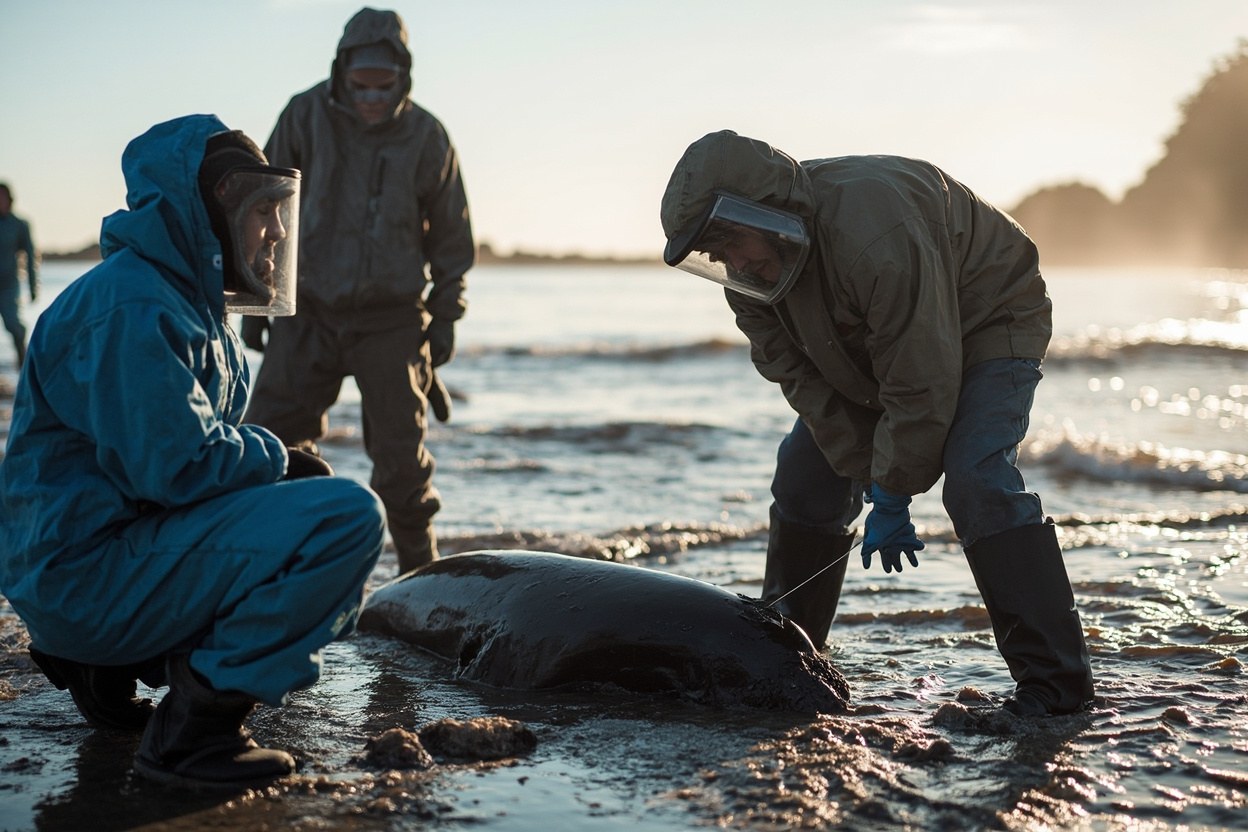
NMFS personnel and contractors acting under an agency agreement may recover marine mammals when required for an authorised response or investigation. An authorised biological research facility, such as a university, museum or accredited stranding network, may also take custody where it holds the necessary permits and can meet the rule's documentation and care requirements.
The final rule distinguishes between an immediate field removal, a transfer to a facility for necropsy or sampling, and later disposition of the remains. Those stages are not interchangeable. A team cannot simply take a carcass for display, a commercial product or an unrestricted research project. The purpose must fit the statutory authority and the conditions attached to the permit or agency direction.
State and tribal authorities continue to have roles in shoreline response, public safety and notification. Their involvement does not transfer ownership or management authority for a listed marine mammal to the state. Where a marine mammal is protected under the Endangered Species Act, additional consultation and identification requirements may apply, especially for species listed under the ESA or for actions affecting a designated critical habitat.
The rule therefore works as a coordination mechanism. It sets a common route for determining who may handle an animal, what records must be retained and what evidence must be preserved. That is a meaningful change for laboratories and rehabilitation groups because a recovery now has to be tied to an authorised purpose and traceable documentation rather than left to informal practice.
What happens to samples and scientific data?
The rule treats biological samples as part of the marine mammal resource rather than as detached material that can be used without restriction. Tissues, teeth, baleen, stomach contents, blood and other samples may be collected when needed to answer a defined scientific question. The permit or response protocol should identify the intended use, the custodian and the final repository where practical.
Data generated from a necropsy or other examination is also not automatically free of restrictions. Researchers may have to submit results to NMFS, retain the samples for a specified period, or provide an opportunity for agency review before publication. A sample collected during an emergency response can be especially valuable because it may document the first sign of a disease or pollution event.
The rule also recognises that not every specimen can be stored indefinitely. Where a sample has no further scientific value, or where retaining it creates a safety or biosecurity problem, the agency may authorise its disposition. Commercial sale of a whole carcass or selected body parts remains subject to separate restrictions and, in some cases, specific statutory prohibitions.
For wildlife organisations, the important point is that salvage is now more clearly an evidence-preservation exercise. If a stranding involves an unusual or endangered animal, the organisation should contact the relevant NMFS stranding network and regional office before moving the body. Photographs, location data and notes about the condition of the animal can be useful even when physical recovery is not authorised.
Does the rule make it easier to respond to mass strandings?
Potentially, yes. A consistent rule can reduce uncertainty when a response team must decide whether to move a large or deteriorating carcass, how to document it and how to coordinate with laboratories. It should also help distinguish ordinary strandings from events requiring an unusual mortality investigation, such as multiple deaths linked to a common sound, toxin, pathogen or food-web disturbance.
But faster administration is not the same as unlimited discretion. The rule's safeguards remain in place because marine mammals are public resources and, for many species, protected animals with recognised ecological value. A response cannot be converted into private possession merely because the animal is dead, injured or difficult to move.
The distinction is particularly important for endangered species. If a carcass belongs to an ESA-listed species, the agency must consider whether salvage would affect a species recovery programme, whether genetic material should be banked, and whether the remains should be returned or disposed of in a culturally appropriate way. Tribal consultation may also be required where the species or event has significance to an Indigenous community.
These safeguards do not prevent emergency action. They make the decision visible and traceable. In a mass stranding, the rule should therefore be read alongside NMFS's emergency response guidance, stranding network protocols and applicable consultation requirements.
What does the rule mean for wildlife rehabilitation groups?
Rehabilitation groups should review their standard operating procedures for stranded marine mammals. Agreements with a stranding network should specify who may take custody, which records must accompany a transfer, how samples must be labelled and what happens when a facility cannot provide appropriate care. Staff and volunteers should also know the reporting route for an unusual number of animals or a suspected harmful event.
The rule should not be read as requiring every group to build a necropsy laboratory or retain every tissue sample. It establishes who may act and the conditions for action. Smaller organisations can coordinate through an authorised facility or an agency agreement, but should not take a protected animal or carcass into their own programme without the required permission.
For members of the public, the clearest practical advice is simple: keep a safe distance, photograph the scene if it can be done without interference, record the location, and call the relevant stranding network or NMFS office. Do not move a large carcass, pull samples from an animal, or attempt to retain teeth, baleen or tissue without authorisation. A stranded animal can still carry infectious material, sharp bones, contaminants or evidence needed for an investigation.
What remains unchanged about federal marine mammal authority?
The rule does not transfer federal jurisdiction over marine mammals to states, counties or private organisations. It also does not weaken the Marine Mammal Protection Act's prohibitions on unauthorised taking, harassment or sale of marine mammals or their parts. Nor does it alter the basic ESA rule that federal agencies must review activities that may affect listed species or designated habitat.
The most important practical distinction is between an authorised salvage operation and an unauthorised removal. The first is supported by a permit, agreement or federal direction and has a defined scientific, response or disposal purpose. The second is a taking, regardless of whether the animal was already dead. The revised rule gives agencies a clearer way to document the first and enforce the second.
That framing is useful to conservation organisations because it protects both animal welfare and scientific integrity. Dead marine mammals can be evidence of preventable harm. Treating every carcass as waste risks losing information; treating every carcass as a research specimen risks unnecessary disturbance and creates opportunities for commercial exploitation. The November 2026 rule attempts to draw the boundary between those outcomes.
What should readers check in the final Federal Register text?
Before relying on the rule, readers should verify the Federal Register citation, effective date, agency contact information, permit conditions and any corrections. The notice should be read together with the Code of Federal Regulations, NOAA Fisheries stranding procedures and ESA regulations. Where the rule and a species-specific permit impose different conditions, the more specific authorisation and the statute must be considered.
The rule should also be checked for any delayed implementation, temporary waiver or subsequent guidance. A final rule can change administrative practice immediately, but agencies sometimes issue implementation notices, training materials or revised forms. Those documents can explain how the requirements will be applied in the field without changing the legal effect of the rule itself.
For a current assessment, the key documents are Marine Mammal Salvage and Scientific Investigation; Final Rule, 91 FR 00000, signed by the Assistant Administrator for NOAA Fisheries, and the associated NOAA Fisheries stranding and salvage guidance. These are the primary sources for understanding the November 2026 change; advocacy summaries should not substitute for the signed instrument.
Quick answers
- Can anyone keep a dead whale or dolphin found on a beach?
- No. Marine mammal carcasses generally require authorisation, and recovery may be restricted to an authorised response or scientific investigation. Report the animal to the relevant stranding network or NOAA Fisheries rather than moving or retaining it.
- Does the new rule change ESA protections for listed marine mammals?
- No. It revises salvage and investigation procedures, not the underlying prohibition on taking or affecting listed species. Federal consultation and permit requirements still apply where an ESA-listed species is involved.
- Can a researcher collect tissue from a stranded marine mammal?
- Only where the collection is authorised through the applicable agreement, permit or agency direction and meets the rule's documentation and sample-handling requirements.