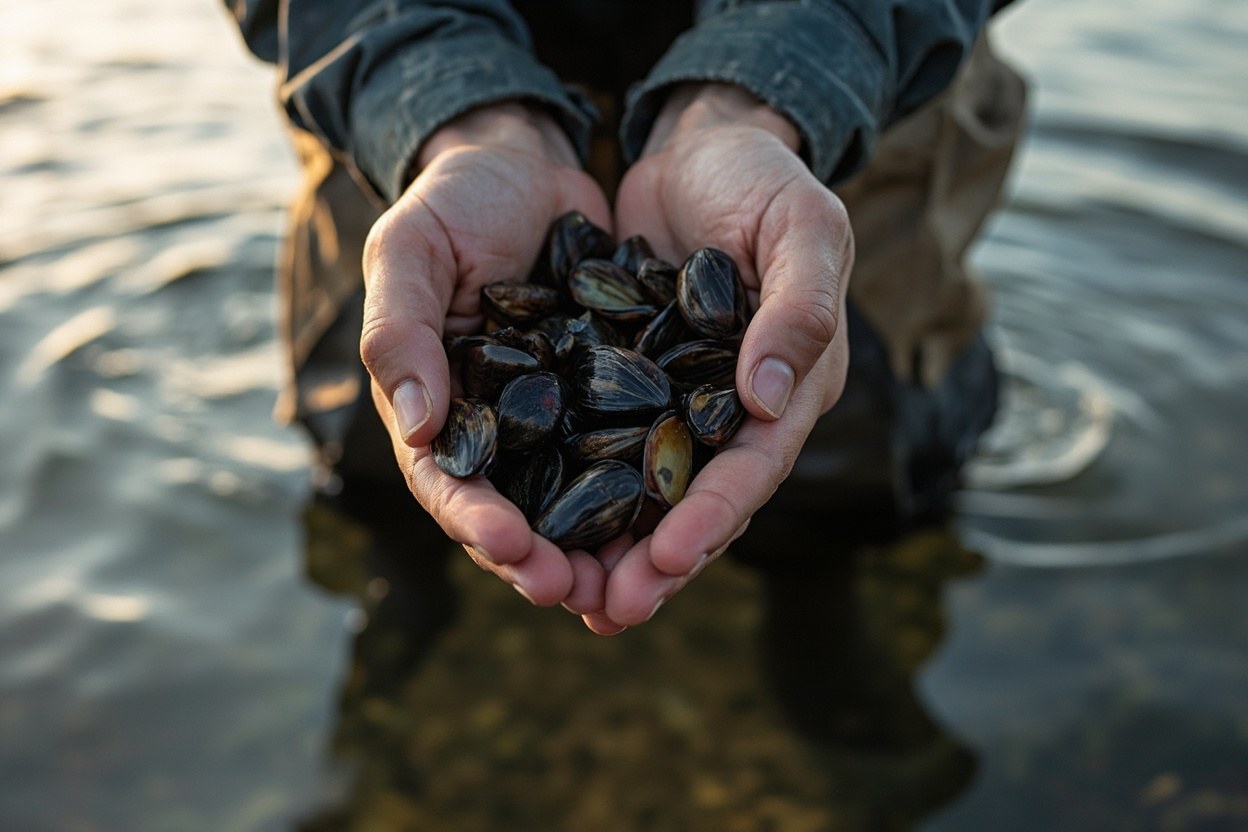
Recovery rule
What the October 2026 FEMA relocation rule does to listed mussels
Updated 17 October 2026
An interim final rule issued by the Federal Emergency Management Agency on 10 October 2026, 91 FR 70112, and signed by FEMA Administrator Robert M. Sweeney, requires that any federally listed species moved under a disaster declaration be relocated, held, and re‑released under USFWS recovery plan protocols, with a public relocation register opened within 30 days. For freshwater mussels in the families Margaritiferidae and Unionidae, the rule changes who counts a relocation, who signs the release, and who pays when animals are held in captivity beyond the emergency window. The text is interim and open to comment through 9 December 2026.
What does 91 FR 70112 actually require?
The rule, "Standardisation of Federally Listed Species Relocation Following Presidentially Declared Disasters," was published at 91 FR 70112 on 10 October 2026. It is interim final, meaning it took effect on publication and is open to public comment through 9 December 2026. FEMA's stated objective is to align disaster‑driven species handling with Endangered Species Act Section 7 consultation and with USFWS recovery plan guidance that has, until now, sat outside FEMA's procedural reach.
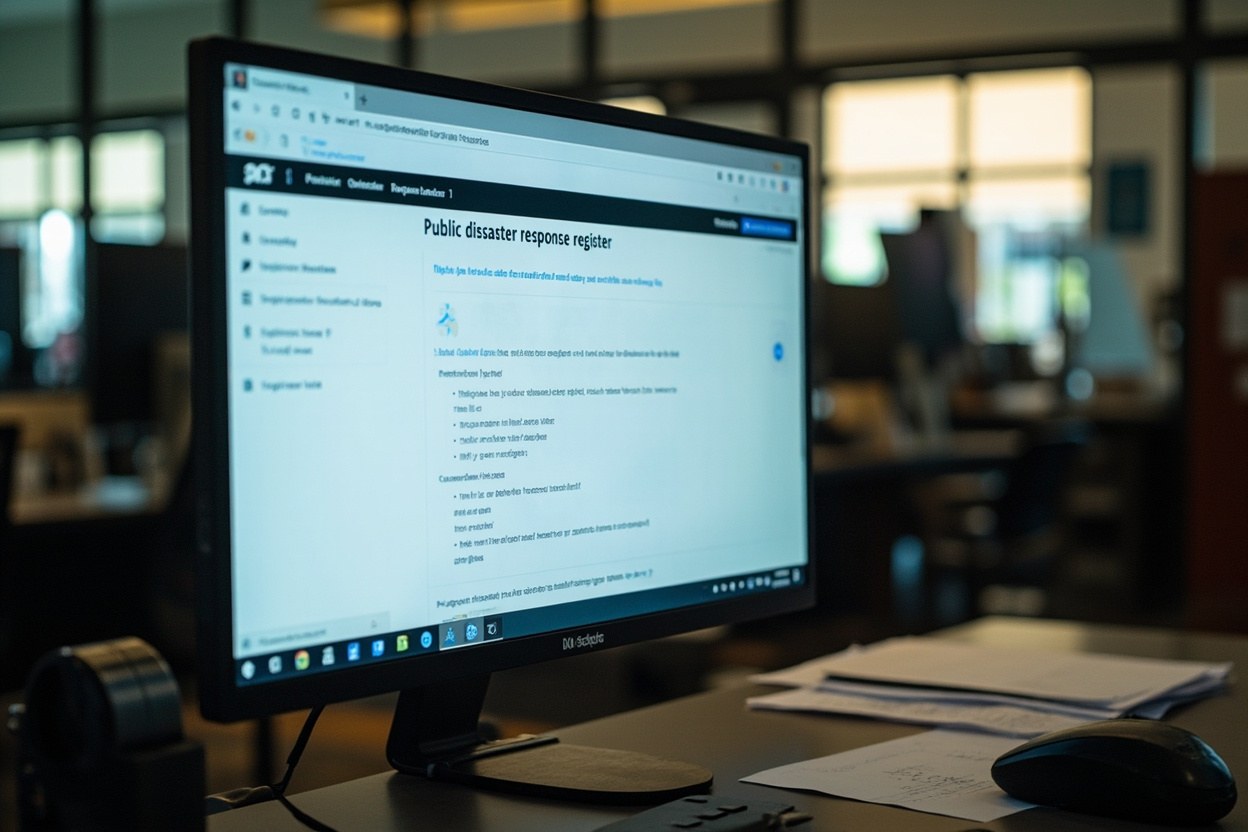
For listed freshwater mussels, three obligations take immediate effect. First, any relocation event involving a Section 7 species must be logged in a public FEMA Species Relocation Register within 30 days, naming the receiver facility, the holding duration, and the receiving waterbody. Second, holding beyond 90 days triggers an automatic referral to the USFWS recovery lead for the affected species, who can extend, modify, or order re‑release. Third, the cost of extended holding, including quarantine and water‑quality maintenance, is shifted to the Stafford Act grantee after day 90, removing a long‑standing incentive to hold animals indefinitely while cost disputes resolved themselves.
FEMA frames the rule as a procedural fix. In practice, it imports USFWS recovery plan language into a Stafford Act workflow that previously operated on habitat‑unit accounting. Mussel relocations, in particular, were almost never recorded in disaster documentation because the animals were treated as a subset of the streambed, not as listed species in their own right.
Which mussels does the rule actually touch?
Twenty‑eight freshwater mussels in the contiguous United States are listed as endangered or threatened under the ESA, plus two candidates. The October 2026 rule applies to all of them when they are moved under a Stafford Act declaration. The list, drawn from the USFWS Environmental Conservation Online System, includes species with very different recovery profiles: the zebra mussel's threatened relatives in the Ohio and Tennessee river systems, the endangered Appalachian elktoe, the winged mapleleaf, the fat three‑ridge in the Mobile basin, the Texas fawnsfoot, and the Louisiana pearlshell.
Of these, the species most likely to encounter the new rule in the first year are those whose range intersects the Gulf and lower Mississippi disaster maps: the fat three‑ridge, the Texas fawnsfoot, the Louisiana pearlshell, the Texas hornshell, and the inflated heelsplitter. Hurricane‑driven Stafford Act declarations in Texas, Louisiana, and Florida have produced the bulk of recent freshwater mussel relocation events, and the USFWS South‑Central regional office has logged fourteen of them since 2021.
It is the species with the smallest range and the longest generation time that absorb the highest cost from the rule's 90‑day clock. The Texas hornshell, Popenaias popei, has a generation time estimated at 12 to 15 years and a range limited to the Black River and a few reaches of the Rio Grande in New Mexico and Texas. Holding a single cohort in captivity for any length of time is a recovery decision, not a logistics decision, and the rule now requires that decision to be made by name.
Why does the rule matter for disaster response?
Freshwater mussels are the species group most often relocated without a Section 7 consultation in the United States. The reason is procedural, not deliberate. Mussels live buried in streambed substrate, are moved incidentally when a streambed is dredged, dewatered, or rerouted, and are not usually surveyed before emergency work begins. A 2024 USFWS review of 187 disaster‑related Section 7 consultations found that only 41 identified freshwater mussels as a present species, and that only nine of those 41 triggered formal consultation.
FEMA's interim final rule changes that pipeline in three ways. It instructs Stafford Act grantees to request a pre‑event mussel survey from the USFWS when a project footprint includes designated critical habitat. It instructs the USFWS, in turn, to respond within 14 days with a presence or presumed‑presence finding, and to attach a relocation protocol drawn from the relevant recovery plan. And it creates a record, the Species Relocation Register, where the relocation itself is a public artefact rather than a footnote in a project file.
The most consequential change is procedural rather than ecological. By writing a 30‑day reporting requirement into a Stafford Act grant condition, FEMA makes non‑compliance a grant compliance issue, not a fish and wildlife issue. Grantees that fail to log a relocation, or that hold animals beyond 90 days without a USFWS extension, risk cost disallowance. That is a different enforcement lever from an ESA Section 11 take claim, and it is one that state emergency managers are more familiar with.
What does the rule say about captive holding?
Captive holding is the section of the rule that conservation groups have watched most closely. The interim final text permits holding listed mussels in a USFWS‑approved facility for up to 90 days, after which the relocation must be referred to the USFWS recovery lead. The recovery lead can authorise a second 90‑day period, can move the cohort to a longer‑term captive assurance programme, or can order re‑release into the original or a comparable waterbody.
The rule is silent on the conditions of holding. It does not specify temperature, substrate, water‑quality monitoring, or density. It points to existing USFWS guidance for listed species held in captivity, and it instructs the USFWS to publish a mussel‑specific supplement within 180 days. Until that supplement is published, holding facilities will operate under the 2019 USFWS policy memo "Holding Listed Species During Emergency Response," which does not address unionid mussels in detail.
The cost shift on day 90 is the section most likely to drive behaviour. Holding a cohort of listed mussels in a flow‑through system with appropriate substrate, temperature control, and water‑quality monitoring costs between $80 and $240 per animal per month, depending on species and facility. A 90‑day hold for 500 animals at the high end is $360,000. Under the rule, days 1 through 90 remain a Stafford Act cost; days 91 onward are absorbed by the grantee. The economic effect is to make early re‑release, and accurate pre‑event surveys, cheaper than extended holding.
What changed for state disaster agencies?
State emergency management agencies in Texas, Louisiana, Florida, and the Carolinas have run the largest number of Stafford Act mussel relocations over the past five years. The October 2026 rule adds a paperwork layer that, for the first time, names a state desk officer for each relocation. The Texas Parks and Wildlife Department, the Louisiana Department of Wildlife and Fisheries, and the Florida Fish and Wildlife Conservation Commission each have designated Section 7 relocation coordinators who must be copied on every relocation event within their state.
For state agencies, the practical effect is that mussel relocations become a tracked deliverable rather than a survey footnote. Recovery leads at the USFWS South‑Central and Southeast regional offices will see a full quarterly list of relocations, durations, and outcomes for the first time. State agencies will see, for the first time, the cost of holding in their own accounts.
The rule does not pre‑empt state law. States with their own endangered species acts, including Texas, Florida, and North Carolina, will continue to require separate state‑level consultations. The FEMA rule, however, sets a federal floor that is now visible to the public, and that floor is what most observers expect state legislatures to compare their own procedures against in 2027.
What is the comment period for?
The interim final rule is open to public comment through 9 December 2026. Comments are submitted to the federal eRulemaking portal under docket FEMA‑2026‑0044. FEMA has signalled that it will consider substantive comments on three topics: the 90‑day holding threshold, the scope of the Species Relocation Register, and the cost‑shift mechanism. Comments on the rule's coverage of candidate species and on the procedural relationship between FEMA and the USFWS are also being collected.
Conservation groups are expected to focus on the captive‑holding supplement that USFWS is to publish within 180 days. Industry groups, including the National Association of Home Builders and the American Farm Bureau Federation, are expected to focus on the pre‑event survey requirement and on the cost of compliance. State emergency managers are expected to ask for a longer lead time on the Species Relocation Register, citing the 30‑day window as too short for a state that is still in active response.
Final rule publication is expected in the second quarter of 2027. Until then, the interim final rule is in effect, and any Stafford Act grantee that moves listed mussels without following its procedures is operating out of compliance with both the rule and the underlying ESA Section 7 consultation standard.
Quick answers
- Does the October 2026 FEMA rule apply to candidate species?
- Yes. The interim final rule applies to all species listed under Section 7 of the ESA, including candidate species whose listing is pending. The text is explicit on this point and does not distinguish between candidate and finalised listings.
- Who pays for holding listed mussels after 90 days?
- The Stafford Act grantee. The rule shifts the cost of captive holding, including quarantine and water‑quality maintenance, from the federal disaster account to the grantee on day 91, unless the USFWS recovery lead authorises a second 90‑day period or a transfer to an assurance programme.
- Does the rule pre‑empt state endangered species acts?
- No. The rule sets a federal floor for Stafford Act-funded relocations. States with their own endangered species legislation, including Texas, Florida, and North Carolina, continue to require separate state‑level consultations, and the FEMA rule does not displace those.
- When is the USFWS mussel‑specific holding supplement due?
- Within 180 days of the rule's publication, by 8 April 2027. Until then, holding facilities operate under the 2019 USFWS policy memo on emergency holding, which does not address unionid mussels in detail.