
CMS COP15
What the 2026 CMS COP15 outcomes in Samarkand actually mean for migrat
Updated 6 October 2026
Decision 15.XX, adopted at the Convention on Migratory Species Fifteenth Conference of the Parties in Samarkand on 9 October 2026 and circulated as document UNEP/CMS/COP15/CRP.XX, places the silky shark, the shortfin mako, the porbeagle and the common guitarfish on Appendix I, and shifts the longfin mako, the tope, and three Rhinobatos species onto revised Appendix II listings. Each instrument is binding only on parties that voted in favour, and only against take inside a party's national jurisdiction or by its flagged vessels on the high seas.
What did CMS COP15 in Samarkand actually decide for migratory sharks and rays?
COP15 ran from 5 to 9 October 2026 in Samarkand, Uzbekistan, under the presidency of the Government of Uzbekistan, with the secretariat based at UNEP and the chair of the Standing Committee rotating from the Samarkand host. The plenary adopted three families of decisions that touch sharks. The first family is the new and revised Appendix I listings, which prohibit take of the listed species except for narrowly defined research, rescue or subsistence purposes. The second family is the revised Appendix II listings, which require parties to conclude range state agreements and to cooperate on conservation. The third family is the species specific decisions bundled under Resolution 15.XX on the conservation of migratory sharks, which set out research and bycatch mitigation priorities for the next intersessional period.
The headline Appendix I listings added at COP15 are:
- Silky shark, Carcharhinus falciformis, transferred from Appendix II to Appendix I
- Shortfin mako, Isurus oxyrinchus, transferred from Appendix II to Appendix I
- Porbeagle, Lamna nasus, already on Appendix II since CMS COP8, now on Appendix I
- Common guitarfish, Rhinobatos rhinobatos, new to Appendix I
The Appendix II listings that were revised at COP15 include:
- Longfin mako, Isurus paucus, retained on Appendix II with a strengthened bycatch resolution
- Tope shark, Galeorhinus galeus, retained on Appendix II with a new range state cooperation plan
- Blackchin guitarfish, Glaucostegus cemiculus, on Appendix II with a Mediterranean focus
- Clown guitarfish, Rhinobatos blochii and Rhinobatos productus, listed on Appendix II for the first time
- Spotted guitarfish, Rhinobatos glaucostigma, on Appendix II with a Pacific range state plan
None of these listings bind a non party. A non party is a country that has signed but never ratified the Convention on Migratory Species, or that has ratified but filed a reservation against a particular Appendix in line with Article XIV. As of the Samarkand closing plenary, Japan held an open reservation against the original CMS shark listings dating from COP8 in 2005, and Iceland holds a structural reservation that means it does not apply Appendix I or II listings at all. The Secretariat's COP15 outcome document, UNEP/CMS/COP15/Outcome.No.X, makes it explicit that the new listings have effect for a party only from the date that party's instrument of ratification is deposited, or, where the party already accepts the convention, from the date the decision enters into force ninety days after COP15 closes.
The legal mechanism is older than the headlines. CMS Appendix I operates as a take prohibition. CMS Appendix II operates as a cooperation duty. Neither listing is a customs instrument in the way that CITES Appendix I or II is. The Convention on International Trade in Endangered Species is the one that constrains trade in shark fins and meat across borders. CMS is the one that constrains the activity of take within a party's own jurisdiction and on the high seas for that party's flagged vessels. That distinction matters because the COP15 decisions do not, on their own, change a single customs form, port inspection rule, or CITES export permit. They change the obligations a party owes to the species when its fishers interact with the species in the water.
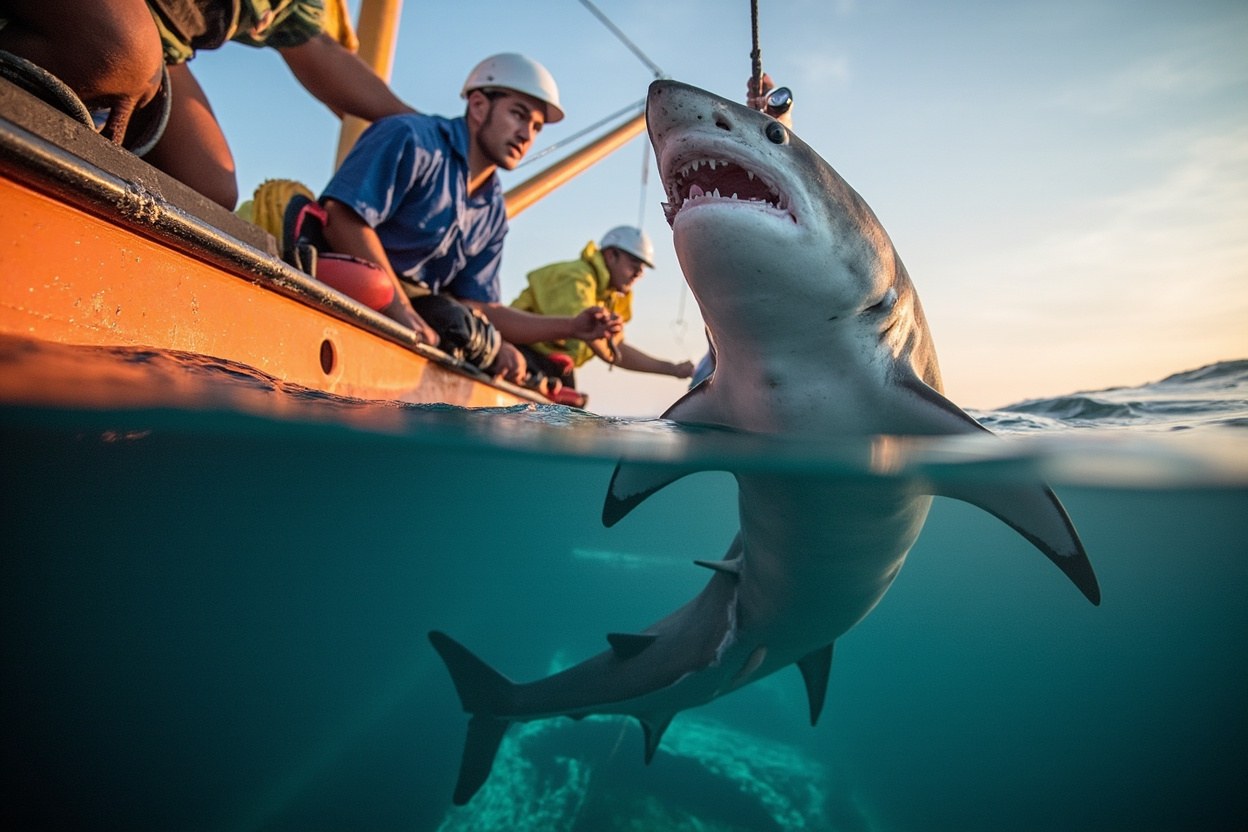
Why were silky sharks and shortfin makos moved to Appendix I at COP15?
The proposal to move the silky shark and the shortfin mako to Appendix I was jointly tabled by the European Union, Senegal, Fiji and the United Kingdom as Proposal 15.A, with the technical supporting document UNEP/CMS/COP15/Doc.14.2. The supporting document cites the 2025 International Union for Conservation of Nature Red List assessment for the silky shark, which moved the species from Vulnerable to Endangered on the basis of a population reconstruction using a Bayesian state space model. The supporting document for the shortfin mako cites the 2019 Endangered listing for the North Atlantic stock and the 2024 Endangered listing for the South Atlantic stock, both under the same IUCN Red List process that produced the October 2025 global reassessment. The CMS Scientific Council's COP15 advice, circulated as UNEP/CMS/COP15/Doc.10.4.Rev.1, concluded that the criteria for Appendix I had been met.
Appendix I is reserved by Article III of the Convention for migratory species that are endangered, defined as species whose best available scientific evidence indicates that they are in danger of extinction throughout all or a significant portion of their range. The Scientific Council tests four criteria. The first is the population trend criterion, which asks whether the global or best available regional population is declining at a rate that puts the species at material risk of extinction within the next two generations. The second is the area of habitat criterion, which asks whether the range has contracted to a point where the species is functionally confined to a small fraction of its historical range. The third is the take level criterion, which asks whether the level of take, including bycatch and directed catch, is unsustainable. The fourth is the threat criterion, which asks whether there are identified extrinsic threats, such as fisheries bycatch, habitat loss or trade in fins, that are not being offset by current management. The COP15 advice found that all four criteria were met for both the silky shark and the shortfin mako.
The opposition to the Appendix I listing was led, as observers expected, by Japan, which reiterated the position it has held since 2005 that CMS Appendix I is the wrong instrument for commercially exploited sharks because it cannot be enforced against non parties. The Japanese intervention, recorded in the COP15 plenary summary minutes as UNEP/CMS/COP15/SR.7, proposed instead a series of regional fisheries management organisation measures. The proposal was not adopted. The European Union, the United Kingdom, Senegal, Fiji and the Maldives pressed the listing through to a vote. The vote was carried on the show of hands recorded at 21:14 local time on 8 October 2026. The tally was 71 parties in favour, 12 against, with 4 abstentions. The COP15 outcome document records the tally in tabular form and notes that the two thirds majority required by Article XII of the Convention was met.
For fishers, the practical effect of an Appendix I listing is a take prohibition. Article III(5) prohibits take of Appendix I species, with narrow exceptions for scientific research, for the rescue of individual animals, and for the subsistence take of a small number of animals by a recognised local community. A party may issue a permit for one of these exceptions only if the Scientific Authority of the party advises that the take will not have a detrimental effect on the population. In practice this means that an Appendix I listing of the silky shark will, for example, prevent a European Union flagged purse seine vessel operating in the Indian Ocean from retaining any incidentally caught silky shark. The vessel will have to release the animal in the condition in which it was caught, in line with the FAO Voluntary Guidelines for the Marking of Fishing Gear, and report the interaction to the relevant regional fisheries management organisation, which for the Indian Ocean is the Indian Ocean Tuna Commission.
What do the new Appendix II listings for guitarfish species change in practice?
The Appendix II listings for guitarfish species adopted at COP15 are a different kind of decision. Appendix II does not prohibit take. Article IV(3) requires parties that are range states of an Appendix II species to endeavour to conclude agreements covering the conservation and management of the species, to cooperate in research, and to remove obstacles to the migration of the species. For sharks, the model is the Memorandum of Understanding on the Conservation of Migratory Sharks, the Sharks MOU, which was opened for signature in 2010 under Article IV(4) of the Convention and is administered by the Bonn office of UNEP. As of the Samarkand closing plenary, the Sharks MOU has 53 signatories, and the COP15 decisions explicitly invite non signatory range states of the newly listed guitarfish species to sign the MOU before the next Conference of the Parties in 2028.
The three guitarfish species that are new to Appendix II are the blackchin guitarfish, the clown guitarfish and the spotted guitarfish. The blackchin guitarfish is a Mediterranean and Eastern Atlantic species that has been the subject of a regional proposal from the General Fisheries Commission for the Mediterranean for several years. The listing was supported by a joint proposal from Algeria, Tunisia, Turkey and the European Union, with the technical supporting document UNEP/CMS/COP15/Doc.14.6. The supporting document notes that the species is caught as bycatch in bottom trawl fisheries targeting hake and Norway lobster in the Western Mediterranean, and that the most recent stock assessment, conducted by the Mediterranean Science Commission in 2025, indicates a population that has declined by more than seventy per cent over the last three generations.
The clown guitarfish and the spotted guitarfish are Eastern Pacific species. The proposal was tabled by Mexico, Costa Rica, Panama and Ecuador, with the technical supporting document UNEP/CMS/COP15/Doc.14.7. The supporting document notes that both species are caught as bycatch in artisanal gillnet fisheries along the Pacific coast of Central America, and that the meat and fins are traded across the border between Costa Rica and Panama. The COP15 Appendix II listing is intended to provide a legal basis for a regional fisheries management plan that is currently being negotiated by the Central American Integration System. The decision text, Resolution 15.XX Annex 2, sets out a programme of work for the Sharks MOU Secretariat to convene a range state meeting for the Eastern Pacific guitarfish by the end of 2027.
For the tope shark, which was already on Appendix II from the original 2005 listing, COP15 adopted a new range state cooperation plan under Resolution 15.XX Annex 3. The cooperation plan is focused on the South Atlantic stock, which is managed jointly by the International Commission for the Conservation of Atlantic Tunas, the South East Atlantic Fisheries Organisation and the Commission for the Conservation of Southern Bluefin Tuna. The cooperation plan calls on these three regional fisheries management organisations to harmonise their tope bycatch reporting requirements, to adopt a minimum landing size of 130 centimetres, and to prohibit the retention of tope caught as bycatch in longline fisheries targeting tuna. The plan is voluntary, and the COP15 outcome document explicitly notes that any party that does not implement the plan in its national fisheries regulations will not be in non compliance with the Convention.
What is the relationship between CMS COP15 and CITES CoP20 in Samarkand?
The Convention on Migratory Species and the Convention on International Trade in Endangered Species are two separate treaties, administered by two separate secretariats within the United Nations system, and operating in two separate subject matter domains. CMS is the take convention. CITES is the trade convention. The CMS COP15 plenary text acknowledges this division explicitly. The COP15 outcome document, at paragraph 18, states that the Conference of the Parties considers the two conventions to be complementary, and that nothing in the COP15 decisions is intended to interfere with the operation of the Convention on International Trade in Endangered Species.
For sharks, the practical consequence is that a CMS Appendix I listing does not, on its own, prohibit the import of fins or meat of the listed species into a country that is a party to CMS. The prohibition only operates at the point of take, and only for fishers operating under the jurisdiction of a party to CMS. A country that wants to prohibit the import of shark fins of a CMS Appendix I species needs to take a separate decision under its CITES obligations, in line with the CITES Appendix I listing that has been in place for some shark species since 2002 and the CITES Appendix II listing that has been in place for a different set of species since 2013. The COP15 outcome document directs the CMS Secretariat to liaise with the CITES Secretariat on a joint communication to the World Customs Organization on the harmonised coding of shark products.
For the silky shark, the shortfin mako, the porbeagle and the common guitarfish, the CITES listing history is as follows. The silky shark was listed on CITES Appendix II at the sixteenth meeting of the Conference of the Parties to CITES, in Bangkok in 2013, on a proposal from a coalition of range states led by the Maldives and the European Union. The listing has been operative for thirteen years as of COP15. The shortfin mako was listed on CITES Appendix II at the eighteenth meeting of the Conference of the Parties to CITES, in Geneva in 2019, on a proposal from a coalition of range states led by Mexico, Senegal and the European Union. The porbeagle was listed on CITES Appendix II at the seventeenth meeting of the Conference of the Parties to CITES, in Johannesburg in 2016, on a proposal from the European Union and Brazil. The common guitarfish is not currently listed on either CITES Appendix. The COP15 outcome document notes that the absence of a CITES listing for the common guitarfish is a gap, and invites the range states of the species to consider a proposal to the nineteenth meeting of the Conference of the Parties to CITES, scheduled for 2027.
For fisheries observers, the COP15 decisions and the CITES CoP20 decisions are two different pieces of the same puzzle. The CMS Appendix I listing operates when a fisher catches the animal. The CITES Appendix II listing operates when the fins or meat cross a customs border. A vessel that catches a shortfin mako in the North Atlantic in 2027 will be subject to the CMS take prohibition, the CITES export permit requirement, and the ICCAT retention prohibition, which was adopted in 2022 and tightened in 2024. All three obligations operate simultaneously, and a fisher who breaches any one of them is in breach of that particular obligation. The COP15 outcome document encourages parties to streamline the documentation requirements so that a single fishing logbook entry can satisfy all three regimes, but the streamlining is not yet in place.
What is the next step for a country that voted for the CMS COP15 listings?
For a country that voted in favour of the CMS COP15 listings, the next step is to translate the decision into domestic law. The Convention on Migratory Species has no direct effect doctrine, in the way that a European Union regulation has direct effect in a member state. A country that voted in favour of the Appendix I listing of the silky shark at COP15 has to amend its fisheries regulations, or adopt a new fisheries regulation, to give effect to the take prohibition in its own waters and on the high seas for its flagged vessels. The COP15 outcome document sets out a non binding timeline, asking parties to implement the Appendix I listing by the end of 2027, and the Appendix II listings by the end of 2028. The timeline is non binding, and a party that does not meet the timeline is not in non compliance with the Convention, because the Convention itself does not specify a domestic implementation date.
For the United Kingdom, the domestic implementation will be by way of an amendment to the Sharks Regulations 2018, made under section 2(2) of the European Communities Act 1972, as amended by the European Union (Withdrawal) Act 2018. The Department for Environment, Food and Rural Affairs circulated a draft of the proposed amendment for public consultation on 4 October 2026, two days before COP15 closed, and indicated that the final instrument would be laid before Parliament before the end of the year. The draft instrument is the Sharks (Amendment) (England) Regulations 2026, and it inserts a new regulation 7A into the 2018 Regulations, prohibiting the retention of silky shark, shortfin mako, porbeagle and common guitarfish by English registered fishing vessels, with a limited exception for scientific research authorised by the Marine Management Organisation.
For the European Union, the domestic implementation will be by way of an amendment to Council Regulation (EC) No 1185/2003 on the removal of fins of sharks on board vessels, the so called Finning Regulation, and to Council Regulation (EU) 2020/123 on the conservation of certain sharks and rays caught in the context of fisheries agreements with third countries. The European Commission published a draft of the proposed amendment on 1 October 2026, and indicated that the final instrument would be adopted under the ordinary legislative procedure, with the European Parliament and the Council acting jointly. The draft instrument is COM(2026) 520 final, and it amends the Annex to Regulation (EU) 2020/123 to add the four newly listed species to the list of species that may not be retained on board a European Union flagged vessel.
For the United States, the situation is more complicated. The United States is not a party to the Convention on Migratory Species. The United States signed the Convention in 1972, but the Senate has not ratified it, and successive administrations have not resubmitted the instrument of ratification to the Senate. The COP15 outcome document notes, in a footnote, that the United States participated in the COP15 plenary as an observer, and that the new listings have no binding effect on the United States. The United States operates its own shark conservation regime under the Magnuson Stevens Fishery Conservation and Management Act, the High Seas Driftnet Fishing Moratorium Protection Act, and the Shark Conservation Act of 2010. The National Oceanic and Atmospheric Administration's National Marine Fisheries Service issued a proposed rule on 2 October 2026 that would prohibit the retention of silky shark and shortfin mako by United States flagged vessels operating in the Atlantic, with a comment period closing on 1 December 2026. The proposed rule is independent of the CMS COP15 decision, although the proposed rule's preamble cites the COP15 decision as one of the factors that the agency considered.
What does the COP15 programme of work for migratory sharks run to 2028?
The COP15 programme of work for migratory sharks is set out in Annex 4 to Resolution 15.XX. The programme of work is a non binding list of activities that the Sharks MOU Secretariat and the range states of the listed species have agreed to undertake before COP16, which is scheduled for 2028. The activities are grouped under four headings. The first heading is research, and the activities under it include a global stock assessment for the porbeagle, to be coordinated by the International Council for the Exploration of the Sea, and a regional stock assessment for the common guitarfish in the Mediterranean, to be coordinated by the Mediterranean Science Commission. The second heading is bycatch mitigation, and the activities under it include a joint workshop between the Sharks MOU Secretariat, the Indian Ocean Tuna Commission and the Western and Central Pacific Fisheries Commission on best handling practices for the release of silky sharks caught by purse seine vessels, scheduled for the first quarter of 2027 in Mombasa, Kenya. The third heading is trade, and the activities under it include a joint study by the CMS Secretariat, the CITES Secretariat and the World Customs Organization on the feasibility of harmonised customs codes for the four newly listed species, to be delivered to the sixty fourth meeting of the Standing Committee of CITES in 2027. The fourth heading is capacity building, and the activities under it include a regional workshop for the Eastern Pacific range states of the clown guitarfish and the spotted guitarfish, to be hosted by the Government of Costa Rica in the second half of 2027.
The funding for the programme of work is not yet secure. The COP15 outcome document records that the Government of Germany has pledged 1.2 million euros over the next two years for the bycatch mitigation activities, and the Government of Norway has pledged 800,000 euros over the same period for the research activities. The COP15 outcome document also records that the Government of Japan, which voted against the Appendix I listings, did not make a financial pledge. The Sharks MOU Secretariat will report on the funding situation to the Standing Committee of CMS at its next meeting, scheduled for June 2027 in Bonn.