Trade rules
What changed for sharks and rays at CITES CoP20 in Samarkand
Updated 6 October 2026
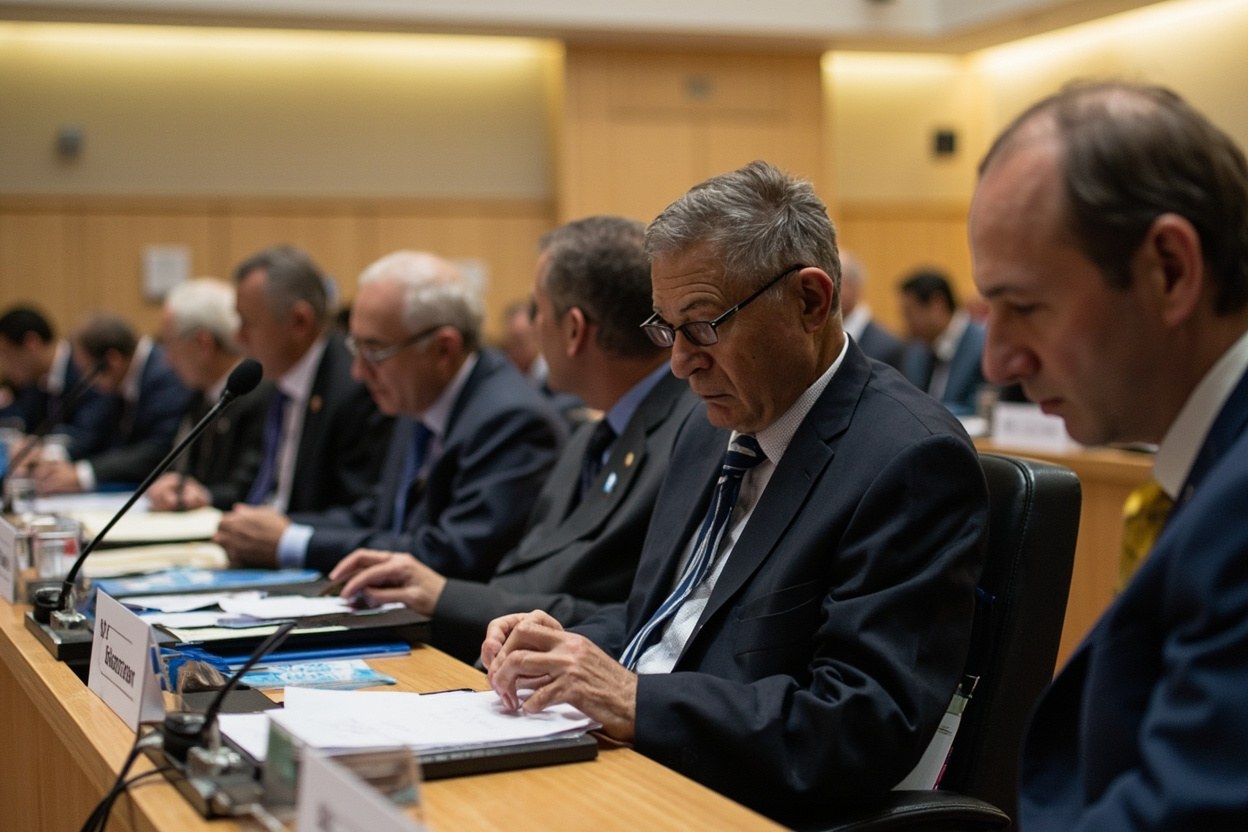
At the nineteenth regular meeting of the Conference of the Parties to the Convention on International Trade in Endangered Species of Wild Fauna and Flora, held in Samarkand, Uzbekistan from 14 to 25 September 2026, governments adopted five decisions and two amendments to the Appendices that touch sharks and rays. The most consequential is a zero export quota annotation on the silky shark, Carcharhinus falciformis, effective 90 days after the meeting closes, plus a clean Appendix II listing for the Brazilian guitarfish, Pseudobatos horkelii. The Parties also endorsed a revised identification guide for shark fins that, for the first time, treats DNA barcoding as an accepted method at inspection. Document CoP20 Com. I. 12, signed by the Committee Chair on 23 September 2026, sets the timetable for those changes to take effect in national law.
Why elasmobranchs kept their place on the agenda
Sharks and rays have been the largest single animal group in CITES Appendix II since the 2013 listings and the 2019 expansions, but enforcement has lagged behind paperwork. The Samarkand meeting took place against a backdrop of record reported trade in CITES-listed shark fins and a spate of disputed identifications at port. The Animals Committee, meeting the week before the plenary, recommended a tighter annotation on silky sharks and a clean listing for guitarfish. The Secretariat, in document CoP20 Doc. 49, reported that Parties filed 1,482 annual reports covering elasmobranchs in 2024 and that more than 12 percent of those reports contained reservations or partial data. The Parties were told, in plain language, that the listings were not failing because the science was wrong but because the implementation machinery was uneven.
Two issues shaped the room. The first was the long-running argument over how to keep hammerhead shark look-alike catches inside the legal envelope. The second was a request from Range States to acknowledge that several coastal guitarfish and wedgefish species had collapsed without ever being listed. The Samarkand outcomes sit on top of the 2025 IUCN Red List update, which elevated the Brazilian guitarfish to Critically Endangered and split the previously single assessment of the white-dotted guitarfish into two separate assessments under IUCN treatment rules. Anyone trying to read the CITES record in 2026 without the 2025 IUCN backdrop will see the same numbers and not understand why they moved.

What the silky shark annotation actually does
The amendment to the Appendix II listing of Carcharhinus falciformis is the one that will hit supply chains fastest. Under the new annotation, Parties may only trade in silky shark specimens that originate from a bycatch mitigation programme recognised by the Animals Committee, and the export quota for any Party that has not yet filed such a programme is set to zero. In practical terms, the largest single open trade in shark fins for the global dried fin market closes on 24 December 2026. Range States that have already adopted non-entangling bycatch devices and a shark catch limit equivalent to 80 percent of the 2018 baseline can continue to export under the existing annotation.
For anyone who tracks the chain, this is the moment where the document trail and the boat trail diverge. A vessel landing a mixed shark catch off the Atlantic will need to demonstrate at landing that no silky shark larger than the size at maturity in the relevant ocean basin is on board. Document CoP20 Doc. 51.1, signed by the Standing Committee Chair on 18 September 2026, records the 90 day implementation delay. The Secretariat's compliance report, also adopted at Samarkand, notes that five Parties reported more than 200 tonnes of silky shark product in 2024 and that three of those Parties did not yet have a programme in place on the closing day of the meeting. The zero annotation is therefore not a future threat to those fleets. It is a present one, dressed in a 90 day grace period.
Brazilian guitarfish and the second listing on the table
The clean Appendix II listing of Pseudobatos horkelii, the Brazilian guitarfish, was the simplest decision in the room and the one with the longest history. The species was proposed for Appendix II in 2019 but was withdrawn after Range States asked for more catch data. By the 2025 IUCN assessment, the population was down to an estimated 4 percent of unfished biomass, and Brazil, the sole Range State, co-sponsored the 2026 proposal. CoP20 Prop. 14, adopted without a vote, sets out the listing under the standard Article IV framework, which means trade in Brazilian guitarfish specimens now requires an export permit based on a non-detriment finding.
Because the guitarfish lives almost entirely in Brazilian waters, the practical effect of the listing is a domestic one. Brazilian fishers who land guitarfish as bycatch in coastal gillnet operations will need a non-detriment finding covering the year of export, and any product crossing a border in trade will need a CITES export permit stamped by IBAMA, the Brazilian environmental agency. The Secretariat will publish a model non-detriment finding for the species before the 90 day entry into force date. The IUCN Species Survival Commission Shark Specialist Group, which proposed the listing along with Brazil, will provide the scientific basis.
Hammerhead look-alikes and the wedgefish clean up
Two other taxonomic clean ups came out of Samarkand. The first is a small but meaningful set of name changes inside the existing smooth hammerhead, Sphyrna zygaena, listing. CoP20 adopted a taxonomic proposal that adds a footnote to the Sphyrna zygaena entry clarifying that any look-alike specimen from the genus Sphyrna in trade is to be treated as the listed species for identification purposes until genetic confirmation. The change closes a gap that has been exploited for years. The annotation is paired with a new identification guide, CoP20 Inf. 7, that gives inspectors a six step field test using dorsal fin shape, trailing edge colour, and caudal keel position before any DNA test is ordered.
Wedgefish came up twice. The family was first listed in 2019 and the Samarkand meeting adopted a single consolidated annotation covering all wedgefish species in trade that are currently in Appendix II. The annotation aligns the wording across the family and adds a zero quota for the bowmouth guitarfish, Rhina ancylostoma, effective on entry into force. Range States that have filed a non-detriment finding equivalent to the standard for sharks and rays may continue to trade under a transition clause until 31 December 2027. Past that date, any bowmouth guitarfish in trade must be accompanied by a document that matches the new annotation exactly.
The identification guide and what DNA barcoding changes
The most quietly important document to come out of the elasmobranch stream is the revised Identification Guide for Shark Fins in Trade, adopted as CoP20 Inf. 7 and endorsed in Decision 19.196. The previous guide, from 2015, treated DNA testing as an emerging tool and left any positive identification to a panel of morphological experts. The 2026 guide treats DNA barcoding as accepted at inspection, with a specific protocol for the CO1 region and a chain of custody requirement that matches the chain used in the timber trade. The change is small in the document and large in the field. A customs officer at the Port of Hong Kong or the Port of Tanjung Priok can now accept a barcoded identification as the basis for a seizure, rather than treating it as a laboratory result that needs a second morphological pass.
The guide also standardises the labelling of dried fins. Each lot must carry a species identification in the CITES common name format, an exporter reference number, and a country of origin code. The labelling standard is a direct response to the 2024 compliance matter involving re-exported fins from Mozambique and the 2025 matter involving fins declared as blue shark but identified as scalloped hammerhead on DNA. The Parties will report on implementation in their 2027 annual reports, due by 31 October 2027, and the Standing Committee will review compliance in early 2028.
Range State push back and the West African reservation
Not every change was unanimous. Senegal, on behalf of seven West African Range States, entered a reservation against the silky shark zero quota annotation, on the grounds that artisanal fishers in the region have no realistic path to a bycatch mitigation programme in 90 days. The reservation is permitted under Article XXIII of the Convention and means that the zero quota does not apply to Senegalese landings for trade in fins and meat to other West African Parties. It does not apply to any export to a non reserving Party. The reservation is logged in the meeting record and will be reviewed at the next meeting of the Animals Committee in 2027.
The Secretariat, in the same compliance report, flagged that the West African reservation exposes a structural problem. A 90 day window for a bycatch programme assumes a fisheries management capacity that several West African Parties have said in writing they do not have. The Decision adopted at Samarkand asks the Secretariat to convene a working group with the West African states to draft a model bycatch programme, and to fund a regional workshop in early 2027. The workshop is not a soft commitment. It is in the Decisions text, which is a binding agenda for the Standing Committee and the Animals Committee to act on.
What this means for traders, inspectors, and conservation lawyers
For traders, the practical effect of Samarkand is that the species list used in customs codes and in CITES permits has grown by one clean entry, tightened by one zero quota, and clarified by one annotation. Anyone handling a shipment that includes any shark or ray fin, ray skin, or shark tooth derivative needs to check three things: the new annotation text in CoP20 Com. I. 12, the species name in the CITES common name register, and the identification guide for the lot. A shipment that passed inspection in 2025 may not pass in 2027, and a shipment that was exempt in 2025 as a personal effect may now require a permit if it exceeds the 5 kilogram dry weight threshold for personal effects, which Samarkand did not change but the Secretariat has confirmed remains the standard for fins and ray skins.
For inspectors, the barcoding protocol is the biggest change. The cost of a CO1 test has fallen to a level that several customs administrations have said in writing they can absorb. A port that does not yet have barcoding equipment can still rely on morphological identification under the old guide, but any contested identification will now be measured against the new protocol. The chain of custody requirement is also a step up, and several Parties have asked the Secretariat for a model chain of custody form. The Secretariat is expected to publish a draft in the first quarter of 2027.
For conservation lawyers, the silky shark reservation and the wedgefish transition clause are the two pieces of text that will show up in court. The wedgefish transition clause in particular will be argued either as a fair extension or as a back door, depending on the country. The Decisions text asks the Animals Committee to report on the implementation of the transition clause at the 2027 meeting, and the Standing Committee will consider any Party that has not filed a non-detriment finding by 31 December 2027 as a matter of compliance. The text is on the public record and is searchable in the CITES trade database.
What did not change in Samarkand
Three things did not move. The first is the porbeagle, Lamna nasus, which remains in Appendix II with the existing annotation. A proposal to add a zero quota for North Atlantic porbeagle was withdrawn by the proponent after Range States agreed to a regional management plan. The second is the shortfin mako, Isurus oxyrinchus, which remains in Appendix II with the standard live and dead specimen coverage. A proposal to list the longfin mako, Isurus paucus, was deferred to the Animals Committee for further data, and the Secretariat will publish a discussion paper in the first half of 2027. The third is the giant manta ray, Mobula birostris, which remains in Appendix II with the existing annotation and a 2027 review of any range state proposal to move it to a stricter annotation.
The deep sea mining question also did not come up in the elasmobranch stream. The deep sea vent molluscs and the broader question of high seas mining are being handled in a parallel decision adopted at Samarkand and reported separately, and the deep sea shark species that would be affected by abyssal mining are still being assessed by the IUCN Shark Specialist Group. A 2027 assessment is expected for two species of sleeper shark in the genus Somniosus.
How the Samarkand decisions line up with the 2025 IUCN update
The 2025 IUCN Red List update reclassified several sharks and rays in ways that line up with the Samarkand decisions. The Brazilian guitarfish was uplisted to Critically Endangered on the back of a population estimate that has been falling for more than a decade. The white-dotted guitarfish, Rhinobatos albomaculatus, was split into two assessments, one for the Atlantic population and one for the Indian Ocean population, and the Atlantic assessment is Critically Endangered while the Indian Ocean assessment is Vulnerable. The IUCN Species Survival Commission Shark Specialist Group has committed to publish the underlying data set in a peer reviewed paper in 2027. The CITES and IUCN tracks are not the same, but in 2026 they are unusually aligned on sharks and rays.
For anyone reading the CITES Decisions text alongside the IUCN assessments, the key point is that the two bodies are using the same fishery independent data for the first time on several species. That makes the legal status of a species easier to defend in a non-detriment finding and harder to argue in a reservation. It also means that any future proposal to add a species to Appendix II that is already Critically Endangered on the IUCN Red List will face a higher bar in the Animals Committee and a lower bar in the plenary, which is the opposite of the position a decade ago.
What to watch in the next twelve months
Three things will tell us whether the Samarkand decisions held. The first is the publication of the West African bycatch programme model, due in the first quarter of 2027. If the model is realistic and funded, the West African reservation will fade. If it is not, the reservation will harden and the silky shark zero quota will not be respected in practice. The second is the first batch of barcoded identifications under the new guide, due in customs reports in 2027. If the barcoding rates are high, the identification problem of the last decade is on the way to being solved. If they are low, the guide will sit on a shelf. The third is the wedgefish non-detriment finding compliance, due by 31 December 2027. If Range States file, the family moves to a stable footing. If they do not, the Standing Committee will have a compliance matter on its hands at the 2028 meeting.
For this site, the next set of pages will look at each of those three threads in turn, starting with the West African bycatch programme, because the silky shark zero quota is the decision that will hit a dock first.
Quick answers
- When did the Samarkand CITES decisions on sharks and rays take effect?
- The decisions adopted in plenary take effect 90 days after the meeting closes on 25 September 2026, which puts entry into force at 24 December 2026 for most amendments. Transition clauses for wedgefish run to 31 December 2027.
- Does the silky shark zero quota mean a total ban?
- No. Parties with an Animals Committee recognised bycatch mitigation programme in place may continue to export under the existing annotation. The zero quota applies to any Party that has not filed such a programme by the entry into force date.
- Why is DNA barcoding being treated as accepted at inspection now?
- CoP20 adopted Identification Guide CoP20 Inf. 7, which sets a CO1 protocol and a chain of custody standard. The cost of a CO1 test has fallen to a level that several customs administrations can absorb, and the 2024 and 2025 compliance matters showed that morphological identification alone was not catching mislabelled fins.
- What is the Brazilian guitarfish and why was it listed?
- Pseudobatos horkelii is a coastal guitarfish that lives almost entirely in Brazilian waters. The 2025 IUCN Red List update placed it at Critically Endangered with an estimated 4 percent of unfished biomass remaining, and Brazil co-sponsored the Appendix II listing adopted as CoP20 Prop. 14.