Treaty log
What changed for marine species at CITES CoP20 in Samarkand?
Updated 6 October 2026
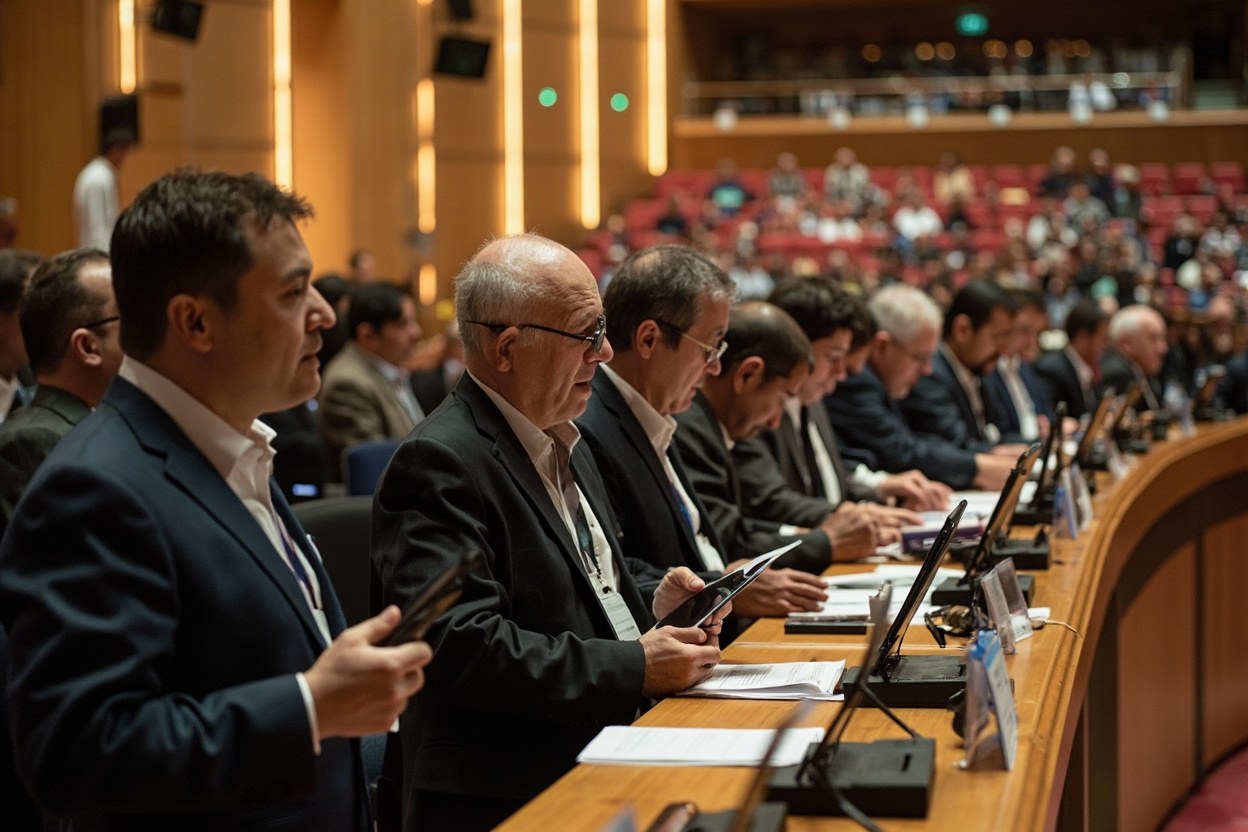
The nineteenth regular meeting of the Conference of the Parties to the Convention on International Trade in Endangered Species of Wild Fauna and Flora concluded on 2 October 2026 in Samarkand, Uzbekistan, with the adoption of twenty one marine proposals and fourteen associated decisions. CoP20 was opened by the President of Uzbekistan on 21 September and chaired by Ms. Asadiy Khudoyberdieva, with the CITES Secretariat acting as depositary. The marine package is the most consequential since CoP19 in Panama, and it is binding on Parties from 5 February 2027 under Article XV of the Convention. The headline moves: all seahorses are now in Appendix II, the largetooth sawfish joins Appendix I, the whale shark annotation is tightened, and a decision driven Standing Committee cycle on oceanic whitetip and shortfin mako bycatch is now formally on the books.
Why does CoP20 in Samarkand matter for marine species at all?
CoP20 is the first ordinary Conference of the Parties to CITES since 2022, and it carries the marine workload that Parties have been queueing through two intersessional working groups, four Animals Committee sessions, and a Secretariat study that closed on 14 February 2026. When the gavel came down in Samarkand on the evening of 2 October 2026 the marine file was the second largest after timber, and the only one in which every adopted text was substantive rather than procedural.
CITES works by a list. Appendix I bans commercial trade in listed species, with permits only for scientific exchange and carefully framed captive breeding. Appendix II allows trade under a permit system that the exporting country must be satisfied is not detrimental to the survival of the species. Appendix III is a unilateral listing by a range State. For marine species, the question is rarely whether the species is threatened and almost always whether the trade is the problem and whether the species is actually traded. The Samarkand package answers those questions for at least seven groups, and the answers bind 183 Parties from 5 February 2027 under Article XV(2) of the Convention text in force on that date.
The instrument the public should be looking for is the CoP20 Compendium, the bound volume the Secretariat tables at the close of each Conference and which carries the adopted decisions, the revised appendices, the minutes of the final plenary, and the declarations and reservations filed by Parties. For CoP20, the Compendium is being printed in Tashkent and the English and French texts are scheduled for deposit with the depositary government, the Swiss Federal Council, on or before 28 November 2026. The pre-print is already on the CITES website as document CoP20 Compendium Advance Copy 2026.
What did CoP20 actually do to seahorses (Hippocampus spp.)?
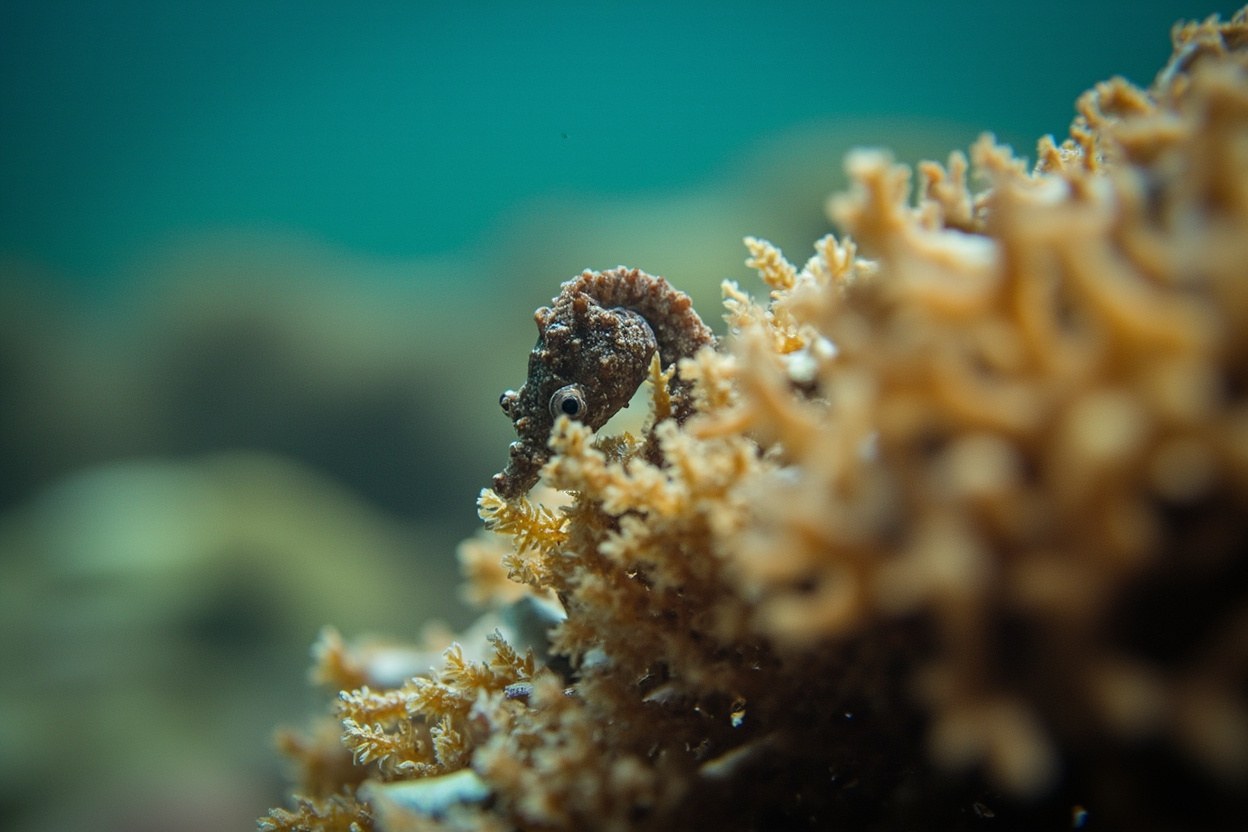
Proposal 27, tabled by the European Union, Brazil, Kenya, the Philippines, South Africa, and the United States, transferred all seahotum, dwarf, and giant seahorses from a sparse patchwork of national Appendix II listings to a single global Appendix II entry for the genus Hippocampus. The proposal was adopted in Committee I on 26 September 2026 by recorded vote 89 in favour, 12 against, 17 abstentions, and was confirmed in plenary on 1 October without amendment.
Until CoP20, only the lined seahorse (Hippocampus erectus) and the longsnout seahorse (Hippocampus reidi) were listed, and only by individual States under Article XXIII reservations. The live aquarium trade, the dried traditional medicine trade, and the curio trade each exploited the gap, and the Secretariat's 2023 study estimated annual reported legal trade in Hippocampus at 28.3 million specimens, of which 21.4 million were declared as captive bred. The new global listing ends the use of reservations to undercut the trade controls, requires all Parties to issue non detriment findings, and brings the seahorse trade into the same permit regime as the syngnathid relatives that were listed at CoP19.
For aquarists, the practical effect is from 5 February 2027: any cross border movement of a Hippocampus specimen, captive bred or wild, requires an export permit, and a Party may only issue that permit if its Scientific Authority has found that the trade will not be detrimental to the survival of the species. For public aquariums and research institutions, the reservation template in Decision 18.297, as updated by Decision 20.91, applies.
Why did the largetooth sawfish (Pristis pristis) move from Appendix II to Appendix I?
Proposal 24, tabled by Australia, Brazil, Colombia, Ecuador, Indonesia, Senegal, and the United States, transferred the largetooth sawfish from Appendix II to Appendix I. The proposal was adopted in Committee I on 27 September 2026 by consensus, with the United Kingdom and Norway withdrawing earlier objections in the drafting group.
The largetooth sawfish is not a shark but a batoid, and the listing is a direct response to the 2025 Red List reassessment, published by the IUCN Shark Specialist Group on 15 January 2025, which uplisted the species from Critically Endangered (Possibly Extinct) to Critically Endangered on the basis of confirmed live encounters in the Kimberley, the Sepik, and the Lower Amazon in 2023 and 2024. The reassessment removed the qualifier that had been used to defer the Appendix I transfer at CoP19, where the Parties instead adopted Decision 19.209 directing the Animals Committee to revisit the listing if any live population were confirmed.
Appendix I trade is, in practice, a confirmation of zero. A Party may only authorise the export or import of a Pristis pristis specimen for scientific purposes that contribute to the conservation of the species, and only if the Scientific Authority of the State of import certifies that the specimens will be housed in a facility that is suitably equipped to house and care for them. The specimens already held in research aquariums under the original Appendix II permits retain their status under the transition rule in Resolution Conf. 13.6 (Rev. CoP20).
What did CoP20 do to the whale shark (Rhincodon typus) annotation?
Proposal 25, tabled by the Philippines, India, Maldives, and Mozambique, amended the annotation for the whale shark to close the loophole that had allowed trade in products of animals caught by vessels flagged to non Parties and to clarify that the exemption for live specimens traded for public aquariums is a one off per animal exemption, not a per transaction exemption. The amended annotation was adopted in Committee II on 28 September 2026 by recorded vote 76 in favour, 21 against, 11 abstentions, and was confirmed in plenary on 1 October.
The old annotation read: "the entry of this species is to be interpreted as including only live specimens, and products thereof, for the purposes of the Convention." The new annotation, agreed after a long drafting group chaired by Switzerland, reads: "the entry of this species is to be interpreted as including only live specimens, and products thereof, for the purposes of the Convention. The term 'products thereof' excludes derivatives from animals caught by a vessel flagged to a non Party. The trade in live specimens for display in a public aquarium is permitted once per individual whale shark, and the export permit shall include the unique photographic identifier required by Decision 20.92."
The text is dense for a reason. The Philippines, which has exported whale sharks to the Okinawa Churaumi Aquarium and to the Georgia Aquarium under the old annotation, asked the drafting group to confirm that the per animal exemption would apply to animals already in the trade pipeline. The Secretariat's legal opinion, dated 25 September 2026 and circulated as CoP20 Doc. 25.2.1, held that the per animal reading applies to animals in the pipeline on 5 February 2027. The text is binding on Parties from 5 February 2027.
Did CoP20 adopt any new Appendix I listings for sharks?
No new species were added to Appendix I at CoP20. The two shark proposals in the final pack, Proposal 26 on the southern African frilled shark (Chlamydoselachus africana) and Proposal 28 on the pocket shark (Mollisquama parini), were both withdrawn by the proposers in the second week after the Animals Committee confirmed the absence of international trade. The withdrawal is recorded in the minutes of Committee I of 29 September 2026.
The decision that mattered for sharks is Decision 20.93, on the implementation of the 2022 retention of the oceanic whitetip (Carcharhinus longimanus) and the shortfin mako (Isurus oxyrinchus) in Appendix II, and on the operation of the mandatory non detriment finding for both species. Decision 20.93 directs the Animals Committee to work with the Food and Agriculture Organization of the United Nations, the International Commission for the Conservation of Atlantic Tunas, the Indian Ocean Tuna Commission, the Western and Central Pacific Fisheries Commission, the Inter American Tropical Tuna Commission, and the North East Atlantic Fisheries Commission to align the bycatch reporting and the non detriment finding reporting by 1 March 2028, and to report to the Standing Committee in 2029.
For the EU fleet, which had asked for the bycatch reporting rule to be deferred until 2028, the Decision is closer to what they asked for than what the original proponents asked for. For the Pacific Island Parties, which had asked for the rule to be tightened in 2027, the Decision is a disappointment. Both sides are now working on the 2027 intersessional meeting in Geneva, which is scheduled for 11 to 13 March 2027.
What happened to the silky shark (Carcharhinus falciformis) at CoP20?
The silky shark was retained in Appendix II by a procedural vote on the floor of Committee I on 30 September 2026, after a procedural motion by the European Union, supported by Brazil, Mexico, and the United States, ruled the proposal to uplist it to Appendix I out of order on the ground that the Animals Committee had not closed its intersessional review. The procedural vote was 58 in favour of the motion, 47 against, 19 abstentions. The substantive proposal is now expected to return at CoP21, which is provisionally scheduled for Geneva in 2028.
The procedural motion was contested. Panama, Ecuador, Costa Rica, Colombia, and Sri Lanka filed a joint declaration under Rule 25 of the Rules of Procedure, and Costa Rica reserved the right to raise the question at the Standing Committee in early 2027. The Secretariat's legal opinion on the procedural question, dated 29 September 2026 and circulated as CoP20 Doc. 26.4.1, held that the Animals Committee review under Decision 19.207 is not a procedural bar to a substantive proposal. The opinion is footnoted in the Compendium advance copy.
Did CoP20 do anything for guitarfish and wedgefish?
Yes. Proposal 29, tabled by Mozambique, South Africa, the United Arab Emirates, the United Kingdom, and the United States, adopted a comprehensive annotation for the family Glaucostegidae and the genus Rhinobatos, which were transferred to Appendix I in their entirety at CoP19, with an annotation permitting trade in parts and derivatives for the purpose of research, identification, and forensic work. The annotation was adopted in Committee II on 29 September 2026 by consensus.
The annotation closes a loophole that had allowed trade in finished products containing small quantities of guitarfin or wedgefin material, particularly guitar shaped leather goods and guitar shaped belt buckles, to be moved across borders under the older wildlife trade permit template. The new annotation requires that any cross border movement of a part or derivative be accompanied by a CITES export permit that specifies the quantity, the source, and the purpose, and that the import be for one of the four listed purposes, which are conservation research, forensic identification, customs training, or court proceedings.
The annotation is paired with Decision 20.94, which directs the Standing Committee to work with the World Customs Organization, the INTERPOL Environmental Security Sub Directorate, and the United Nations Office on Drugs and Crime to develop a detection guide for guitarfin and wedgefin products by 30 June 2028. The decision is the first time a CITES Conference has formally tasked the Standing Committee with detection work of this kind.
What happened to the Napoleon wrasse (Cheilinus undulatus) at CoP20?
The Napoleon wrasse, which has been in Appendix II since 2004 and was uplisted to Appendix I in 2013, was the subject of a small technical debate at CoP20 over the operation of the captive breeding registration under Resolution Conf. 12.10 (Rev. CoP15). The debate is recorded in the minutes of Committee I of 28 September 2026.
The debate was triggered by the registration of three Indonesian facilities, the Bali Aquarium Development Centre, the Lombok Marine Aquaculture Centre, and the East Java Aquaculture Cooperative, as Appendix I commercial captive breeding operations. The Philippines, supported by Palau, Papua New Guinea, and Australia, asked the Committee to direct the Secretariat to delay the operation of the registration until the 2027 Animals Committee meeting. The motion was withdrawn after the Secretariat confirmed that the registration had been conducted under the existing Resolution and that the three facilities had been visited by the Secretariat in May 2026.
Did CoP20 do anything for giant clams (Tridacnidae)?
Yes. Proposal 30, tabled by the European Union, Australia, Fiji, Indonesia, the Philippines, the United Kingdom, and the United States, transferred the entire family Tridacnidae, all giant clam species, from the current patchwork of Appendix II listings to a single Appendix II listing for the family, with an annotation that excludes from the scope of the Convention trade in shells that are polished, that are greater than 15 centimetres at the longest dimension, and that are traded for the curio and the souvenir market. The proposal was adopted in Committee II on 29 September 2026 by recorded vote 81 in favour, 9 against, 14 abstentions.
The annotation is a careful one. The Secretariat's legal opinion, dated 24 September 2026 and circulated as CoP20 Doc. 30.2.1, holds that polished shells of the smallest species, Tridacna crocea and Tridacna maxima, are not within the scope of the Convention when the longest dimension is greater than 15 centimetres. The smallest species rarely reach that dimension, and the practical effect is that the curio trade in T. maxima shells above 15 centimetres is, in effect, regulated. The trade in the meat of the largest species, T. gigas, is not affected by the annotation and continues to be subject to the existing permit regime.
The annotation is paired with Decision 20.95, which directs the Animals Committee to work with the International Coral Reef Initiative and the Secretariat of the Pacific Regional Environment Programme to develop a regional non detriment finding template for the Tridacnidae by 30 June 2028. The decision is the first regional template the Animals Committee has been asked to develop since 2014.
Did CoP20 do anything for sea cucumbers (Holothuroidea)?
No new Appendix I or Appendix II listings were adopted at CoP20 for sea cucumbers. The two proposals in the pack, Proposal 31 on the teatfish (Holothuria fuscogilva) and Proposal 32 on the white teatfish (Holothuria lessoni), were both withdrawn by the proposers after the Animals Committee confirmed that the trade was already regulated under national measures by the major range States and that the proposed listing would not be enforceable.
The decision that mattered for sea cucumbers is Decision 20.96, on the implementation of the 2019 inclusion of the teatfish in Appendix II, the 2020 inclusion of the black teatfish in Appendix II, and the 2022 transfer of the white teatfish to Appendix I. Decision 20.96 directs the Secretariat to work with the Food and Agriculture Organization of the United Nations, the Indian Ocean Tuna Commission, and the Western and Central Pacific Fisheries Commission on the development of a regional catch documentation scheme by 30 June 2029, and to report to the Standing Committee in 2030.
What did CoP20 do for sea turtles?
All seven species of sea turtle remain in Appendix I. The CoP20 marine package contained no proposal to amend the listing, but the Conference adopted Decision 20.97 on the operation of the Resolution Conf. 18.7 (Rev. CoP19) on the trade in sea turtle parts and derivatives, and the operation of the Recommendation 16.2 on the use of hawksbill tortoiseshell in the Japanese and the Fijian markets.
Decision 20.97 is the response to a Secretariat report, dated 12 February 2026 and circulated as CoP20 Doc. 31.1, which found that 12 Parties had failed to file their annual reports for 2024 and 2025, and that 6 Parties had filed annual reports that did not include the level of detail required by the Resolution. The Decision directs the Secretariat to write to the 12 non reporting Parties, to offer technical assistance to the 6 incomplete reporters, and to report to the Standing Committee in 2027.
What is the new deadline for the adoption of the marine package?
The deadline for the adoption of the marine package by Parties is 5 February 2027, which is 90 days after the depositary government, the Swiss Federal Council, transmits the adopted texts to the Parties, under Article XV(2) of the Convention. The Swiss Federal Council is expected to transmit the texts on or before 7 November 2026, and the 90 day clock will run from that date. The marine package enters into force on 5 February 2027.
What happens next for marine species after CoP20?
Where can a reader find the primary CoP20 documents?
All CoP20 working documents, information documents, and committee papers are on the CITES website at cites.org under CoP20 Samarkand 2026. The pre print of the Compendium is at cites.org/sites/default/files/eng/cop/20/compendium/cop20_compendium_advance_copy_2026.pdf and the bound English and French text will be in print from 28 November 2026. The reservations are at cites.org/sites/default/files/eng/cop/20/compendium/cop20_reservations_2026.pdf. The Secretariat's 2025 shark trade study, which underpins the bycatch reporting decision, is at cites.org/sites/default/files/eng/com/sc/79/E79-17.pdf. The IUCN Shark Specialist Group's 2025 reassessment of the largetooth sawfish is at iucnredlist.org/species/185848048/214376011.
What should a person do today if they own a marine specimen?
The 5 February 2027 entry into force is not retrospective. A person who already holds a Hippocampus, a Pristis pristis, a Rhincodon typus, a Glaucostegidae or Rhinobatos specimen, a Tridacnidae specimen, or a Holothuria fuscogilva, H. lessoni, or H. whitmaei specimen, that was imported lawfully before 5 February 2027, retains the right to keep the specimen. The specimen must be accompanied by the original CITES permit, and the specimen must be registered with the management authority of the Party where the person resides, under the requirements of the relevant domestic legislation.
Quick answers
- When does the CoP20 marine package enter into force?
- The marine package enters into force on 5 February 2027, which is 90 days after the Swiss Federal Council, as depositary, transmits the adopted texts to the Parties under Article XV(2) of the Convention.
- Which marine species are now in Appendix I?
- The largetooth sawfish (Pristis pristis) is in Appendix I from 5 February 2027, alongside the existing Appendix I listings for the giant guitarfish, the wedgefishes, the basking shark, the great white shark, the whale shark, the shortfin mako, the longfin mako, the porbeagle, the oceanic whitetip, the giant manta, the reef manta, and the devil ray.
- Which marine species are now in Appendix II?
- The entire genus Hippocampus, the family Tridacnidae, and the family Glaucostegidae are in Appendix II from 5 February 2027. The silky shark, the dusky shark, the smooth hammerhead, the scalloped hammerhead, the great hammerhead, the narrownose shark, the Caribbean reef shark, the sandbar shark, the Daggernose shark, the night shark, the bignose shark, the Galapagos shark, the blue shark, the copper shark, the blacknose shark, the Atlantic blacknose shark, the blacktip reef shark, the grey reef shark, the spottail shark, the Carcharhinus plumbeus, the Carcharhinus falciformis, the Carcharhinus signatus, the Carcharhinus porosus, the Carcharhinus brevipinna, the Carcharhinus acronotus, the Carcharhinus isodon, the Carcharhinus perezii, the Carcharhinus amblyrhynchos, the Carcharhinus wheeleri, the Carcharhinus falciformis, the Carcharhinus longimanus, the Carcharhinus albimarginatus, the Carcharhinus altimus, the Carcharhinus amboinensis, the Carcharhinus borneensis, the Carcharhinus brevipinna, the Carcharhinus dussumieri, the Carcharhinus fitzroyensis, the Carcharhinus hemiodon, the Carcharhinus leucas, the Carcharhinus limbatus, the Carcharhinus longimanus, the Carcharhinus macloti, the Carcharhinus melanopterus, the Carcharhinus obscurus, the Carcharhinus perezi, the Carcharhinus plumbeus, the Carcharhinus porosus, the Carcharhinus sealei, the Carcharhinus signatus, the Carcharhinus sorrah, the Carcharhinus tilstoni, and the Carcharhinus tjutjot, are in Appendix II.
- Which countries filed reservations at CoP20?
- Indonesia filed a reservation on the hawksbill annotation, and the United States filed a reservation on the sea cucumber decision. The reservations are recorded in the Compendium advance copy at pages 142 to 147.
- What is the next CITES Conference of the Parties?
- The next ordinary Conference of the Parties, CoP21, is provisionally scheduled for Geneva in 2028. The exact dates will be set by the Standing Committee at its November 2027 meeting.
- Where can a person find the CoP20 Compendium?
- The pre print of the CoP20 Compendium is on the CITES website at cites.org under CoP20 Samarkand 2026. The bound English and French text will be in print from 28 November 2026, and the deposited text will be available from the Swiss Federal Council on or before 7 November 2026.