Critically Endangered
Zebra pleco
Hypancistrus zebra
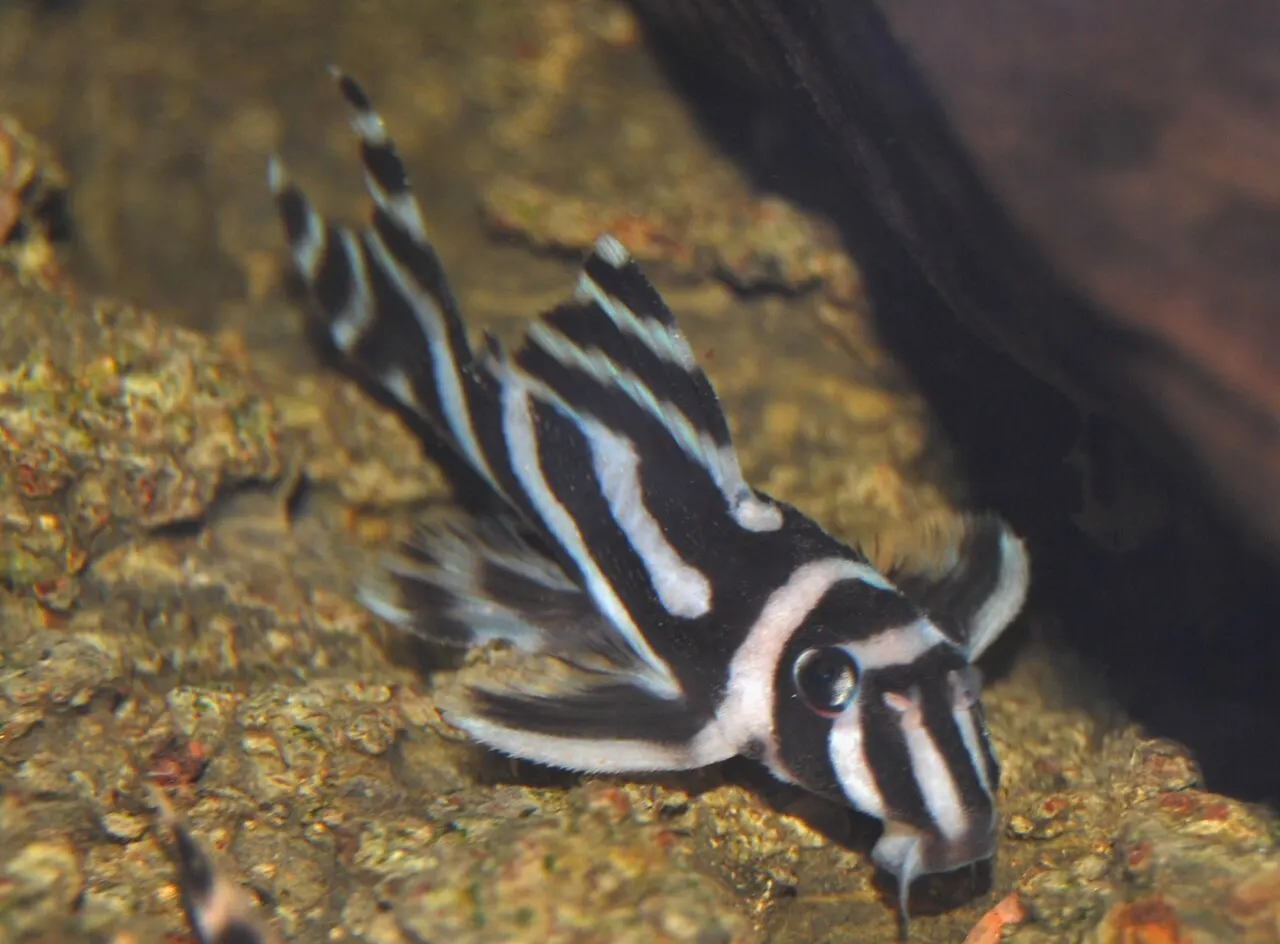
The zebra pleco (Hypancistrus zebra) is a small black-and-white striped armoured catfish found only in the Rio Xingu in Brazil. It grows to about 6 cm and is prized by aquarists. The IUCN rated it Critically Endangered in 2022, with dams and large-scale collecting as the listed threats.
How to recognise it
The zebra pleco is a suckermouth armoured catfish in the family Loricariidae. It is small, reaching about 6.4 cm in standard length, and its black and white stripes give it the name. Mature males have a broader head and longer cheek spines than females. It was formally described in 1991 and carries two aquarium trade codes, L046 and L098, unlike most plecos, which have one.
Where it lives
Its natural range is a short stretch of the Rio Xingu in Brazil, in the river's big bend (the Volta Grande) downstream of the town of Altamira in Pará state. A 2025 study in Neotropical Ichthyology put the range at about 150 km of river.
In the wild it lives in crevices in large rocks in shallow water, where the current is low to moderate, according to that study.
Pins are Wikidata “endemic to” fields. Orange dots, when present, are GBIF occurrence tiles — survey bias included.
How it lives
Aquarium sources describe it as a small predator that eats mostly insect larvae and other small invertebrates. Like other Hypancistrus, the male reportedly draws a female into a cave, where she lays eggs. The male then guards them until they hatch.
Aquarists have bred it in captivity, but fish are still costly because they can only be produced in small numbers.
Why it is in trouble
The IUCN lists large dams and large-scale harvesting, with pets and display animals as the recorded use, as the two threats. The Belo Monte dam, inaugurated in 2016, drastically cut dry-season flow through the Volta Grande, according to the 2025 study. It also cites the 2024 drought, one of the most severe on record, which lowered the river further.
Fish were first exported from Brazil in 1987. Brazil added the species to its list of endangered fauna in 2004 and banned export, but the ban only applies inside Brazil, and smuggling reportedly continues, mostly towards Colombia. The IUCN assessment records a decreasing population trend.
What is being done
The IUCN lists captive breeding and benign introduction as conservation actions for the species. Captive breeding of the zebra pleco has already supplied part of the aquarium market. The 2025 study calls the species highly vulnerable and morphologically distinct from its close relatives in the river.
Sources
Written for this catalog in our own words from the sources below, checked against them on 12 November 2026. Population figures are estimates and carry the year they were made. Status and assessment year: IUCN. 2026. The IUCN Red List of Threatened Species. Version 2026-1. iucnredlist.org.




