Critically Endangered
Yellow-headed temple turtle
Heosemys annandalii
The yellow-headed temple turtle (Heosemys annandalii) is a large freshwater turtle of mainland Southeast Asia, often seen in temple ponds. The IUCN Red List rates it Critically Endangered (2021 assessment) and its wild numbers are still falling, mainly because adults are collected for food and wetlands are drained.
How to recognise it
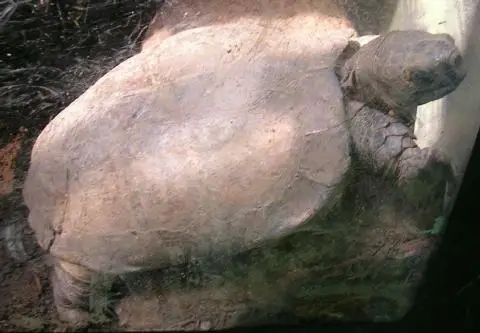
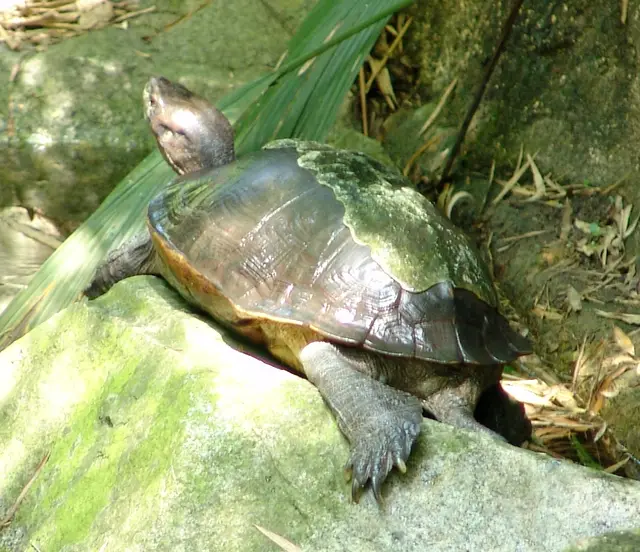
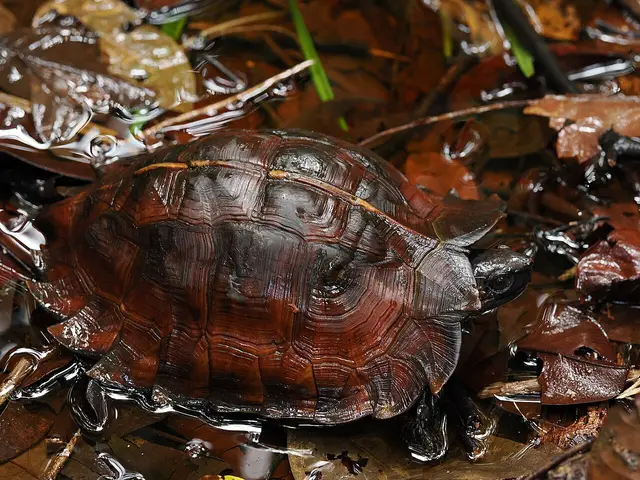
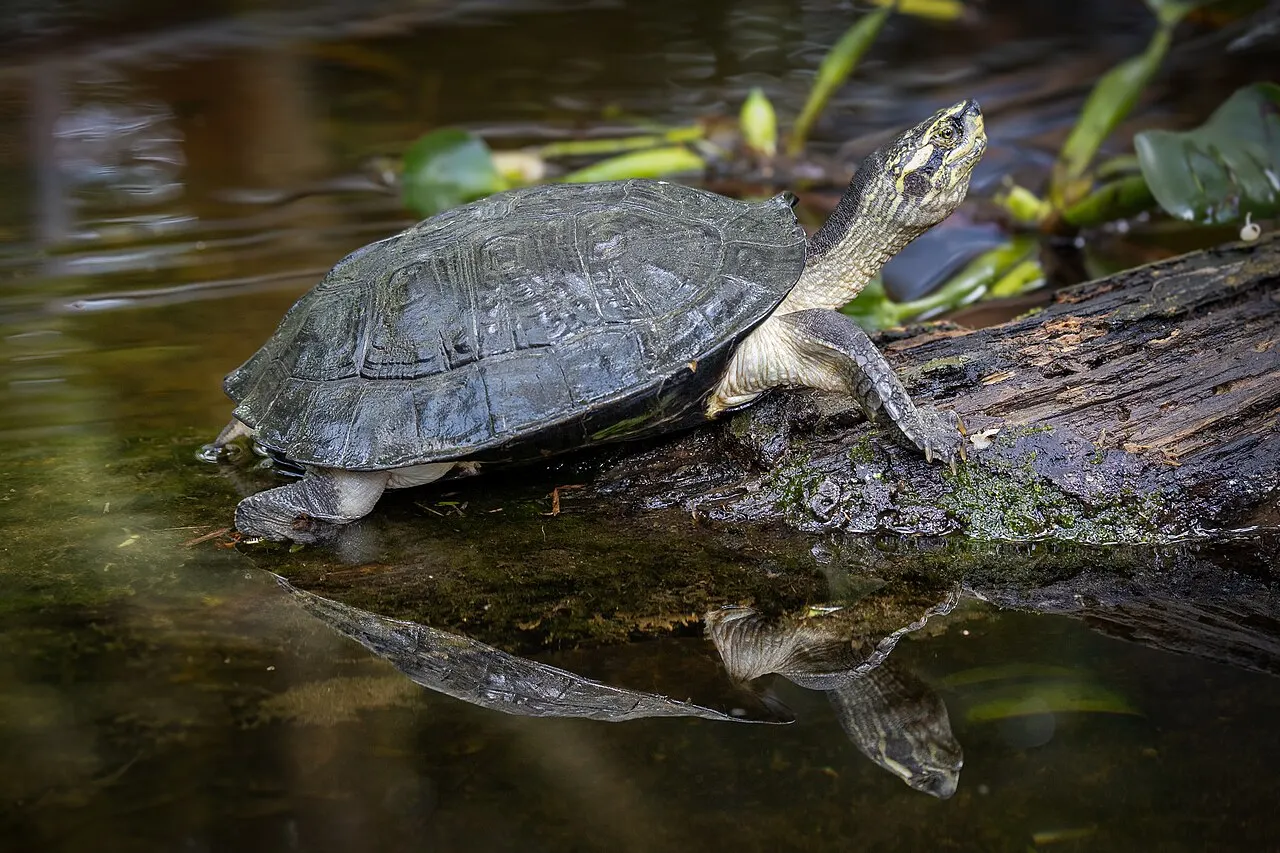
This is a big turtle. Shells can reach about 50 cm in straight length, and the carapace is dark grey, strongly domed and fairly smooth. The underside is yellow or orange with black blotches.
The head gives it away. The forehead, jaws and neck are yellow with darker bands, and the upper jaw has two sharp points that make a zig-zag edge. The feet are large and strongly webbed, which suits a turtle that spends most of its time in water.
Where it lives
The Red List records it as present in Cambodia, Thailand, Viet Nam, Laos and Malaysia, and lists Myanmar as uncertain. Its range is patchy rather than continuous. It lives in slow rivers, canals, ponds, swamp forest, marshes and flooded fields, including seasonally flooded farmland.
Cambodia's Tonlé Sap is considered the most important area for the species. The lake swells from roughly 2,500 square kilometres to around 16,000 in the wet season, and the flooded forest along its margins gives the turtles room to live and feed. How the population there has fared over the last decade is unclear.
Pins are Wikidata “endemic to” fields. Orange dots, when present, are GBIF occurrence tiles — survey bias included.
How it lives
It eats almost entirely aquatic plants, with fallen fruit when it can find it. Around Tonlé Sap, turtles are reported to bury themselves in the muddy, seasonally flooded ground in the dry season, sometimes a metre or more down, which helps shield adults from collectors.
The Red List gives a generation length of 37 years, so this is a long-lived animal that breeds slowly. That matters because losing adults is hard to make up.
Why it is in trouble
The main driver is people eating the adults. Collection for local food and commercial export has hit populations across the region, and a survey of Tonlé Sap in 2000 and 2001 by Platt and colleagues documented over-harvesting for export. The Red List also names roads, housing, pesticides and herbicides, and the shifting and alteration of habitat as threats.
Habitat loss does its own damage. In Cambodia, small relict populations in slow rivers and ponds are being lost as wetlands are turned into rice paddy. Young turtles up to about three years old are caught in fish traps, and are either released or kept in village ponds until they are big enough to sell.
The population trend is decreasing. The 2021 assessment used criterion A2cd+4cd, which covers a decline in the past and projected forward, linked here to habitat loss and exploitation.
What is being done
The species is listed in CITES Appendix II, which regulates international trade, and it occurs in at least one protected area. The Red List lists site protection, trade and harvest management, and education and awareness work among actions needed, and records recent awareness programmes as under way.
On Tonlé Sap, Conservation International and WCS, working with Cambodia's Fisheries Administration at freshwater sanctuaries, have found many juveniles and adults, and some projects give villagers incentives to release turtles caught by accident. A captive breeding project runs at the Angkor Centre for Conservation of Biodiversity in Cambodia. Two turtles reportedly hatched at the Columbus Zoo and Aquarium in November 2019.
Sources
Written for this catalog in our own words from the sources below, checked against them on 12 November 2026. Population figures are estimates and carry the year they were made. Status and assessment year: IUCN. 2026. The IUCN Red List of Threatened Species. Version 2026-1. iucnredlist.org.