Critically Endangered
Arakan forest turtle
Heosemys depressa
The Arakan forest turtle (Heosemys depressa) is a dark, semi-terrestrial turtle of the hill forests of western Myanmar and neighbouring Bangladesh. The IUCN Red List rated it Critically Endangered in 2020 because wild numbers keep falling. Once presumed extinct for decades, it has since been found again in a few remote areas.
How to recognise it
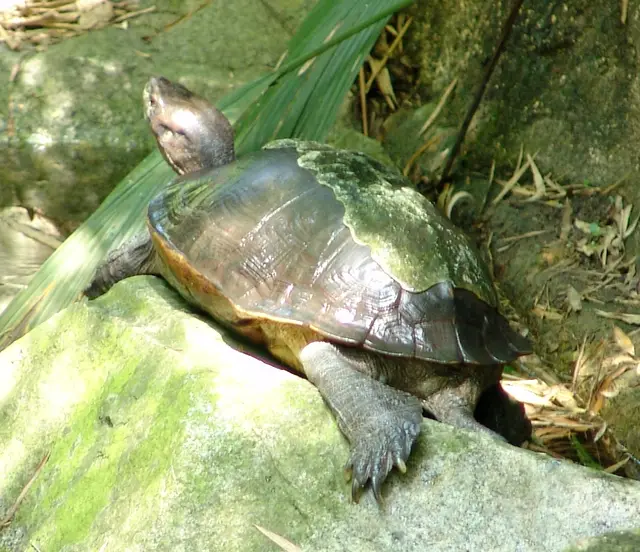
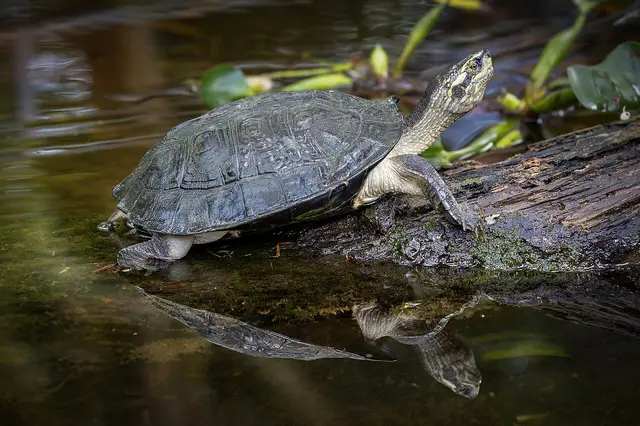
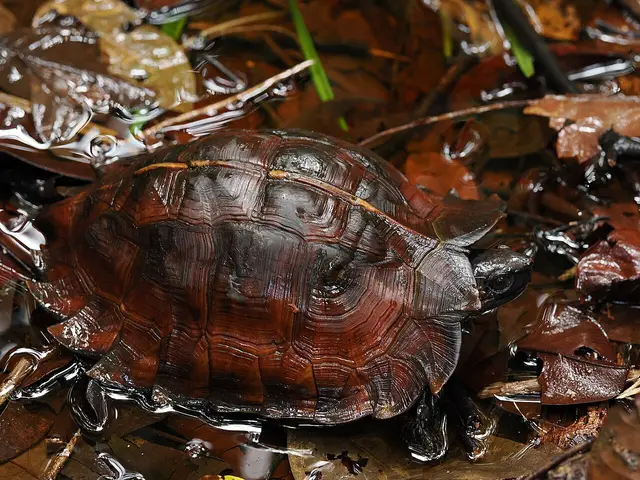
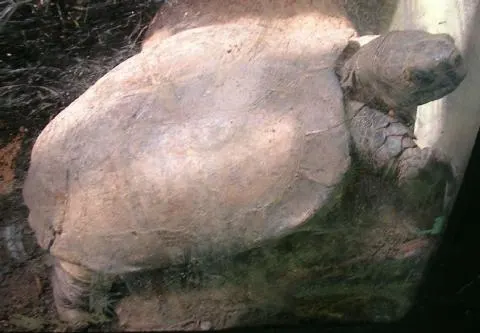
This is a forest turtle, not a pond turtle. Its skin is dark brown and its shell runs from dark brown to tan, a good match for leaf litter. Young animals can look like baby Asian giant tortoises, but the Arakan forest turtle has long, sharp claws suited to scrambling over rough ground.
It is called semi-terrestrial because it can live on land or in water, though adults lean toward land.
Where it lives
The species belongs to the Arakan Hills of Rakhine State in western Myanmar and the Chittagong Hill Tracts across the border in Bangladesh. The Red List assessment records it from lowland moist forest and permanent streams, at elevations up to about 600 metres.
John Anderson described it from an Arakan specimen in 1875. After that it became so hard to find that it was presumed extinct for decades, until one turned up in an Asian food market in 1994. Wild animals were documented in the Rakhine Yoma Elephant Range in Myanmar in 2009, and a citizen science project in 2015 pointed to a population in the Chittagong Hill Tracts.
Pins are Wikidata “endemic to” fields. Orange dots, when present, are GBIF occurrence tiles — survey bias included.
How it lives
Arakan forest turtles are mostly nocturnal. During the heat of the day they burrow under leaves and forest debris, and they become more active in the early wet season. They eat a mixed diet that includes insects, worms, fish and fruit that has dropped to the forest floor.
Local hunters have reported finding eggs in females in June and July. In the Gwa assurance colony, keepers found a clutch of five eggs laid by a captive female in late November, with hatching expected in May or June at the start of the rains. The Turtle Survival Alliance calls captive breeding of this species one of just a handful of such events worldwide.
Why it is in trouble
The Red List assessment names several pressures: people collecting the turtle on purpose, shifting agriculture, more frequent fires, and agro-industry plantations. A generation is about 25 years, so a population that loses adults cannot bounce back quickly.
The Turtle Survival Alliance says animals are taken illegally and moved along the trade route from Mandalay toward China, where pet dealers buy them. The same group attributes more than 80 percent of the decline to habitat loss. Local people also hunt the turtle occasionally, and the species is listed on CITES Appendix II.
What is being done
The Turtle Survival Alliance opened Myanmar's first turtle and tortoise rescue facility, the Turtle Rescue Center at May Myo, in 2012. Confiscated animals are treated and then placed in assurance colonies for breeding. An enclosure at Gwa, in the Rakhine Yoma Elephant Range, was finished in April 2011, and two colonies there produced eight hatchlings in 2023.
In Bangladesh the alliance supports a turtle conservation centre in Bhawal National Park, run with the Creative Conservation Alliance and the Forest Department. As of 2009, Zoo Atlanta was the only institution known to have bred the species outside its range. The turtle occurs in at least one protected area, but the Red List still lists its population as decreasing.
Sources
Written for this catalog in our own words from the sources below, checked against them on 12 November 2026. Population figures are estimates and carry the year they were made. Status and assessment year: IUCN. 2026. The IUCN Red List of Threatened Species. Version 2026-1. iucnredlist.org.