Endangered
Xanthandrus babyssa
Xanthandrus babyssa
Xanthandrus babyssa is a small hoverfly found only on the Portuguese island of Madeira, where it lives in native laurel forest and high heathland. It has no common name. The IUCN Red List classed it as Endangered in 2021 because it occupies about 88 square kilometres, in just five locations.
How to recognise it
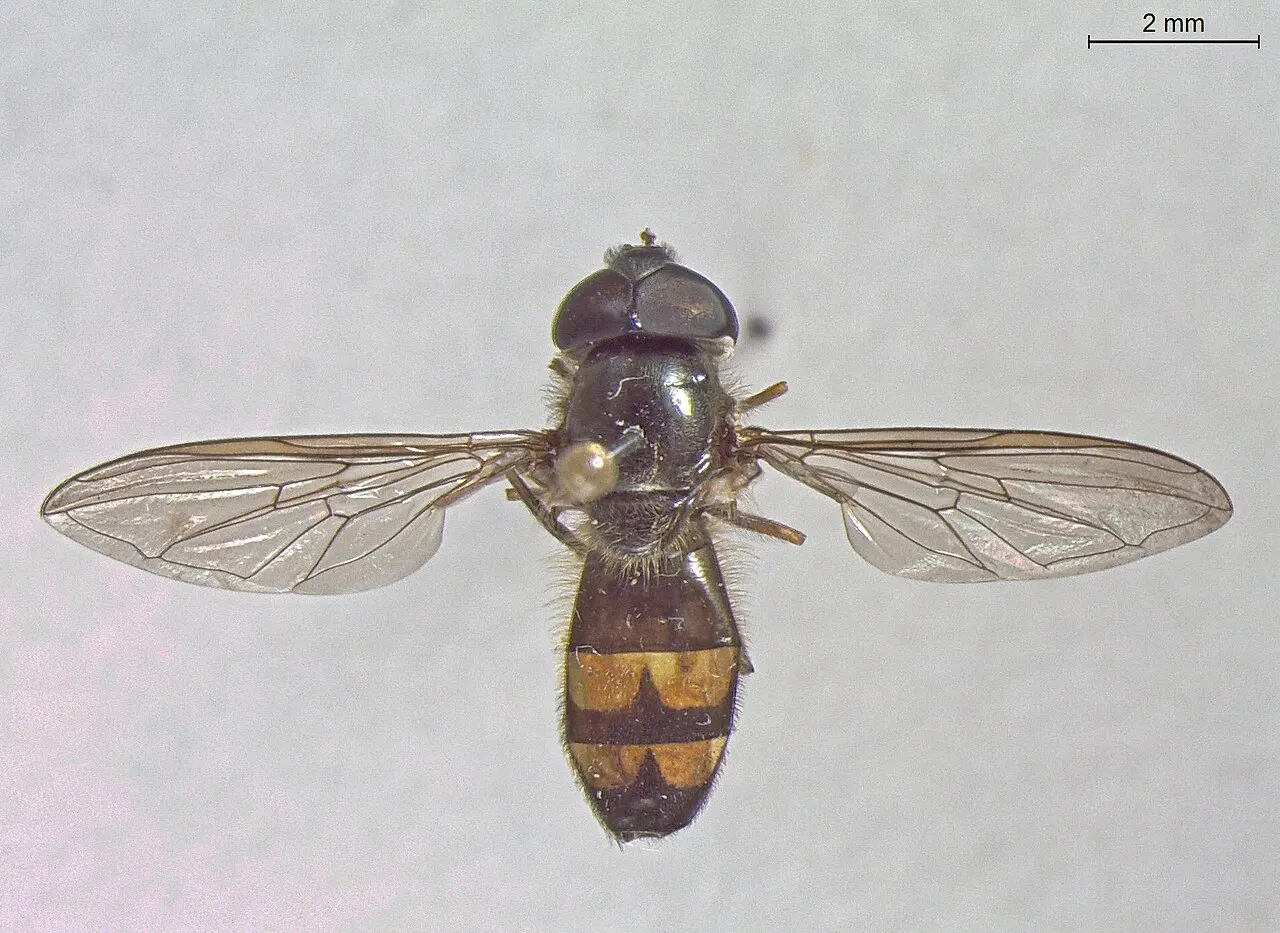
Xanthandrus babyssa is a hoverfly, a member of the family Syrphidae. In a 2022 identification key to the hoverflies of Madeira, it is separated from other species there by an oval abdomen that is clearly broader than the section of the body just behind the head. Males carry broad orange-yellow spots on the third and fourth abdominal segments, and the spots are sometimes joined. Females are mostly black, with either no markings or very small rounded spots.
Xanthandrus azorensis, a different species, is an endemic of the Azores, so the two live on separate island groups.
Where it lives
The fly is endemic to Madeira Island. It is one of just four endemic hoverflies in an archipelago with 26 native species, and it occurs mostly in the native laurel forest (laurisilva) and the heathlands higher up the mountains.
The IUCN gives an elevation range of 50 to 900 metres. It estimates the extent of occurrence at 535 square kilometres, the area occupied at 88 square kilometres, and the number of locations at five. Records in the global biodiversity database GBIF are few, only 17 in total, and nearly all come from Madeira, including several from the Ribeiro Frio nature park. The oldest dates from 1935.
Pins are Wikidata “endemic to” fields. Orange dots, when present, are GBIF occurrence tiles — survey bias included.
Why it is in trouble
The assessors list tourism and recreation areas, temperature extremes and more frequent or fiercer fires as threats. All of these damage or convert the forest and heath the fly relies on. It is recorded from forest plantations as well as native forest, but the species is tied to a very small part of one island.
Nobody knows whether numbers are rising or falling. The Red List gives the population trend as unknown, though it records a continuing decline in the area the fly occupies. The assessors list life history and ecology, population size, distribution and trends, and taxonomy as topics that still need research.
What is being done
The fly occurs in at least one protected area. No species-specific conservation measures are listed in the 2021 assessment.
The 2022 Madeira hoverfly key was published partly to encourage researchers, decision-makers and the public to take an interest in the island's invertebrates. A better-known distribution would help fill gaps in what is known about where the fly lives and what it needs.
Sources
Written for this catalog in our own words from the sources below, checked against them on 12 November 2026. Population figures are estimates and carry the year they were made. Status and assessment year: IUCN. 2026. The IUCN Red List of Threatened Species. Version 2026-1. iucnredlist.org.




