Critically Endangered
Von der Decken's sifaka
Propithecus deckenii
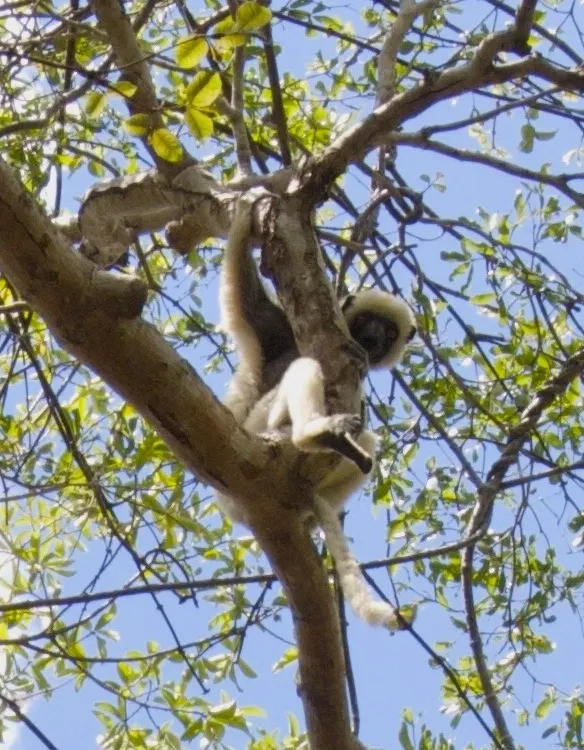
Von der Decken's sifaka (Propithecus deckenii) is a creamy-white lemur that leaps through the dry deciduous forests and limestone spires of western Madagascar. The IUCN's 2020 assessment lists it as Critically Endangered, with a decreasing population hit by forest clearing and hunting.
How to recognise it
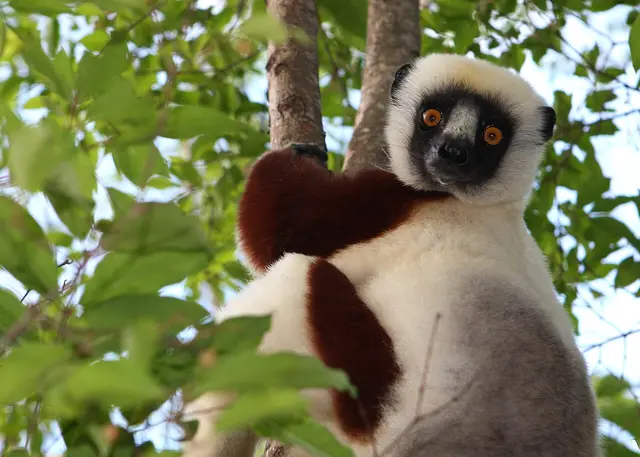
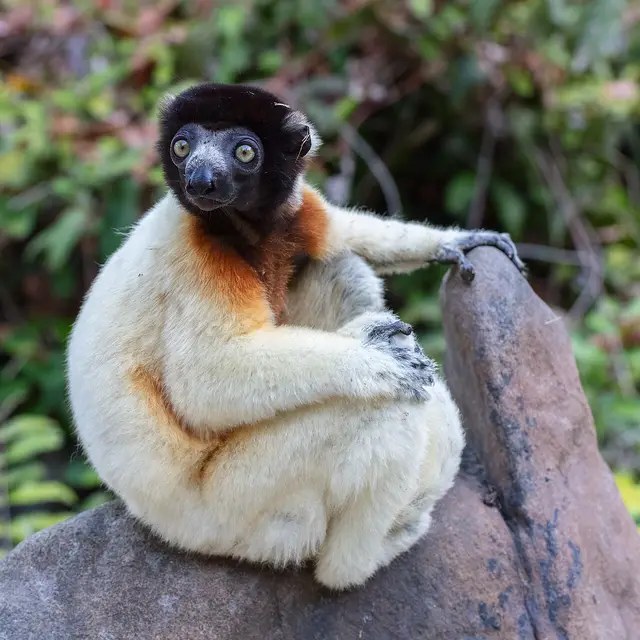
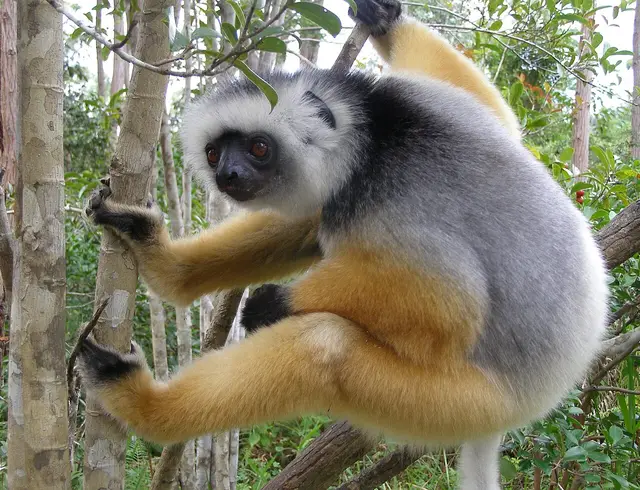
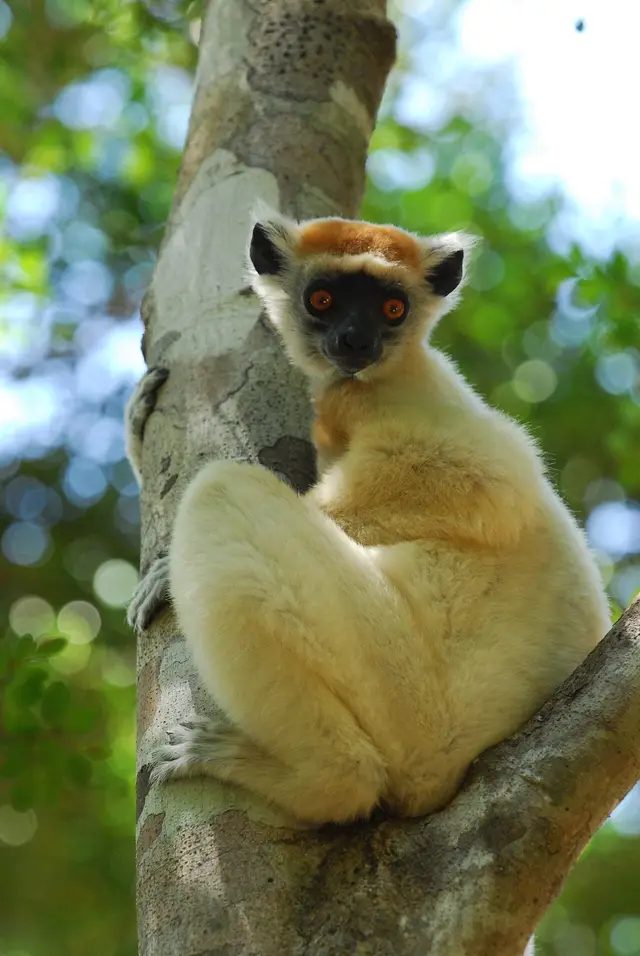
This is one of the smaller sifakas, weighing roughly 3 to 4.5 kg and measuring 90 to 110 cm from nose to tail tip. The coat is usually creamy white with tinges of gold, silver-grey or pale brown on the neck, shoulders and limbs, and the tail is tawny at the base. The face is black with a pale patch on the nose. Some animals are almost entirely black, and how these dark forms relate to the crowned sifaka (Propithecus coronatus) remains unresolved.
It was first treated as a subspecies of Verreaux's sifaka and was raised to full species rank in 1994. The name honours the German explorer Karl Klaus von der Decken.
Where it lives
It's endemic to western Madagascar, with most records west of the Mahavavy River and north of the Manambolo River, in dry deciduous forest and the sharp limestone tsingy country. Records run from sea level up to 1,250 m in the Bongolava massif. The IUCN assessment gives an extent of occurrence of about 60,700 square kilometres, though forest within that area is badly fragmented, and an area of occupancy of about 9,400 square kilometres has been reported.
Population densities reported from surveys vary hugely, from 46 to 309 animals per square kilometre. No range-wide population count exists.
Pins are Wikidata “endemic to” fields. Orange dots, when present, are GBIF occurrence tiles — survey bias included.
How it lives
Sifakas are daytime, tree-living leaf eaters. Groups are small, usually three to six animals, with reports up to ten, and adult females generally lead. The diet widens in the wet season to flowers, buds and fruit and falls back on mature leaves and bark in the dry season, though detailed diet studies of this species are scarce. A very long gut and enlarged caecum, full of fibre-digesting bacteria, deal with the tough food.
They cling to tree trunks and spring from one to the next. This sifaka comes to the ground more than its relatives, partly because of the tsingy terrain, and crosses open ground with a bipedal hopping gait. Females usually bear a single infant. Gestation is given as about 130 to 141 days by one source and about six months by another. The young ride on the mother's back from two to three months and are weaned at about six.
Why it is in trouble
The assessment lists shifting agriculture, small-scale farming and targeted hunting as threats, and it records a continuing decline in the area it occupies. Forest is cleared for crops, charcoal, logging and cattle pasture, and two 2014 surveys reportedly found habitat destruction at every site they checked. The assessment projects a population reduction of 80 percent over the next three generations, with a generation length of about ten years.
Local taboos called fady have protected sifakas in some places, but they have weakened where newcomers have settled. Animals are shot for meat and captured as pets, and the assessment records use for both food and live display.
What is being done
Conservation sites have been identified over its whole range, and it occurs inside protected areas including Tsingy de Bemaraha, Namoroka and Baie de Baly national parks, along with several reserves. It's on CITES Appendix I, which bars international commercial trade. A 2023 report reportedly counted ten animals in registered captive facilities in Madagascar and none outside the country.
Sources
Written for this catalog in our own words from the sources below, checked against them on 12 November 2026. Population figures are estimates and carry the year they were made. Status and assessment year: IUCN. 2026. The IUCN Red List of Threatened Species. Version 2026-1. iucnredlist.org.