Endangered
Annamese langur
Trachypithecus margarita
The Annamese langur (Trachypithecus margarita) is a pale, forest-dwelling monkey of eastern Cambodia, southern Laos and south-central Vietnam. The IUCN Red List classes it as Endangered (2022 assessment). It was long treated as a subspecies of the Indochinese silvered langur before genetic and body-shape studies showed it to be a species of its own.
How to recognise it
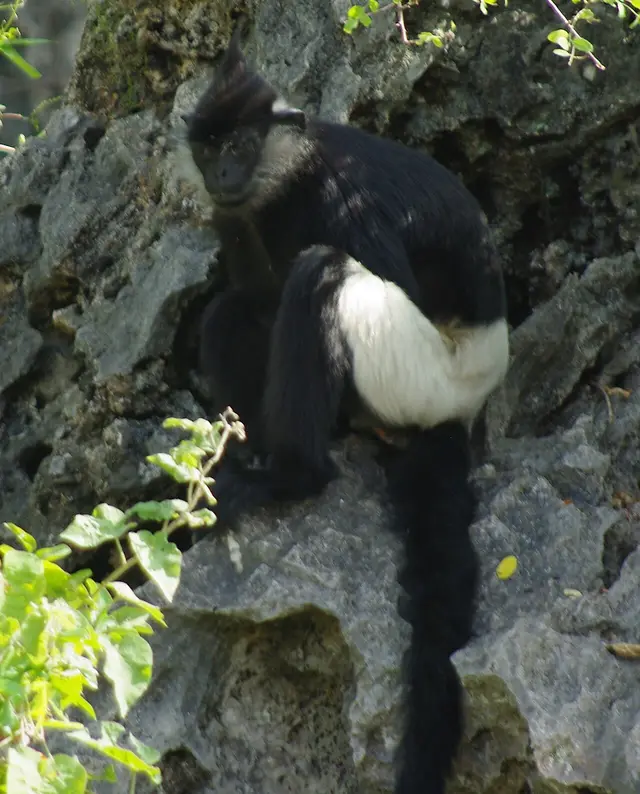
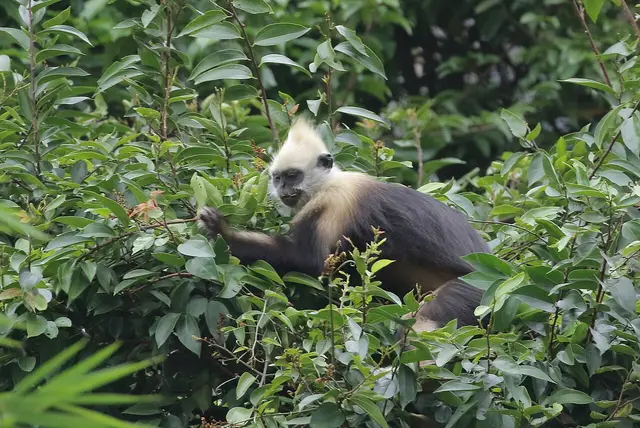
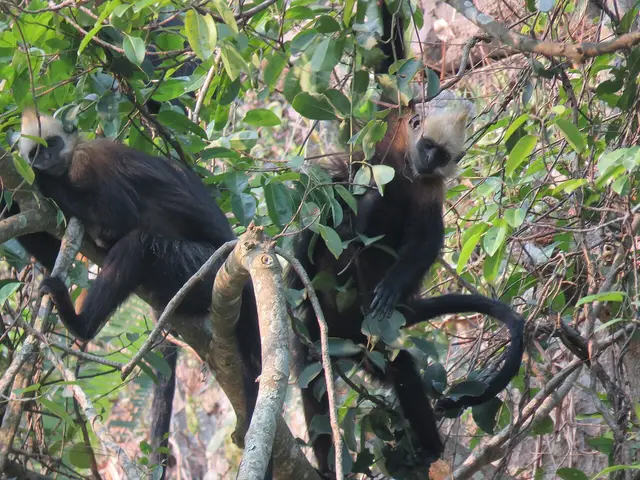
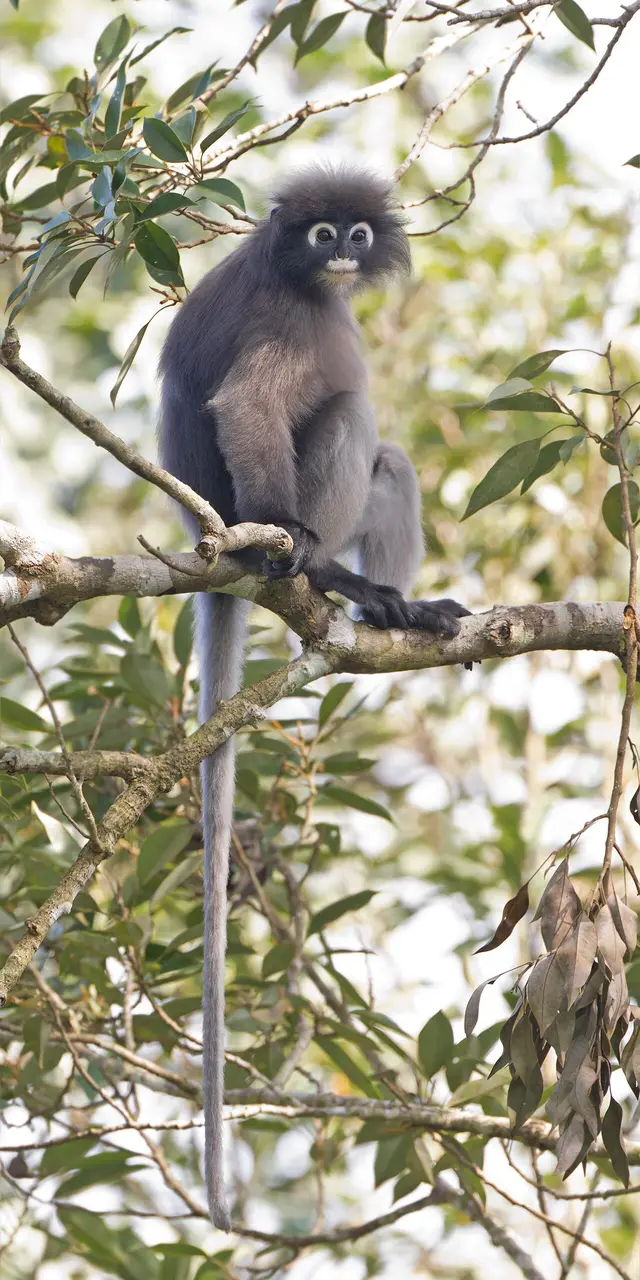
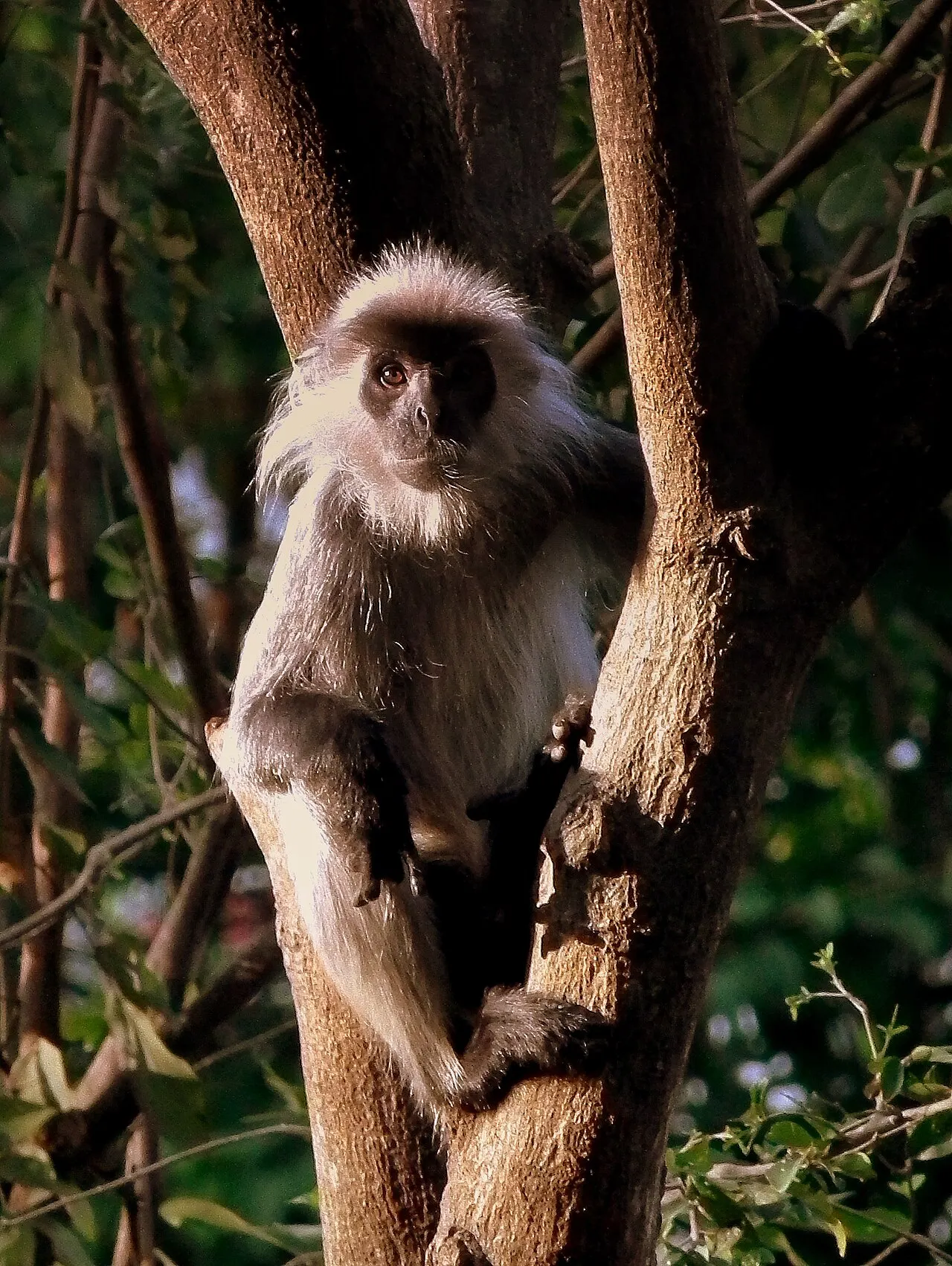
This is a slim, long-tailed monkey with thick pale grey fur, a black forehead and black forearms, hands and feet. The face is grey, with a pale ring around each copper-coloured eye and a tuft of fur standing up like a hat on the crown. Males are generally larger than females.
Babies look nothing like their parents. Newborns are glossy golden-orange with a white face, hands and feet, and the coat changes to the adult pattern over a few months, starting with the head, hands and feet.
Where it lives
The species occurs in eastern Cambodia, including Ratanakiri and Mondulkiri provinces, in southern Laos and in south-central Vietnam. It lives in lowland evergreen and semi-evergreen forest, mixed deciduous forest, and riverside or gallery forest.
Cambodia holds the largest populations and Laos the smallest. Because it was only recently separated from its relatives, the population status and ecology of the species were still described as poorly known in 2019.
Pins are Wikidata “endemic to” fields. Orange dots, when present, are GBIF occurrence tiles — survey bias included.
How it lives
Annamese langurs are mostly leaf and fruit eaters, but two field studies show how flexible their diet can be. At Takou Nature Reserve in Vietnam, a habituated group was followed from October 2009 to September 2011. Immature leaves made up 54.4% of feeding records, mature leaves 7.1% and fruit 29.9%. The group fed on 31 plant species from 20 families, and the mulberry family (which includes figs) accounted for 41.1% of feeding time. The group numbered 18 animals, and the monkeys lived mainly in evergreen forest on the upper slopes of the mountain.
In Veun Sai Siem Pang Conservation Area in northeastern Cambodia, fieldwork from April 2013 to May 2014 followed a group of at least 61 animals with several adult males and females. Seeds made up about 69% of the diet and leaves were a small part of it. The home range reached 256 hectares and was larger in the dry season. In the dry season the group avoided mixed deciduous forest, probably because it offered less canopy cover.
Why it is in trouble
Habitat loss is a major threat, especially in eastern Cambodia and Vietnam's Central Highlands, where land use has changed. Hunting is the other driver. In Laos the remaining habitat is fragmented and under heavy hunting pressure, and in Vietnam demand for langur bones in traditional medicine has probably driven intensive hunting for decades. The pet trade is also listed as a threat.
Logging matters too. The Cambodian study found that logging tracks changed forest structure but not its diversity, while intensive logging affected both. As logging intensified the langurs moved higher in the canopy and abandoned the most heavily logged parts of their range.
What is being done
The species is listed in CITES Appendix II, which controls international trade. It is legally protected in Vietnam, Cambodia and Laos, and groups have been studied inside protected areas such as Takou Nature Reserve and Veun Sai Siem Pang Conservation Area.
Sources
Written for this catalog in our own words from the sources below, checked against them on 12 November 2026. Population figures are estimates and carry the year they were made. Status and assessment year: IUCN. 2026. The IUCN Red List of Threatened Species. Version 2026-1. iucnredlist.org.