Endangered
Indochinese grey langur
Trachypithecus crepusculus
The Indochinese grey langur (Trachypithecus crepusculus) is a slender, long-tailed leaf-eating monkey of the forests of mainland Southeast Asia and southern China. The Red List classed it as Endangered in 2021, with an estimated 2,400 to 2,500 mature animals and a population that is still shrinking.
How to recognise it
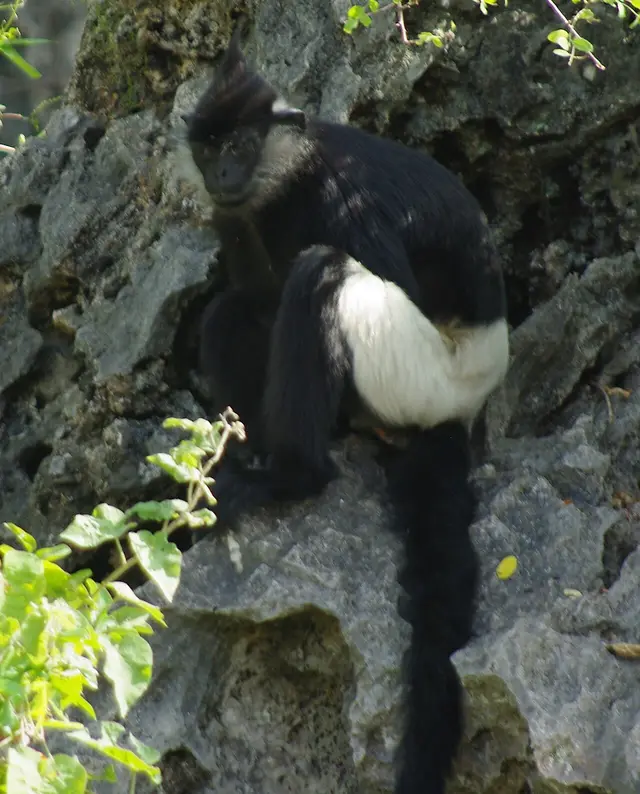
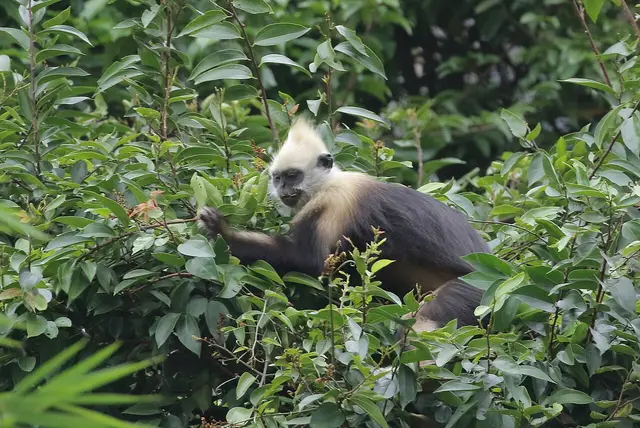
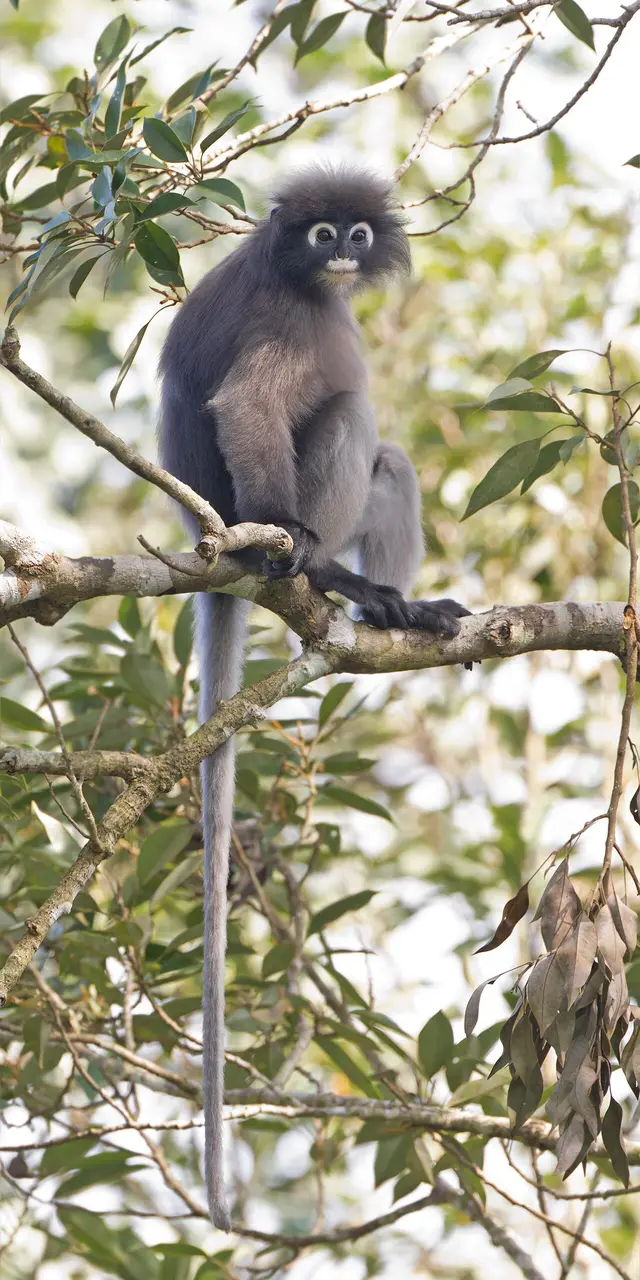
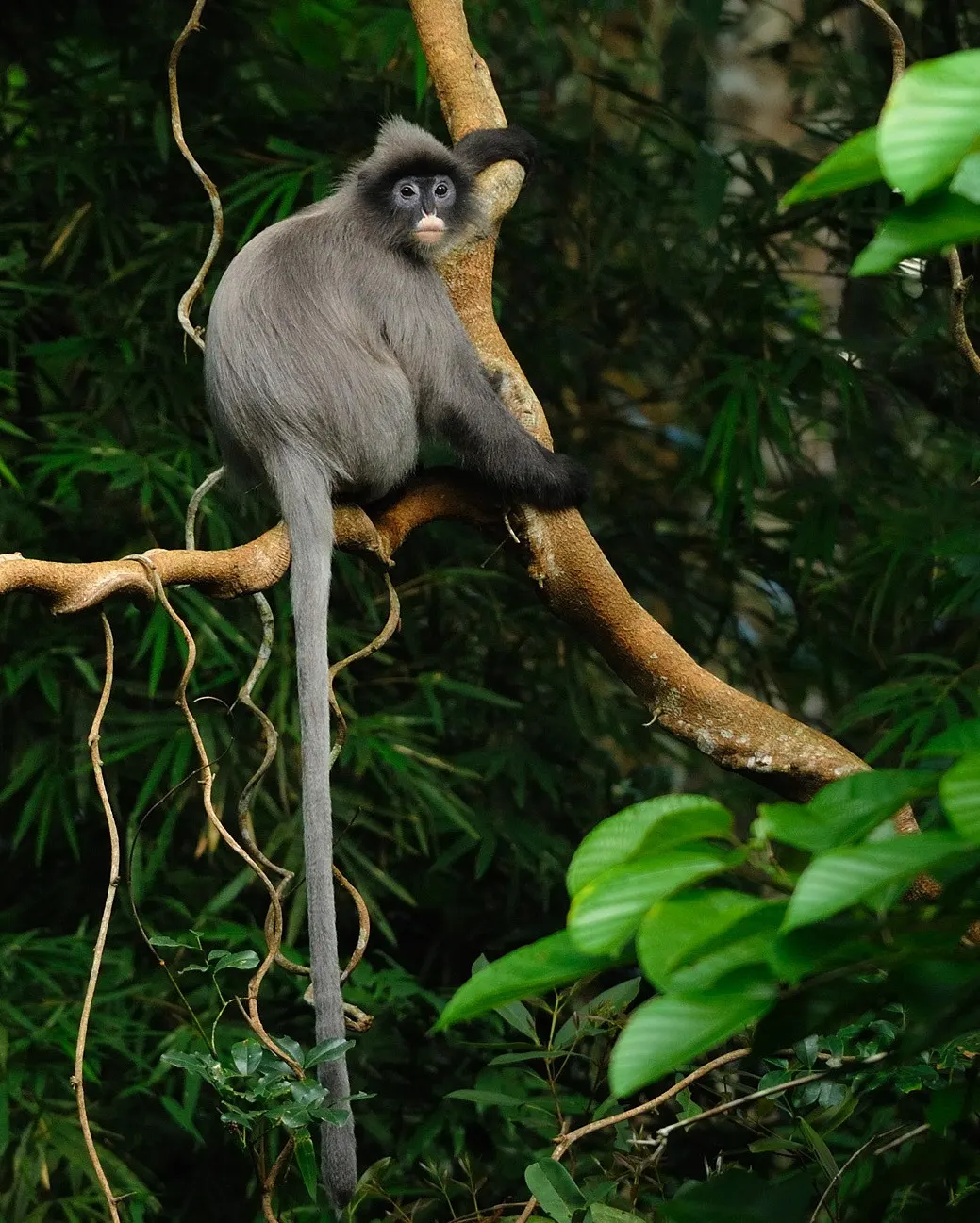
It is a blue-grey to light grey monkey with silver-grey to white underparts, dark grey hands and feet, and pale skin ringing the eyes. Infants are born golden and reach adult colour at about a year old. Males reach about 51 cm in head and body length and 7.1 kg, with females slightly smaller at 49 cm and 6.4 kg. The tail is longer than the body, at roughly 82 to 83 cm.
Elliot described it in 1909, and it was long treated as a form of Phayre's leaf monkey. A 2009 study found it to be a distinct species, and later work suggests it arose from ancient hybridisation between langurs of the obscurus group and the Tenasserim lutung.
Where it lives
The Red List gives its range as Cambodia, China (Yunnan), Laos, Myanmar, Thailand and Vietnam, at about 50 to 1,000 m above sea level. In general terms it runs from northern Thailand east to Vietnam, west to eastern Myanmar, and north into southern China south of the Salween River.
Accounts of its habitat differ. Some describe a monkey of old-growth evergreen forest that lives mostly in trees. Others list evergreen, mixed deciduous, bamboo and limestone forests, and say it will live near plantations. The Red List names moist and dry forest, rocky areas and karst among its habitats.
Pins are Wikidata “endemic to” fields. Orange dots, when present, are GBIF occurrence tiles — survey bias included.
How it lives
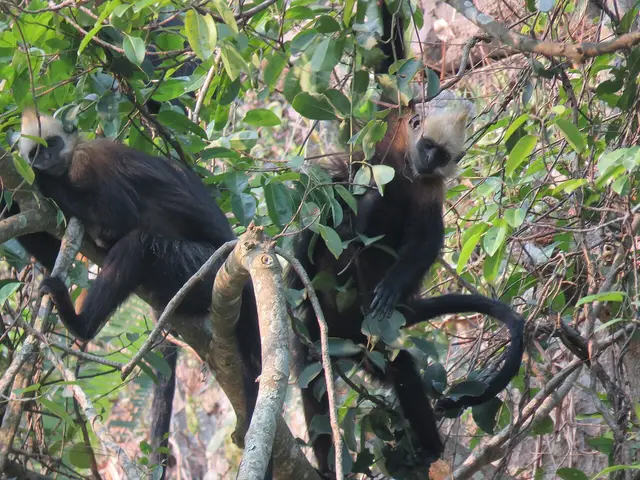
Leaves, especially young ones, make up most of the diet, with figs, bamboo shoots, flowers, seeds and tree gums added. Field studies have recorded 148 plant species eaten. Troops are typically 14 to 30 animals, with one to five adult males and two to 12 adult females, though one source gives groups of up to 20.
Why it is in trouble
The Red List estimates 2,400 to 2,500 mature individuals, and judges the population to have fallen by about 50 percent over three generations (36 years), with the decline continuing. Hunting, with the animal itself the target, is rated as causing rapid declines. Small farms, small plantations and housing cause slower but significant ones. Hunting is thought to be especially heavy in Vietnam and Laos.
The monkey is taken for bushmeat, and its gallstones are used in traditional medicine. Settlements, farmland and pulpwood plantations take its forest.
What is being done
The species occurs in at least one protected area and is covered by CITES Appendix II, which controls international trade. It has the highest level of protection in Vietnam and National Class I status in China. No species-specific recovery plan, systematic monitoring or harvest management plan exists, and none is held in captive breeding programmes. The Red List calls for harvest management, habitat protection, awareness work and captive breeding.
Sources
Written for this catalog in our own words from the sources below, checked against them on 12 November 2026. Population figures are estimates and carry the year they were made. Status and assessment year: IUCN. 2026. The IUCN Red List of Threatened Species. Version 2026-1. iucnredlist.org.