Endangered
Peleng tarsier
Tarsius pelengensis
The Peleng tarsier (Tarsius pelengensis) is a small nocturnal primate found only on Peleng Island and nearby Banggai Island, off eastern Sulawesi in Indonesia. The IUCN assessed it as Endangered in 2020, mainly because of forest clearance and burning for farming.
How to recognise it
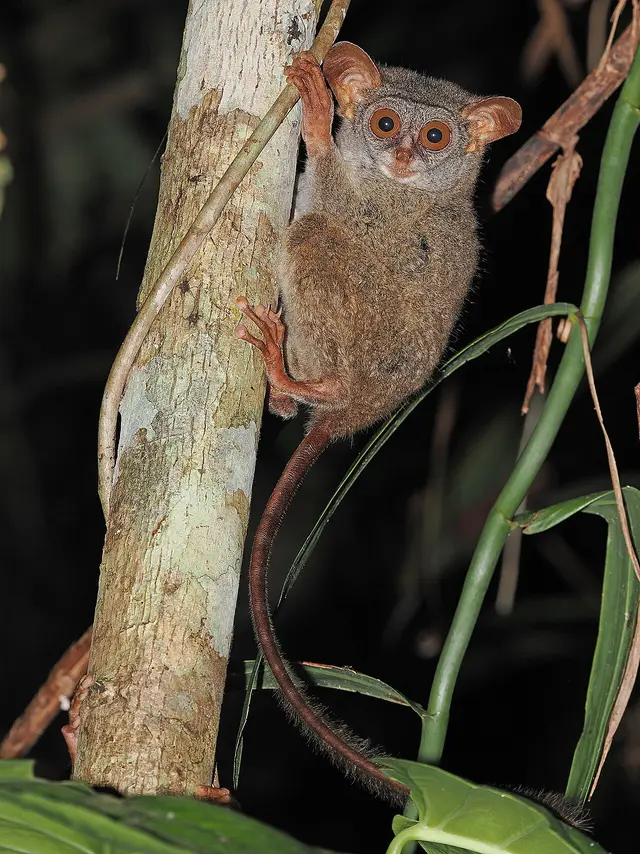
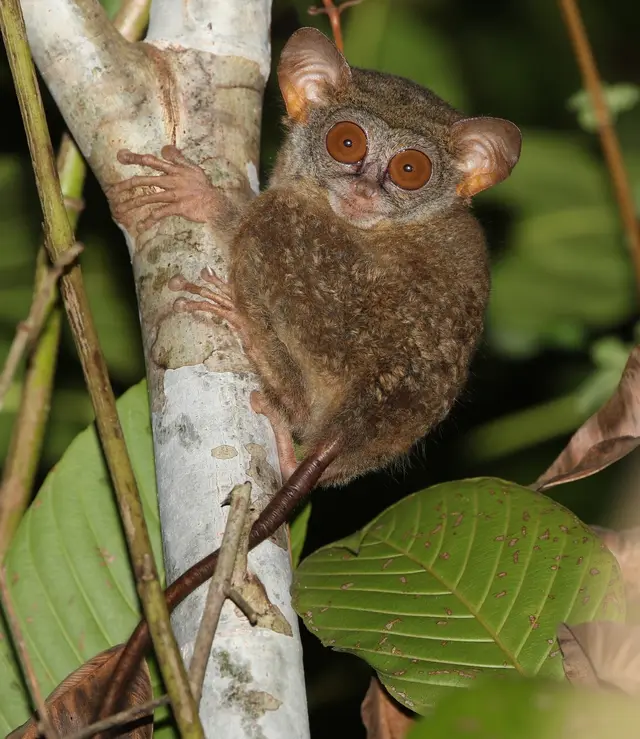
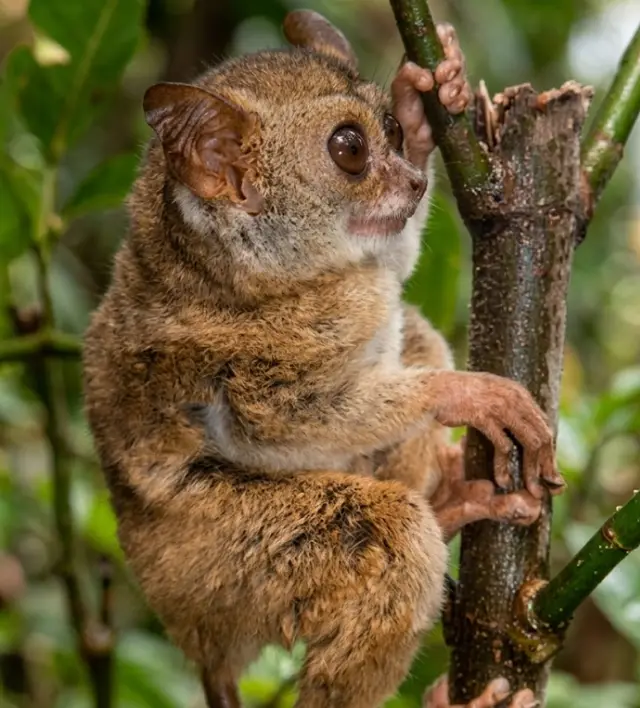
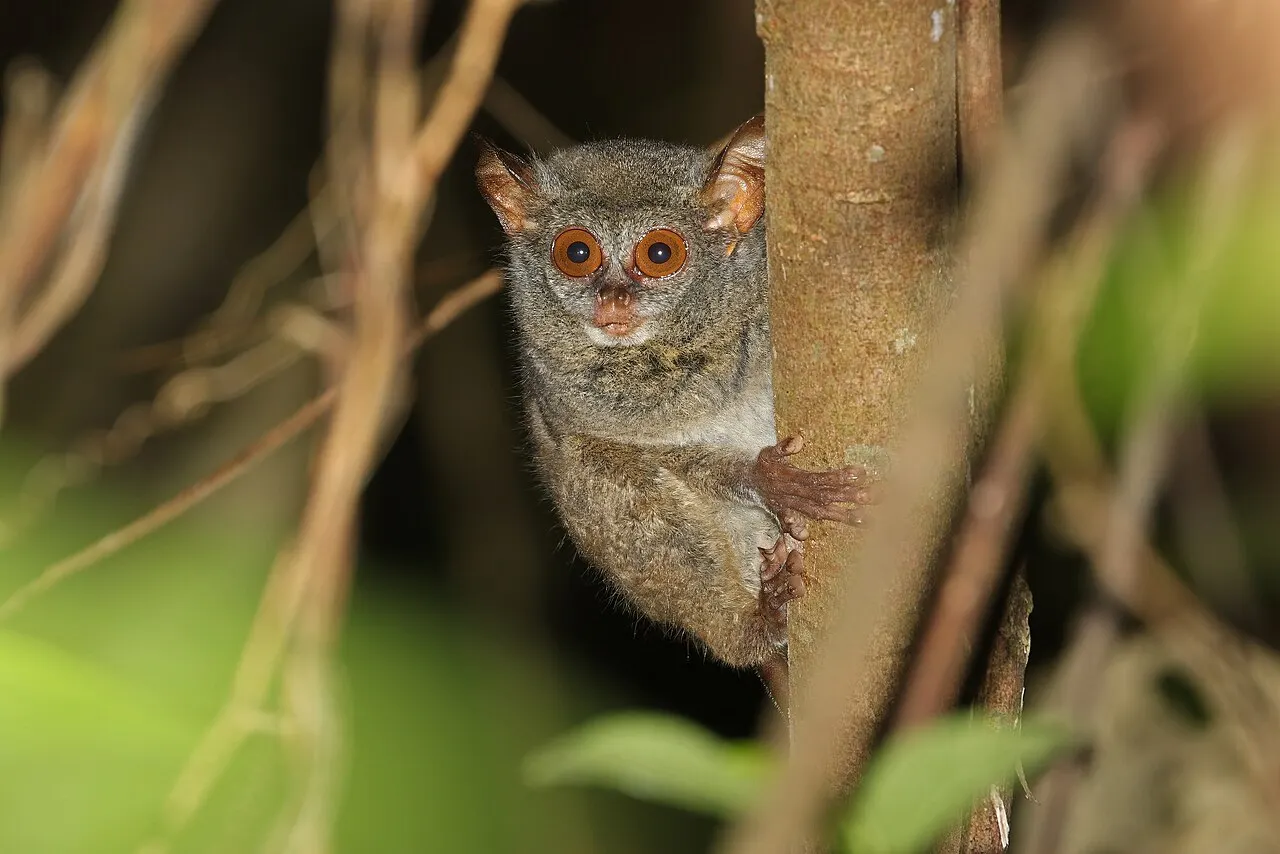
Like other tarsiers, it has large eyes and ears, greyish fur, and long fingers and toes with gripping pads. The body is about 12.5 cm long, and the tail is roughly twice that. Adults weigh about 100 to 140 g, with males slightly larger than females.
Local people call it lakasinding in western Peleng and siling in the east. Henri Sody named it in 1949. Its duet calls closely resemble those of Dian's tarsier, and the two are thought to be close relatives.
Where it lives
The species is endemic to the Banggai island group. A 2023 survey in Scientific Reports, carried out in 2017 and 2018, searched Peleng, Banggai, Labobo and Bangkurung and found tarsiers only on Peleng and Banggai.
The Red List assessment gives an area of occupancy of 1,475 to 1,500 square kilometres, a range split into 4 or 5 locations, and an elevation range of sea level to 520 m. The survey recorded tarsiers up to 937 m, so the true altitude range may be wider.
The assessment lists lowland moist forest and mangrove forest above the high tide line as habitat. The survey also found tarsiers in secondary forest and in village home gardens, and recorded them as more common in secondary than in primary forest.
Pins are Wikidata “endemic to” fields. Orange dots, when present, are GBIF occurrence tiles — survey bias included.
How it lives
Peleng tarsiers sleep through the day in concealed, tangled vegetation a few metres above the ground and hunt at night. They eat insects, spiders and other small arthropods, and also take small vertebrates. Breeding pairs call to each other in duets.
They live in family groups. The survey saw groups of 2 to 7 animals, and up to nine individuals at one sleeping site. Groups used one to three sleeping trees on alternating days. Possible predators include reticulated pythons, lizards, eagles, owls and civets, though no predation was seen.
Why it is in trouble
The Red List assessment records a decreasing population, severe fragmentation, and a continuing decline in habitat area. The threats it names are small-holder farming and shifting agriculture. Primary forest on Peleng has reportedly shrunk to about 9 percent of its original extent after illegal logging and clearance.
Fire is part of the problem. The 2023 survey reported that burning to clear land has damaged habitat and caused temporary local extinctions, though not island-wide loss. It also states that the tarsier is not hunted.
The real numbers are debated. The survey estimated 234 tarsiers per square kilometre on Peleng (a range of about 148 to 371), and about 2,270 animals in its 1,001 hectare study area. Its authors argued the species no longer meets the Endangered criteria and proposed Vulnerable. The IUCN's 2020 assessment remains the current listing.
What is being done
The assessment records that the species occurs in at least one protected area, and lists site protection and site management as actions. It records no species recovery plan and no systematic monitoring scheme.
Villages on Peleng have set up community-conserved areas, including at Kokolomboi/Lemeleme Darat, Komba-komba, Kawalu/Kautu and Batong. The survey found no tarsiers on Labobo or Bangkurung.
Sources
Written for this catalog in our own words from the sources below, checked against them on 12 November 2026. Population figures are estimates and carry the year they were made. Status and assessment year: IUCN. 2026. The IUCN Red List of Threatened Species. Version 2026-1. iucnredlist.org.