Endangered
Niemitz's tarsier
Tarsius niemitzi
Niemitz's tarsier (Tarsius niemitzi) is a palm-sized primate found on the Togian Islands in Tomini Bay, off Sulawesi, Indonesia. It was formally named in 2019. The IUCN listed it as Endangered in 2020, citing a small range and shrinking forest.
How to recognise it
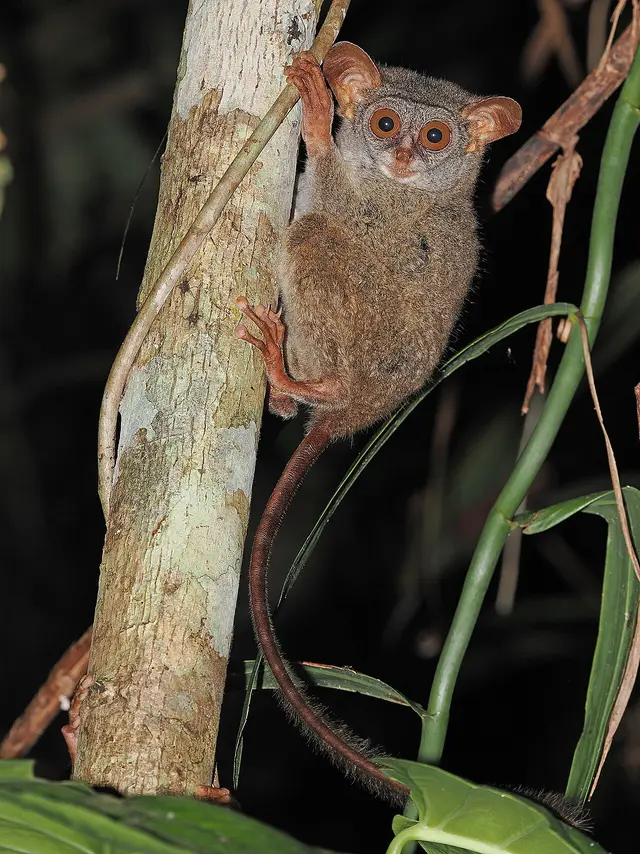
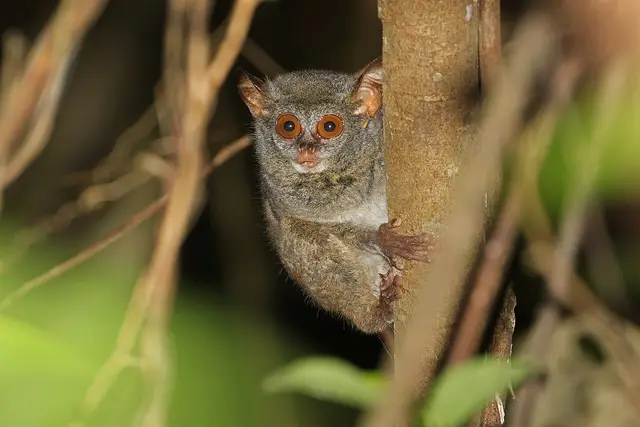
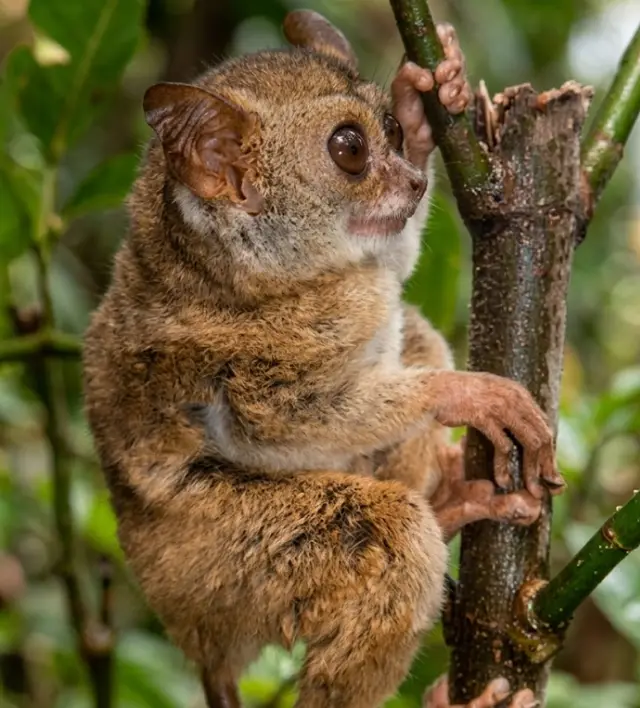
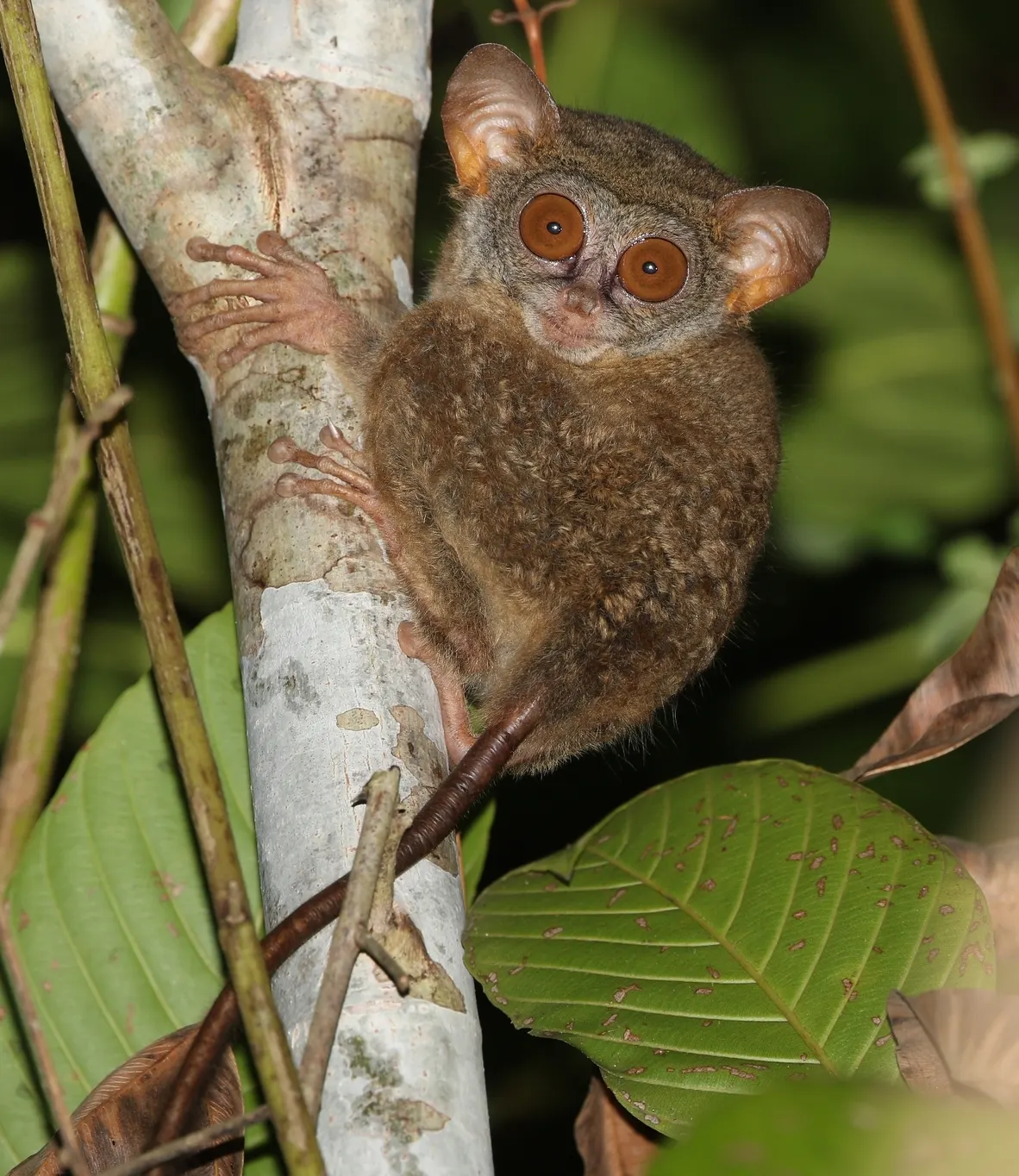
Like all tarsiers, it is a small nocturnal primate with huge eyes and a long, thin tail. This one has darkly pigmented skin, especially on the tail, and fairly dark fur, with dark grey fur on the face that is clearest in adults.
Females weigh about 104 to 110 g and males about 125 to 138 g. Tails run roughly 245 to 261 mm in females and 246 to 258 mm in males. Many tarsiers on small islands have a reduced tuft at the tail tip, but this one keeps a full tuft.
Where it lives
It is found on the Togian Islands, off the coast of Central Sulawesi. Deep water more than 120 metres deep separates the group from the Sulawesi mainland. The IUCN gives its elevation as sea level to about 300 m and counts six locations.
Habitats listed include lowland moist forest, mangrove forest above the high-tide line, rural gardens and heavily degraded former forest, so it can use some altered land.
Pins are Wikidata “endemic to” fields. Orange dots, when present, are GBIF occurrence tiles — survey bias included.
How it lives
Local names include bunsing, tangkasi and podi. Tarsiers on Sulawesi call to each other in duets, and this species has a structurally simple one, possibly the simplest of any known tarsier. In playback experiments it answers the duets of other tarsiers by duetting back.
Why it is in trouble
The IUCN estimates 10,000 to 20,000 animals (2020) in six subpopulations, and says the population is decreasing and severely fragmented. The threats it lists include clearing for small-holder farming, tourism and recreation development, pesticide use and persecution, along with some intentional capture.
Alexandra Nietsch and Carsten Niemitz first reported tarsiers on the islands in 1993. The species was formally described in Primate Conservation in 2019 by Myron Shekelle and colleagues, who suggested an Endangered listing, mainly because the animal is isolated on the Togian Islands by deep water.
What is being done
The IUCN reports no recovery plan, no monitoring scheme and no invasive species control in place, and it is unknown whether any protected area covers the animal. Awareness and communications is the one action it lists. Shekelle has said funding for tarsier conservation is inadequate.
Sources
Written for this catalog in our own words from the sources below, checked against them on 12 November 2026. Population figures are estimates and carry the year they were made. Status and assessment year: IUCN. 2026. The IUCN Red List of Threatened Species. Version 2026-1. iucnredlist.org.