Critically Endangered
Synodontis xiphias
Synodontis xiphias
Synodontis xiphias is a large upside-down catfish known only from the lower Niger River in Nigeria. Albert Günther described it in 1864. The IUCN rated it Critically Endangered in 2020, because it occupies roughly 4 square kilometres at a single location where its habitat is declining.
How to recognise it
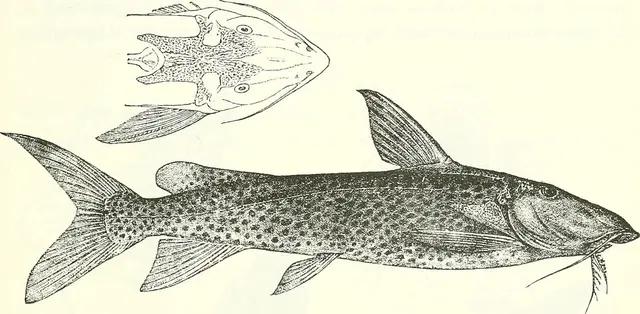
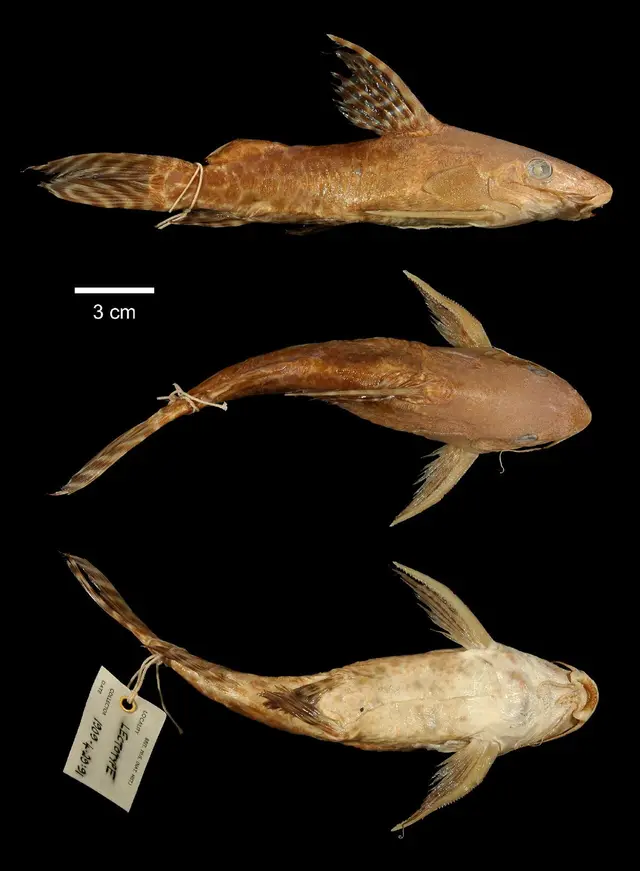
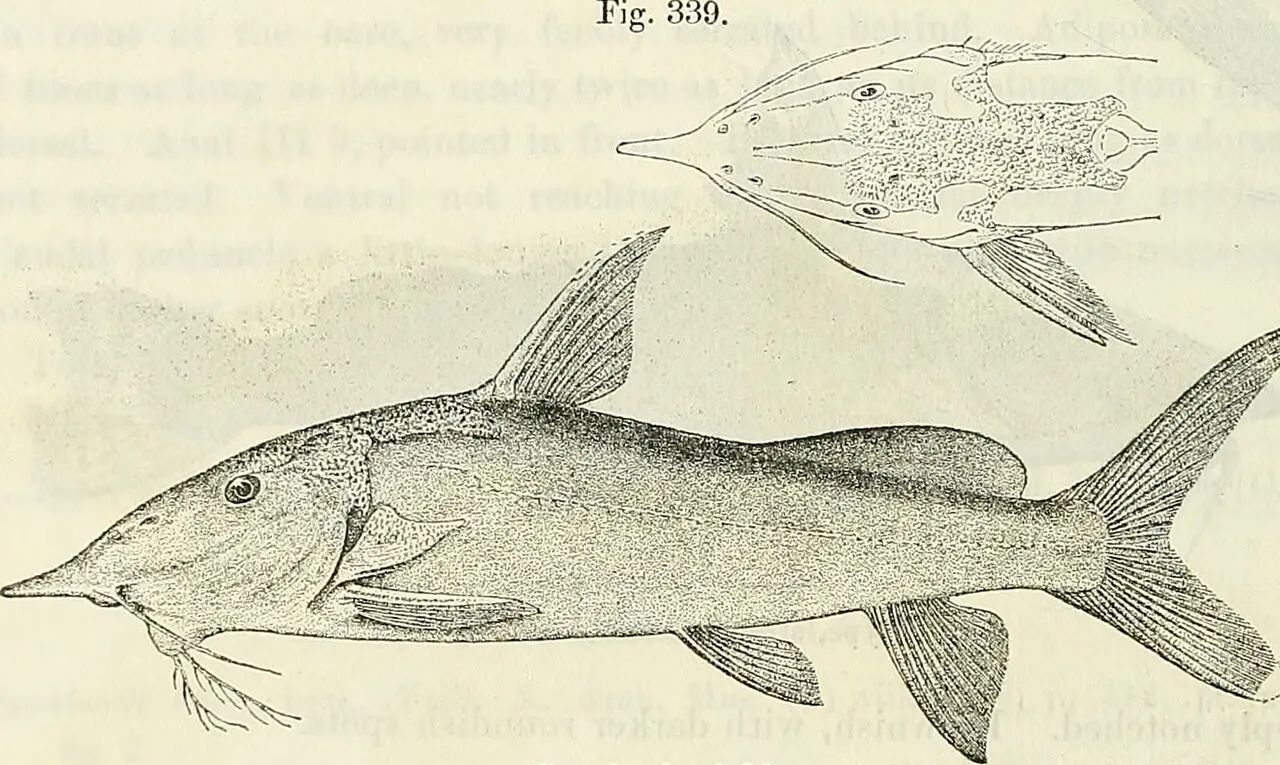
It is brown with small round spots on the sides and the adipose fin, a colour described from preserved specimens. Like other Synodontis, it has a hard bony head capsule that runs back to the dorsal fin spine, and a rough, pointed process on the shoulder, much longer than broad. It has three pairs of barbels, and the lower two pairs have long, slender branches.
The dorsal and pectoral fins carry stiff spines, the tail is deeply notched, and the dorsal fin has seven branched rays. Reported maximum size varies: 67.5 cm by FishBase's standard-length figure, about 70 cm in a hobbyist catalogue, and 80 cm total length as another FishBase maximum.
The species name comes from the Greek for sword. The long snout that inspired it is an artefact of the old stuffed type specimen, whose skin was stretched over a wire frame.
Where it lives
The IUCN assessment records it as endemic to Nigeria and restricted to one location in the lower Niger River, with an area of occupancy of about 4 square kilometres. Its habitat is listed as seasonal freshwater lakes and permanent freshwater marshes and pools. Very little is known beyond the original collection, and even the exact place where the type specimens were taken is uncertain.
Pins are Wikidata “endemic to” fields. Orange dots, when present, are GBIF occurrence tiles — survey bias included.
How it lives
Spawning is thought to happen in the flood season, between July and October, with pairs swimming in unison. Studies of the genus suggest young fish grow fast in their first year, then slow down. FishBase rates the species as having low resilience, with a population doubling time of 4.5 to 14 years. Local people eat it, and the IUCN records subsistence use as human food.
Why it is in trouble
The assessment records an ongoing decline in the area of habitat. The threats it lists, each rated low in impact, are mining and quarrying, housing, commercial and industrial development, and a pressure of unrecorded type. Oil exploration in the Niger Delta is also reported as a danger to its habitat. The population trend is unknown.
The assessment records no conservation actions in place. Research priorities named are threats, life history and ecology, and population size, distribution and trends.
Sources
Written for this catalog in our own words from the sources below, checked against them on 12 November 2026. Population figures are estimates and carry the year they were made. Status and assessment year: IUCN. 2026. The IUCN Red List of Threatened Species. Version 2026-1. iucnredlist.org.