Critically Endangered
Synodontis guttatus
Synodontis guttatus
Synodontis guttatus is a large, spotted upside-down catfish known only from the lower Niger River in Nigeria. The Red List (2020) lists it as Critically Endangered and possibly extinct, because it has apparently not been recorded in the wild since it was described in 1865.
How to recognise it
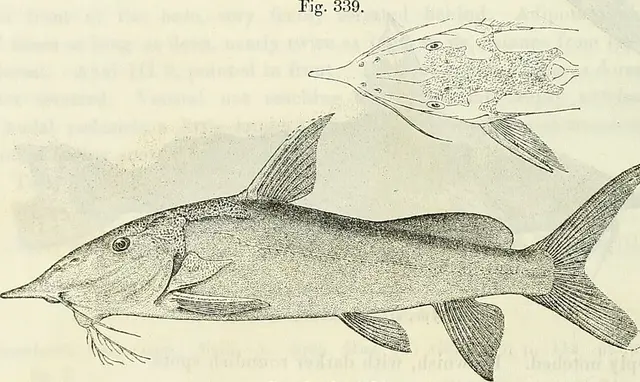
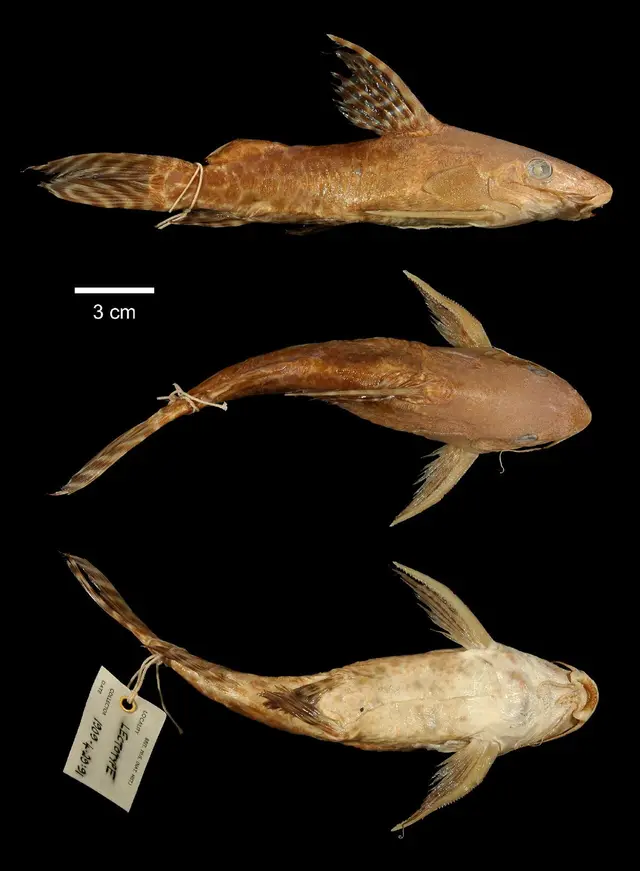
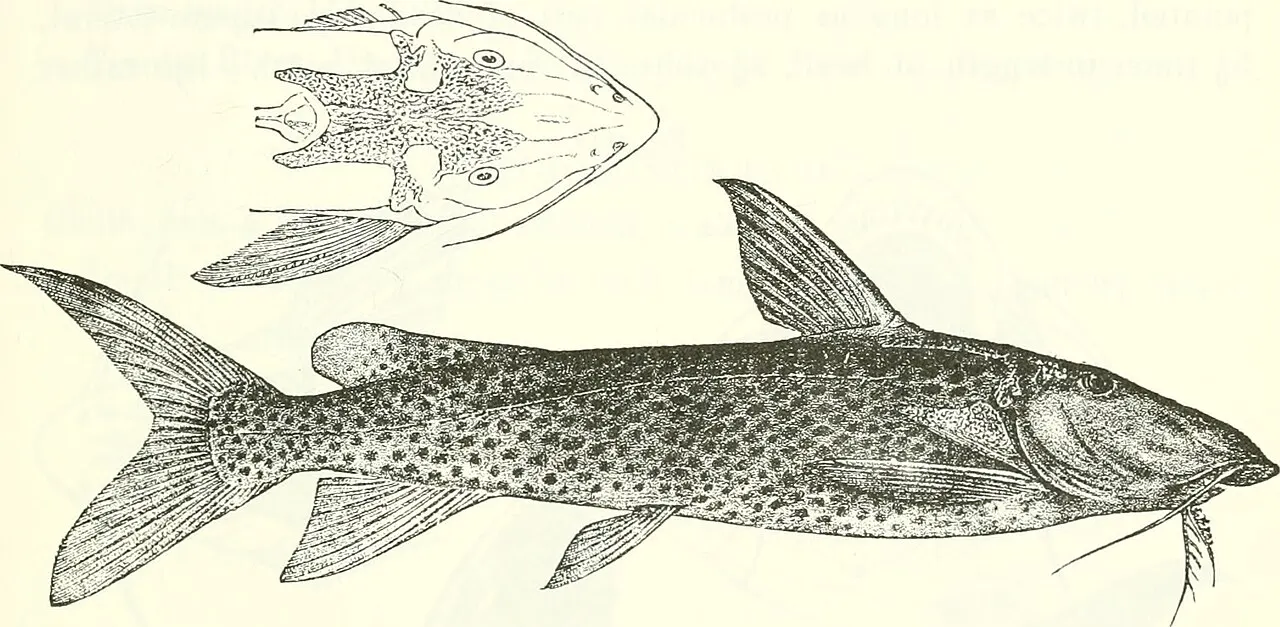
This is a big catfish. Reported maximum lengths run from about 65 to 70 centimetres in total. The body is brown and covered in small, round, dark spots, which gave it the species name guttatus, Latin for spotted. Spots also mark the fins.
The head is protected by a strong, bony capsule that reaches back to the first dorsal fin spine, and the humeral process (a rough, pointed bony projection behind the gill cover) is much longer than it is broad. It has about 30 teeth in the lower jaw, three pairs of barbels and a pointed snout. The small adipose fin sits well back from the dorsal fin, and the tail fin is deeply notched.
Where it lives
Albert Günther described the species in 1865 from the Niger, and only one preserved specimen is known. Some references say Niger basin, but the Red List treats it as known only from the type locality in the Niger Delta region of Nigeria, with an area of occupancy of about 4 square kilometres at a single location.
The habitats listed are permanent freshwater marshes and pools and seasonal freshwater lakes. Little else about its habitat is recorded.
Pins are Wikidata “endemic to” fields. Orange dots, when present, are GBIF occurrence tiles — survey bias included.
How it lives
Very little is known. FishBase describes it as egg-laying, with pairs forming to breed. Spawning is reportedly in the flood season, roughly July to October, and growth is said to be fast in the first year and slower afterwards. The Red List records it as used for human food.
Why it is in trouble
The Red List gives the population trend as unknown but records a continuing decline in habitat area. The threats it lists are mining and quarrying and the growth of housing and urban areas, along with threats of unrecorded type. A hobby summary of the assessment adds oil exploration and agricultural development in the Niger Delta, and one encyclopedia entry mentions pollution.
With one tiny known site and no recent records, it is unclear whether any population remains. A targeted survey of the Niger Delta is the only way to find out.
What is being done
No conservation action is recorded for it, and no captive population is listed.
Sources
Written for this catalog in our own words from the sources below, checked against them on 12 November 2026. Population figures are estimates and carry the year they were made. Status and assessment year: IUCN. 2026. The IUCN Red List of Threatened Species. Version 2026-1. iucnredlist.org.