Endangered
Sudeten Ringlet
Erebia sudetica
The Sudeten ringlet (Erebia sudetica) is a mountain butterfly with a band of red spots across its wings. It lives in scattered grasslands near the tree line in the Alps, the Massif Central, the Sudetes and the Carpathians. The IUCN Red List rated it Endangered in 2025, as its occupied area shrinks and fragments.
How to recognise it
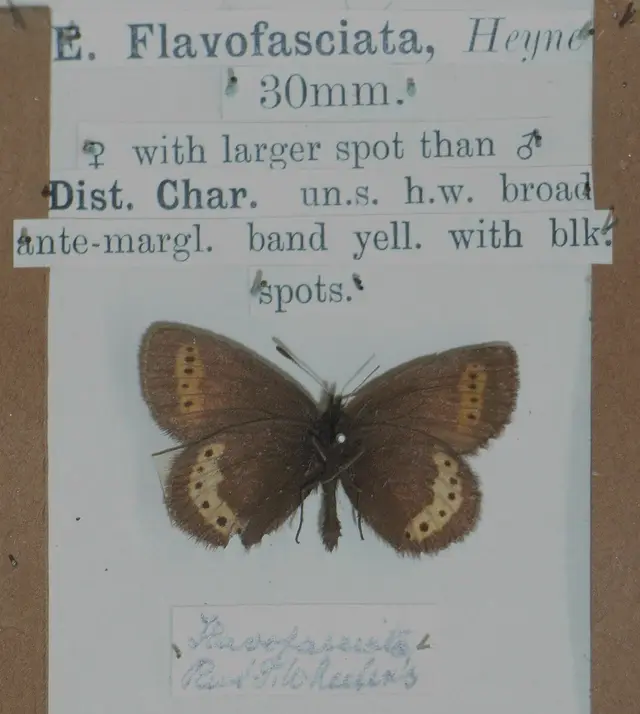
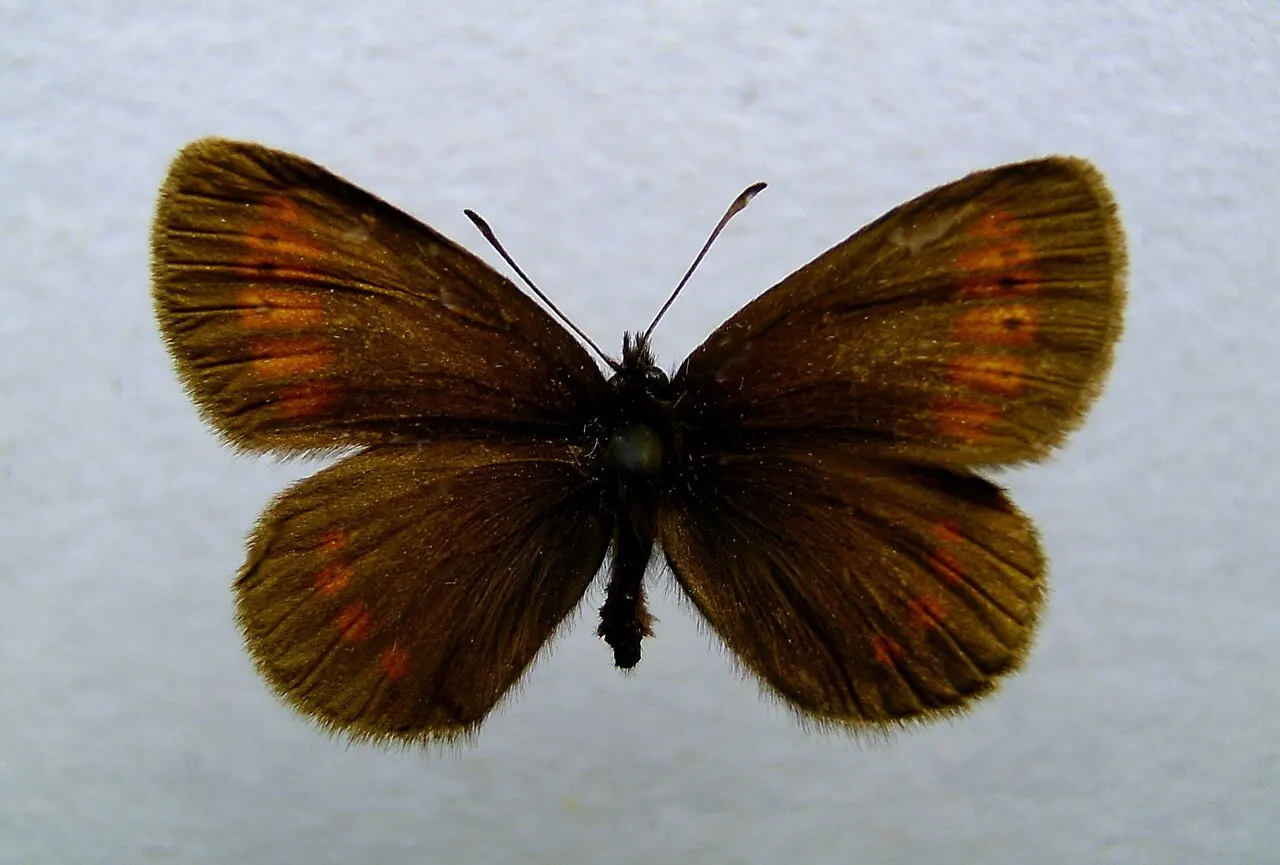
The upper side of the forewing carries a red band of spots. In the typical form the band has four or five red marks in a regular row, most with a tiny black dot, and the underside of the hindwing shows six conspicuously regular spots. The French Cantal form is less bright, with the upper band cut to about four marks. The black centres are weak, and females are slightly better marked than males.
It looks very much like the Mountain Ringlet (Erebia epiphron) and, less so, the Lesser Mountain Ringlet (Erebia melampus). The species was described by Otto Staudinger in 1861, and the IUCN lists an older arrangement, a subspecies of E. melampus, among its synonyms.
Where it lives
The IUCN gives its range as Czechia, Poland, Romania, Ukraine, France and Switzerland. It occurs in isolated mountain blocks rather than a continuous belt. In France it is found at a few separate places in Savoie, Isère and the Cantal, where an observer recorded it at 1,650 to 1,850 m. Across its whole range the Red List gives an elevation of 800 to 2,500 m.
The assessment puts its area of occupancy at about 420 square kilometres, inside a far larger extent of occurrence of roughly 538,557 square kilometres, and describes the population as severely fragmented.
Pins are Wikidata “endemic to” fields. Orange dots, when present, are GBIF occurrence tiles — survey bias included.
How it lives
It favours alpine and subalpine grassland, especially near the tree line. It is most numerous in damp meadows with tall grasses and flowers, though it also breeds on dry grassland. Sweet vernal grass is probably the most important caterpillar food, with other grasses such as annual meadow-grass also used.
There is one generation a year, and the species overwinters as a caterpillar. In the Czech mountains, a 2021 study in PeerJ found that low winter precipitation, meaning thin snow cover over the overwintering larvae, lowered the next summer's numbers. Warmer autumns and warm, dry springs raised them. In France, adults have been seen in mid-July, settling deep in the grass in high winds.
Why it is in trouble
The Red List says the species is declining and that its area of occupancy is still shrinking. The threats it records are changes in how mountain land is used, including agricultural grazing and farming, and a wider shift and alteration of habitat.
The picture is not the same everywhere. The 2021 Czech study reported that populations of two Erebia butterflies in the Jeseníky and Krkonoše mountains were stable or even increasing over the monitoring period, while warning that suitable habitat will depend on how mountain grassland is managed.
What is being done
The species is covered by international legislation and occurs in at least one protected area. The IUCN lists site and area management, habitat protection and awareness raising among the actions needed. Czech researchers published a management methodology in 2021, built on climate and vegetation models of its past, present and future range, which describes it as a specialised subalpine butterfly protected under the EU Habitats Directive.
Sources
Written for this catalog in our own words from the sources below, checked against them on 12 November 2026. Population figures are estimates and carry the year they were made. Status and assessment year: IUCN. 2026. The IUCN Red List of Threatened Species. Version 2026-1. iucnredlist.org.
- IUCN Red List assessment, Erebia sudetica (2025)
- Butterflies of France, Erebia sudetica
- Butterflies of Europe (Naturalis), Erebia sudetica
- Konvicka et al. 2021, PeerJ, winter precipitation and mountain butterflies
- Konvicka et al. 2021, Okac mensi (Erebia sudetica) v case globalni zmeny, methodology
- Sudeten ringlet (encyclopedia article)