Critically Endangered
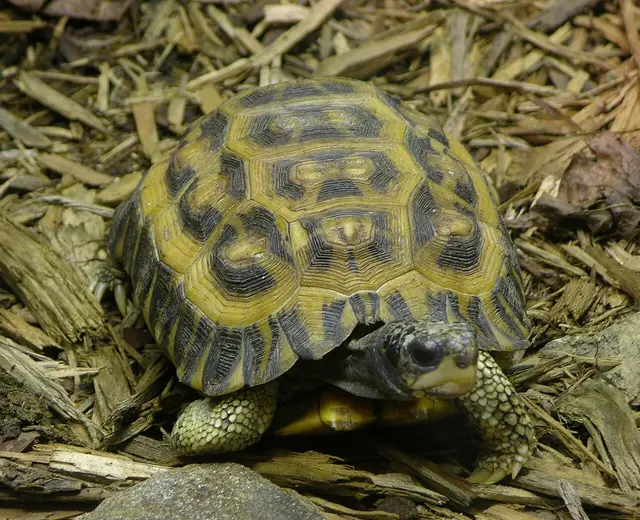
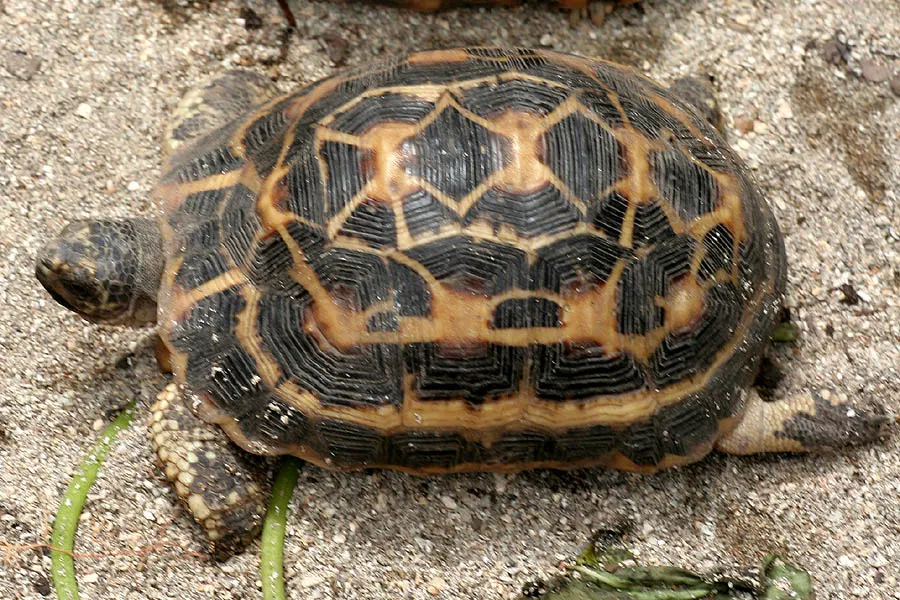
Spider tortoise
Pyxis arachnoides
The spider tortoise (Pyxis arachnoides) is a small tortoise found only in the dry forest and scrub of southern and south-western Madagascar. The IUCN Red List rated it Critically Endangered in 2020, with a decreasing population. Collection for the pet and food trades, habitat loss and fire all threaten it.
Where it lives
This tortoise is endemic to Madagascar. It lives in a narrow strip of dry forest and dry shrubland in the south-west, including sandy coastal areas with spiny vegetation. Those two dry habitats are the only ones listed in its IUCN assessment.
Three forms are usually recognised: the common (Pyxis arachnoides arachnoides), northern (brygooi) and southern (oblonga) spider tortoises. Researchers still debate whether they are true subspecies, distinct lineages or simply local populations, and a whole-genome sequencing project across the range is testing how they are related.
Pins are Wikidata “endemic to” fields. Orange dots, when present, are GBIF occurrence tiles — survey bias included.
How it lives
Little is known about its life cycle. It reportedly eats young leaves and insect larvae, and also feeds on the droppings of larger animals. Mating is said to begin when the wet season ends dormancy.
Reproduction is slow. A female reportedly lays a single egg at a time, and incubation takes roughly 220 to 250 days. Lifespan is put at up to 70 years, an estimate rather than a measured figure.
Why it is in trouble
The IUCN lists pet and food use among the pressures on this tortoise, along with an increase in fire frequency and large-scale accidental harvest. The Turtle Survival Alliance says its habitat has shrunk by more than 70 percent. Illegal trade continues, and in 2011 Malagasy police reportedly seized a shipment bound for Indonesia.
A 2012 survey by Ryan Walker and Thomas Rafeliarisoa, published in Oryx, estimated that the range had shrunk by about 71 percent in recent years. Eight fragmented populations remained, and the total was put at about 665,000 tortoises (95 percent confidence interval 492,680 to 897,550). The survey suggested the current population may be under 30 percent of the historical one.
What is being done
The species is on CITES Appendix I, which covers international trade. The IUCN assessment records that it occurs in at least one protected area and is subject to ex-situ conservation. It lists actions including harvest and trade management, site protection and management, education and training, and livelihood alternatives for local people.
The Oryx survey found that about 73.5 percent of the remaining tortoises live inside protected areas, but nine of the 12 protected areas allow some extraction of resources. The smuggling and the loss of dry forest are both continuing.
Sources
Written for this catalog in our own words from the sources below, checked against them on 12 November 2026. Population figures are estimates and carry the year they were made. Status and assessment year: IUCN. 2026. The IUCN Red List of Threatened Species. Version 2026-1. iucnredlist.org.