Critically Endangered
Scoophead
Sphyrna media
The scoophead (Sphyrna media) is one of the smaller hammerhead sharks, found in shallow, inshore waters of the tropical western Atlantic and eastern Pacific. The IUCN Red List rated it Critically Endangered in 2020, with a decreasing population. It is little studied, and fishing is the main concern.
How to recognise it
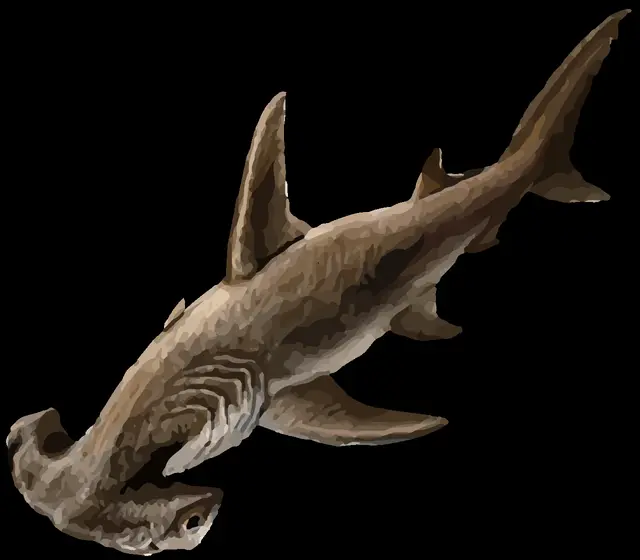
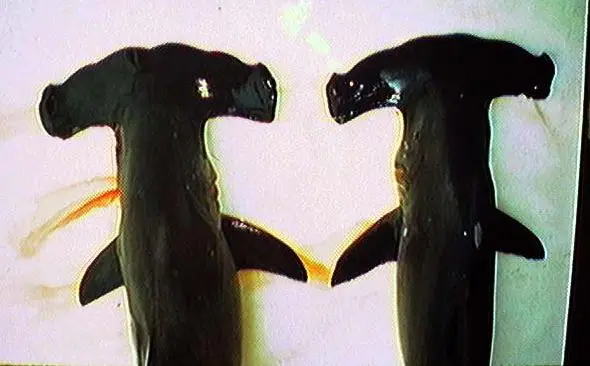
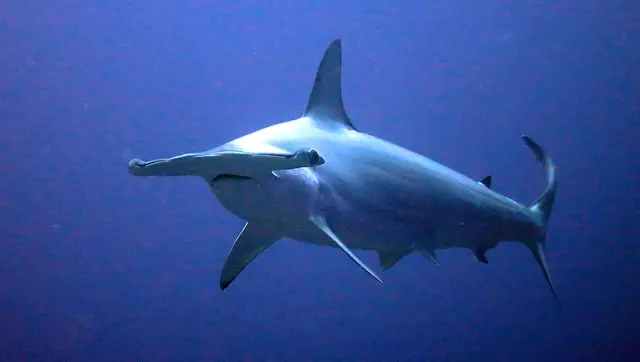
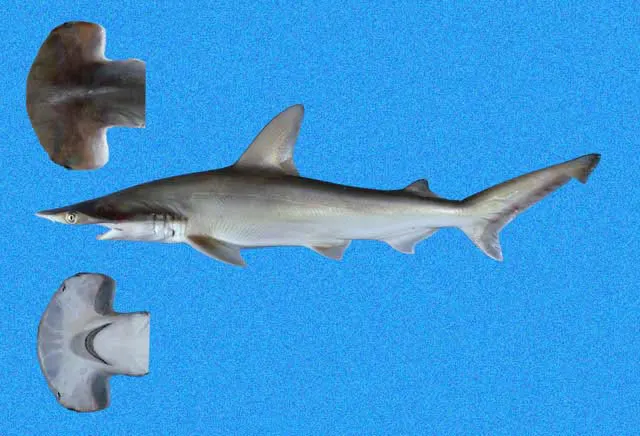
The scoophead has a moderately broad, mallet-shaped head, between about 22 and 33 percent as wide as the body is long. The front edge of the head is arched, and there are no grooves in front of the nostrils. The scalloped bonnethead (Sphyrna corona) shares that feature.
It is grey-brown above and light below, with no markings on the fins. Compared with the scalloped bonnethead it has a shorter snout, a broadly arched mouth and a deeply concave anal fin. Adult males reach roughly 90 to 100 cm and adult females 100 to 133 cm. The largest recorded fish are about 150 cm.
Where it lives
The scoophead is found in the western Atlantic from Panama to southern Brazil, and in the eastern Pacific from the Gulf of California to Ecuador and probably northern Peru. The Red List assessment names 20 countries and territories, from Mexico and Guatemala down through Central America to Colombia, Venezuela, the Guianas, Brazil, Ecuador and Peru, plus Trinidad and Tobago and several Dutch Caribbean islands.
It stays over continental shelves, mostly close to shore, and is recorded from the surface down to about 100 m. The listed habitats include sandy, sandy-mud and muddy seabed, and estuaries. One shark-watching site describes it as favouring turbid bays, estuaries and river mouths.
Pins are Wikidata “endemic to” fields. Orange dots, when present, are GBIF occurrence tiles — survey bias included.
How it lives
Very little is known. Its diet is reported to include small sharks and rays, bony fish, octopus and squid. Pups are born live, nourished through a yolk-sac placenta, at around 30 to 34 cm or less. Litters are reportedly one to eight pups.
The Red List gives a generation length of 12 years, so numbers rebuild slowly after losses.
Why it is in trouble
Fishing is the threat. The assessment lists targeted catch by small-scale fisheries and accidental catch in both small-scale and large-scale ones. Gear includes bottom longlines, gillnets and hook and line. Off Trinidad it is reportedly a common bycatch of the gillnet mackerel fishery. The flesh is sold fresh or turned into fishmeal. The assessment also lists industrial aquaculture as a threat, though its impact is unscored.
Heavy fishing off Colombia and Venezuela has reportedly made it rare there. The Red List records a decreasing population overall, under criteria A2bcd (2020).
What is being done
Not much that is specific. The assessment records no recovery plan, no monitoring scheme, no harvest management plan and no international trade controls for the species. Its listed conservation actions are harvest and trade management, species recovery, site protection and national-level measures.
Sources
Written for this catalog in our own words from the sources below, checked against them on 12 November 2026. Population figures are estimates and carry the year they were made. Status and assessment year: IUCN. 2026. The IUCN Red List of Threatened Species. Version 2026-1. iucnredlist.org.