Critically Endangered
Scalloped bonnethead
Sphyrna corona
The scalloped bonnethead (Sphyrna corona) is a small, little-known hammerhead shark of the tropical eastern Pacific, from Mexico to Peru. The IUCN Red List (assessed 2020) lists it as Critically Endangered, mainly because of fishing pressure in the shallow coastal waters it prefers.
How to recognise it
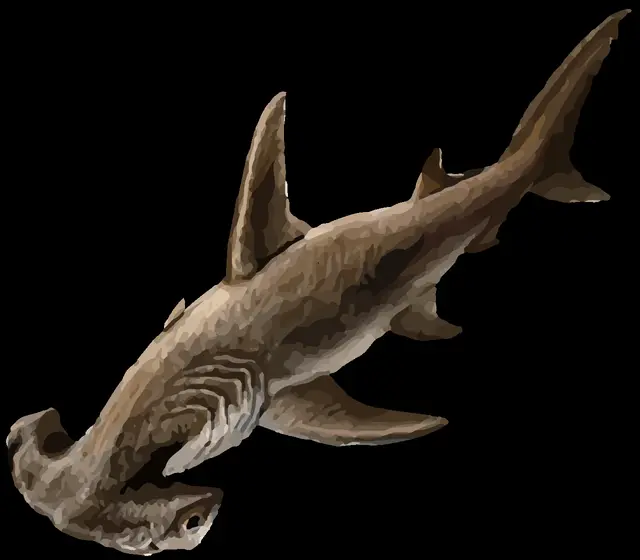
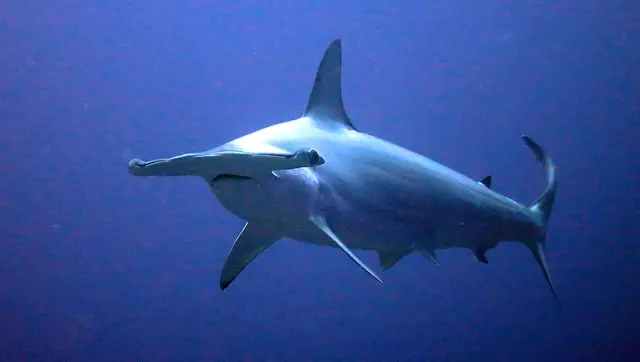
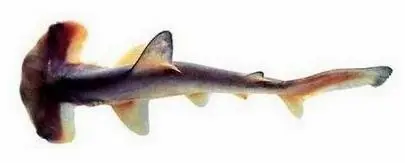
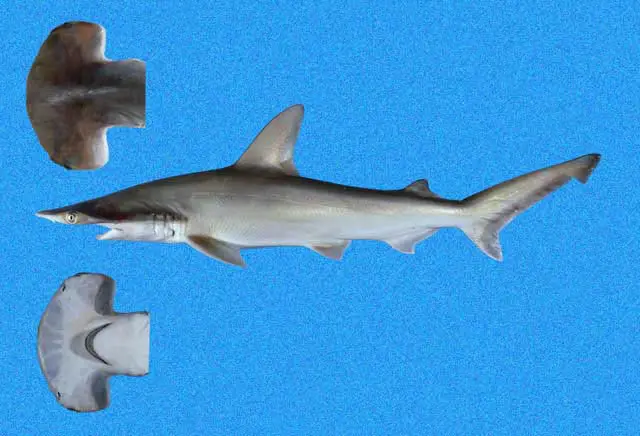
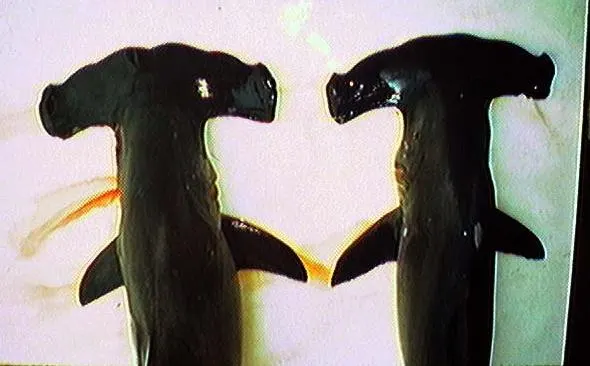
It is probably the smallest hammerhead, reaching about 92 centimetres. Newborns are around 23 cm. The head, or cephalofoil, is moderately wide at roughly a quarter of body length, with a broadly arched front edge. It is grey above and white below, with no bold fin markings, and the mouth is small and strongly arched.
It looks much like the scoophead, but that shark has a shorter snout, a wider mouth and a deeply concave rear edge on the anal fin. Stewart Springer described it in 1940, and it is also called the mallethead or crown shark.
Where it lives
This is a shark of shallow, soft seabeds over mud, sand and gravel, down to about 100 metres. It also enters mangroves and estuaries. The IUCN lists it from Mexico, Guatemala, El Salvador, Honduras, Nicaragua, Costa Rica, Panama, Colombia, Ecuador and Peru. Its range may reach north into the Gulf of California.
Pins are Wikidata “endemic to” fields. Orange dots, when present, are GBIF occurrence tiles — survey bias included.
How it lives
It feeds on or near the bottom, taking crabs, shrimp, snails, clams, octopus, squid, starfish, sea cucumbers, sea urchins and bony fishes. It gives birth to live young, probably two pups per litter. The IUCN gives a generation length of about 8 years.
Why it is in trouble
The IUCN names subsistence and small-scale fishing, large-scale fishing that catches it by accident, and industrial aquaculture as threats. It records a decreasing population trend and rates the shark under criterion A2bcd, which concerns population reduction over time. The shark lives in the same inshore waters that coastal fisheries work, and it may be caught by local fisheries, but detailed catch data are lacking.
What is being done
The IUCN lists harvest and trade management, species recovery, site protection and national-level measures as actions needed. It records no recovery plan, no monitoring scheme and no harvest management plan, and whether the species occurs in any protected area is unknown.
Sources
Written for this catalog in our own words from the sources below, checked against them on 12 November 2026. Population figures are estimates and carry the year they were made. Status and assessment year: IUCN. 2026. The IUCN Red List of Threatened Species. Version 2026-1. iucnredlist.org.