Endangered
Speke's gazelle
Gazella spekei
Speke's gazelle (Gazella spekei) is the smallest gazelle, a fawn-coloured antelope of the open plains and semi-desert of the Horn of Africa, mostly Somalia. The IUCN Red List has rated it Endangered since 2007, most recently in 2016, after a steep decline. It can inflate its nose into a honking sounding board.
How to recognise it
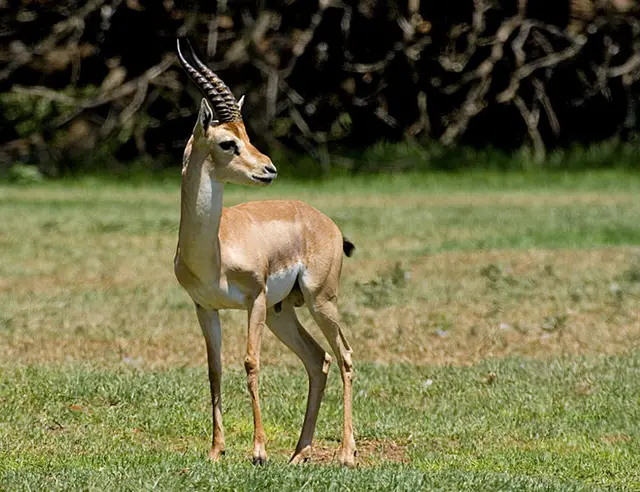
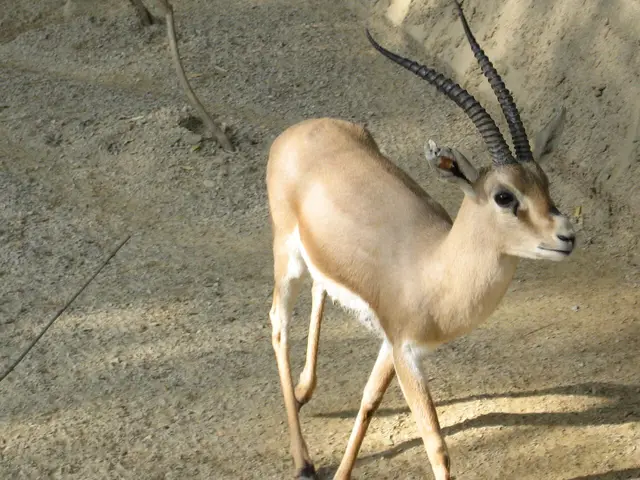
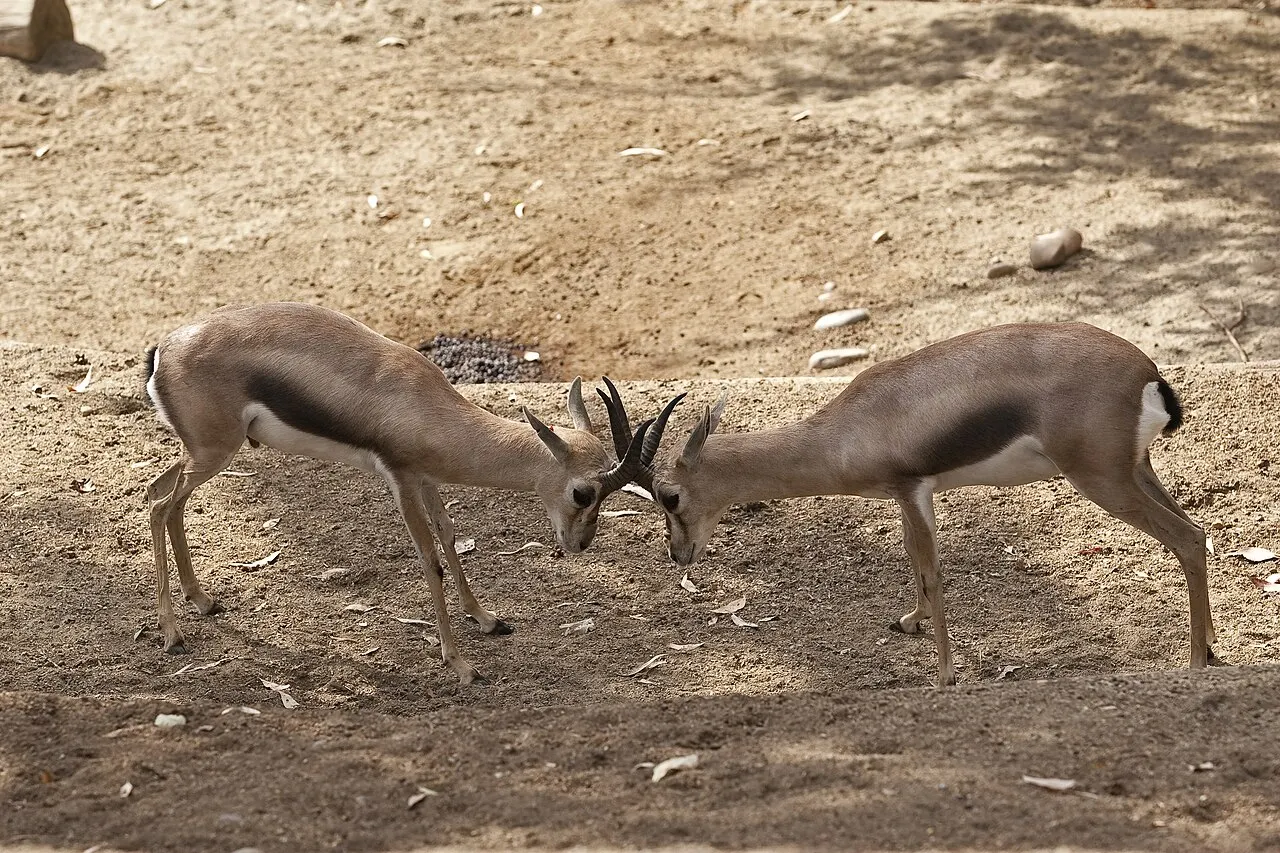
It stands about 2 feet (roughly 60 cm) at the shoulder, is about 3 feet long and weighs 25 to 40 pounds (about 11 to 18 kg). The coat is fawn, with a black flank and a paler band above it, a white belly, and a light beige face with dark lines by the eyes and muzzle. Both sexes carry thin, ringed horns 12 to 15 inches (30 to 38 cm) long.
The most unusual feature is the nose. The skin on top of it can swell to about the size of a baseball. The swelling amplifies a loud honking call, which serves as an alarm and, reportedly, as a display by males in the breeding season.
Where it lives
The species is endemic to the Horn of Africa. The Red List records it as present in Somalia and possibly extinct in Ethiopia, where nothing recent shows it still occurs. It lives from sea level up to about 2,500 m, mostly on semi-arid grassland but also on dwarf shrub and barren rangeland.
A 2010 antelope survey in Somaliland found it widely but thinly spread across open grassy plains with sparse shrubs, and occasionally on stony hillsides with scattered bush up to about 1,650 m. Earlier mapping had put the western edge of its range further west, so the range there appears to have contracted eastward since the 1960s. Elders in at least two villages said the gazelles were coming back, and the survey report could not tell whether the westernmost sightings meant recolonisation or animals overlooked before.
Pins are Wikidata “endemic to” fields. Orange dots, when present, are GBIF occurrence tiles — survey bias included.
How it lives
Speke's gazelle is shy and most active at dawn and dusk. It browses, feeding in the early morning when foliage still holds moisture. Groups of 5 to about 20 are typical: females with young, bachelor herds, or a dominant male with females in the breeding season. An alarmed animal leaps stiff-legged with an arched back, a display called pronking. Zoo animals live up to about 12 years.
The IUCN, citing a field study from Somalia, says the gazelles move seasonally, going to the coast or large inland dunes when biting flies are bad and when sparse dune vegetation stays green longest.
Why it is in trouble
The IUCN lists hunting (the species itself is the target), drought and livestock farming among the threats, and describes the population as decreasing. It suspects a drop of more than 50 percent over three generations (14 years), driven by loss of range or habitat quality and by hunting, especially in conflict areas. Overgrazing by domestic livestock has damaged habitat.
Many local people traditionally did not hunt it, but soldiers have wiped out gazelles along roads in areas of conflict. A 2015 report from the IUCN Antelope Specialist Group on Somaliland also warns of live capture for private collections in the Gulf, helped since the 1990s by new trapping techniques and wooden transport crates. It documents antelopes, including Speke's and Dorcas gazelles, held in Hargeisa hotels and by VIPs.
Nobody has a firm count. In 1999 the zoologist East put the whole population in the tens of thousands, and no estimate existed for Somaliland. A 2010 field trip saw 145 gazelles in groups of 1 to 9, and a bird-tour group counted 155 in September 2012. Those are sightings, not population estimates.
What is being done
The IUCN says there are no functioning protected areas or active field conservation programmes within its range, and that its status will probably worsen without effective protection and management. It records no recovery plan and no systematic monitoring scheme, and names site protection, harvest management and captive breeding as actions.
Small captive populations are kept in zoos. Western zoos believed the species nearly extinct in the 1980s, which turned out to be wrong, and the Los Angeles Zoo had joined the North American Species Survival Plan for it by 1983.
Sources
Written for this catalog in our own words from the sources below, checked against them on 12 November 2026. Population figures are estimates and carry the year they were made. Status and assessment year: IUCN. 2026. The IUCN Red List of Threatened Species. Version 2026-1. iucnredlist.org.