Endangered
Rhim gazelle
Gazella leptoceros
The rhim gazelle, also called the slender-horned gazelle, is the palest gazelle of the Sahara, a creature of sand seas in Algeria, Tunisia, Libya and Egypt. It is Endangered on the Red List (assessed 2016), with only 300 to 600 mature animals thought to remain in the wild.
How to recognise it
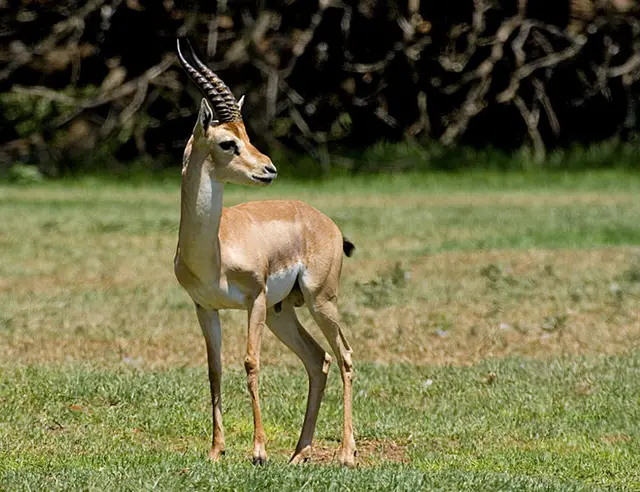
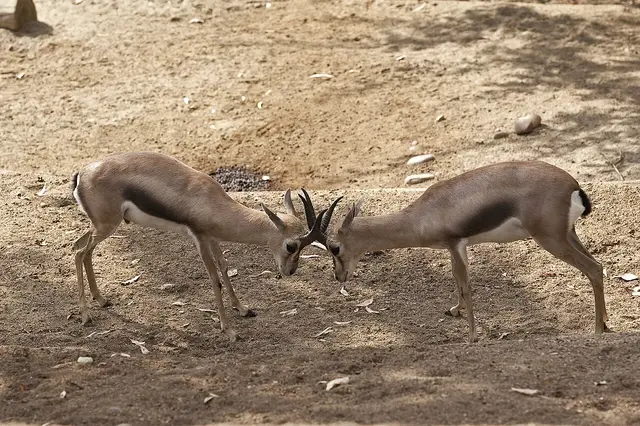
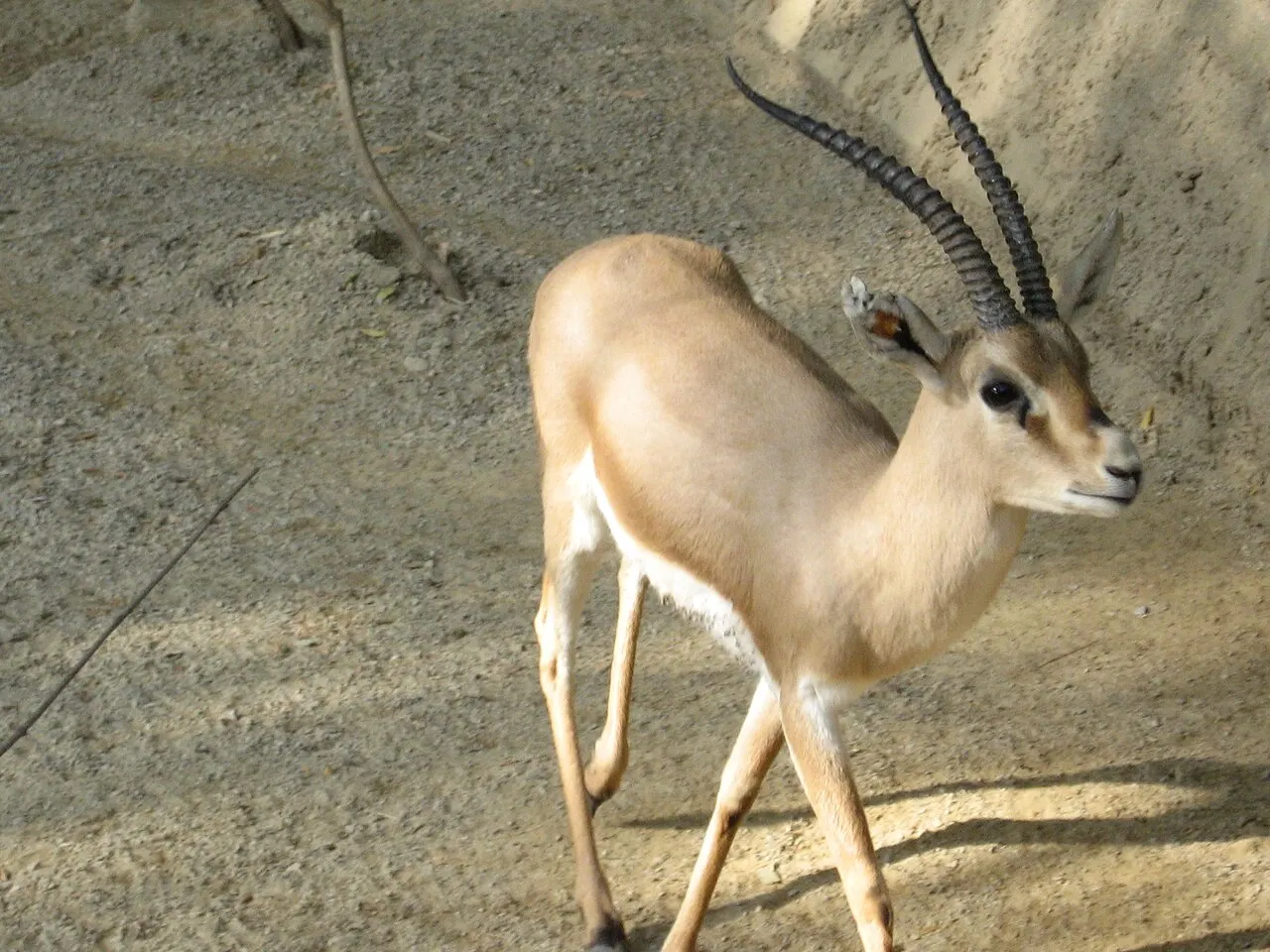
Nothing else in the Sahara looks quite so bleached. The back is pale buff or cream, the legs and belly white or pale buff, and a faint darker band along the flank separates the two. The tail is brownish black, about 15 cm (6 in) long, and stands out against the pale rump. Head and body together measure roughly 101 to 116 cm (40 to 46 in).
Both sexes carry long, slender horns. In males they curve in a gentle S shape, while a female's are thinner, lighter and close to straight.
Where it lives
The rhim belongs to the big dune seas, the ergs, and the gravel basins and flat ground that open up between the dunes. Recent confirmed records come only from the Grand Erg Oriental, which spans Algeria and Tunisia and reaches into Libya, and the Grand Erg Occidental in Algeria. The Red List also names Niger and Chad, but sightings there are reported as doubtful.
Egypt has lost most of its animals. The last confirmed records in the Western Desert date from 2004, and a 2024 survey in and around the Siwa Protected Area found only scant signs and no gazelles on camera traps.
Pins are Wikidata “endemic to” fields. Orange dots, when present, are GBIF occurrence tiles — survey bias included.
How it lives
Rhim gazelles are nomadic, ranging widely across the desert in search of patchy vegetation. They feed mostly in the cool of early morning and evening, picking flowers, fruits and young leaves. Much of their water reportedly comes from dew and the moisture in plants rather than open pools.
Their bodies reportedly help too. Body temperature can climb through the day, which cuts the water lost to cooling. Gestation lasts about five and a half months and twins have been recorded. Females probably breed more in wet spells and less in drought.
Why it is in trouble
Hunting is the main pressure. People once chased these gazelles on horseback and later in motor vehicles, for meat, sport and horns. It still goes on: an AFP report from Libya described hunters using four-wheel-drive vehicles and automatic rifles, with carcasses reportedly selling for up to about $1,000. Quad bikes and motorbikes make animals easier to reach.
Grazing by livestock and the degradation of desert vegetation add to the strain, and the number of vehicle tracks worried Marwell Wildlife's survey team in Tunisia's Grand Erg Oriental. The Red List describes the population as declining and severely fragmented, with a largest group of about 200 animals.
What is being done
The species is on Appendix I of CITES and occurs in at least one protected area. Safety-net herds exist: Algeria's Brezina breeding centre, founded in 2000, held 37 animals in May 2019, and Tunisia has kept a herd in Sidi Toui National Park since 1999, now around 25 animals. Four more were moved to El Gonna National Reserve in November 2020.
In July 2024 volunteers in Libya released eight gazelles onto Farwa Island, an uninhabited island that is not natural rhim habitat. The reserve manager told AFP the vegetation there is sufficient, and the first group released a few weeks earlier was reported to be doing well. A conservation strategy for the species covers 2020 to 2029.
Sources
Written for this catalog in our own words from the sources below, checked against them on 12 November 2026. Population figures are estimates and carry the year they were made. Status and assessment year: IUCN. 2026. The IUCN Red List of Threatened Species. Version 2026-1. iucnredlist.org.
- IUCN Red List assessment
- Rhim gazelle (Wikipedia)
- Sahara Conservation Fund, slender-horned gazelle
- Marwell Wildlife, finding slender-horned gazelles in Tunisia (2022)
- Marwell Wildlife, Slender-horned gazelle conservation in Tunisia: 2024 progress report
- Arab News / AFP, endangered gazelles find Libyan safe haven (2024)