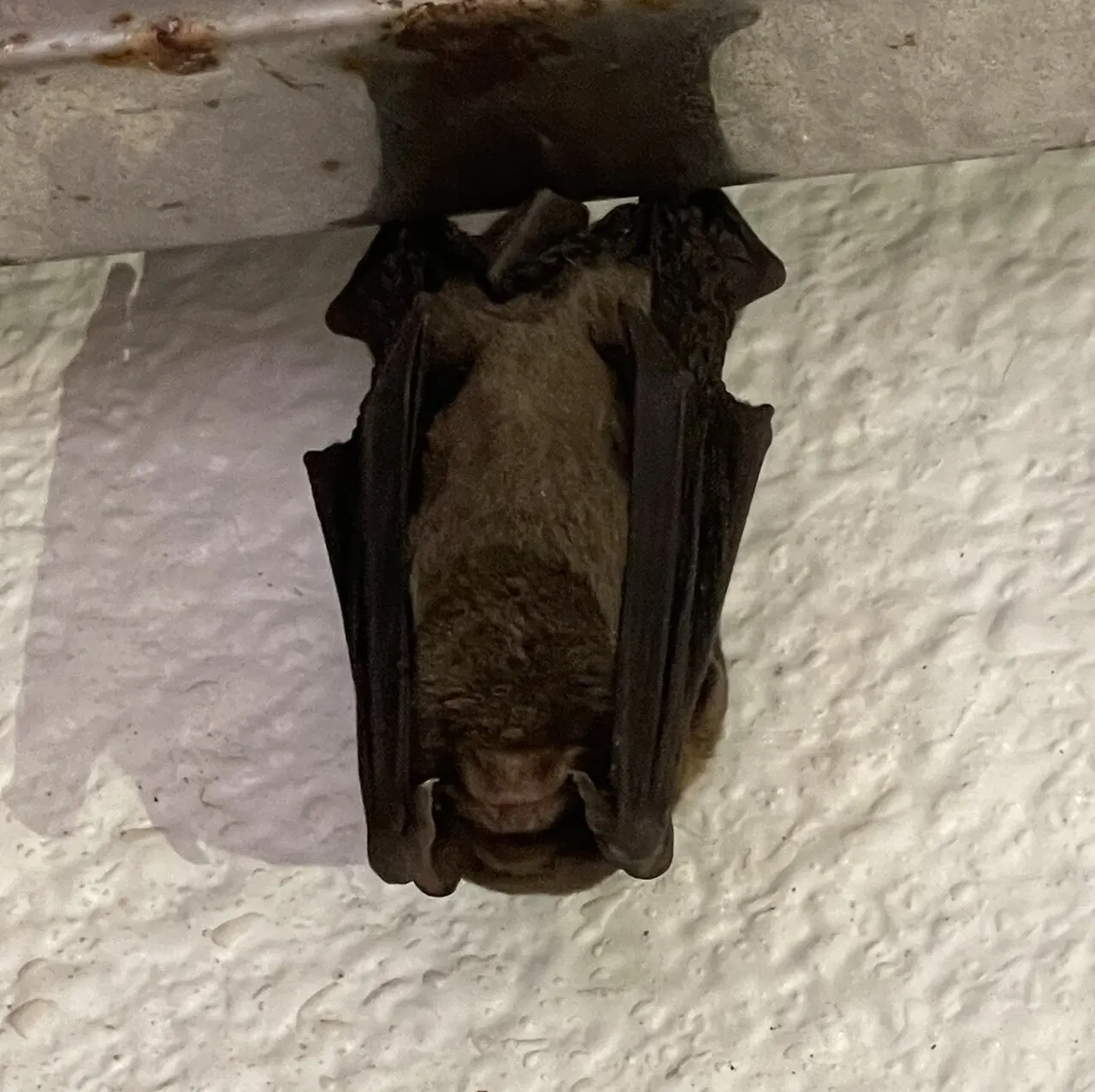
Endangered
Southeast Asian Long-Fingered Bat
Miniopterus fuscus
The Southeast Asian long-fingered bat (Miniopterus fuscus) is a small cave-roosting bat found only in Japan, on islands of the Ryukyu chain. The IUCN Red List classed it as Endangered in 2021 because the area it occupies is tiny, fragmented and shrinking. It is also known as the Ryukyu bentwing.
How to recognise it
This is a small insect-eating bat in the bent-winged bat family, Miniopteridae. An average adult weighs about 11 grams (0.4 ounces), and its forearm measures roughly 41 millimetres.
Where it lives
The species is endemic to Japan. It occurs on Amami-Oshima, Tokunoshima, Okinoerabujima, Okinawa Island, Kume, Ishigaki and Iriomote in the Ryukyu Islands. A single specimen was collected on the Kii Peninsula of Honshu in 1933, but the bat is now thought to be gone from there.
The IUCN estimates its extent of occurrence at about 52,000 square kilometres, but that is mostly sea. The area it actually occupies is estimated at only 499 square kilometres, and the assessment records the population as severely fragmented.
Pins are Wikidata “endemic to” fields. Orange dots, when present, are GBIF occurrence tiles — survey bias included.
How it lives
It forages over forest, taking moths and butterflies, flies and small wasps and their relatives. By day it roosts in caves and old mines. The IUCN habitat list includes karst caves and man-made excavations, as well as subtropical lowland and temperate forest.
Colonies are reportedly often several hundred strong. Females give birth to a single pup in early June. Big maternity colonies were once more common and have become rare, so a handful of cave sites may carry a large share of the breeding.
A naturalist who visited Ishigaki in 2018 found two of these bats sharing Sabichi Cave with horseshoe bats, a reminder that several rare species can depend on the same few caves.
Why it is in trouble
The IUCN lists the population trend as decreasing and records a continuing decline in the area occupied. The threats it records are tourism and recreation areas, recreational activities, and small-scale harvesting with unintended effects, which degrade forest and disturb roost caves.
Some roost caves are reportedly fitted with electric lighting for tourists and face building nearby, and a new airport on Ishigaki is reported to have been built above several caves the bats frequent. These reports come from a single general source, and no details on timing or effects were found. Because so few roosts matter so much, losing one could remove a large part of a local population.
What is being done
The IUCN lists site and habitat protection, site management and awareness work as conservation actions needed, and no actions are recorded as in place. The species reportedly occurs in no protected area. Better surveys across the Ryukyu Islands would show how many large colonies are left.
Sources
Written for this catalog in our own words from the sources below, checked against them on 12 November 2026. Population figures are estimates and carry the year they were made. Status and assessment year: IUCN. 2026. The IUCN Red List of Threatened Species. Version 2026-1. iucnredlist.org.




