Endangered
Sonoyta pupfish
Cyprinodon eremus
The Sonoyta pupfish (Cyprinodon eremus), also called the Quitobaquito pupfish, is a small, tough desert fish living in a few springs and river stretches along the Arizona and Sonora border. The IUCN assessed it as Endangered in 2019, with an extent of occurrence of only about 11 square kilometres.
How to recognise it
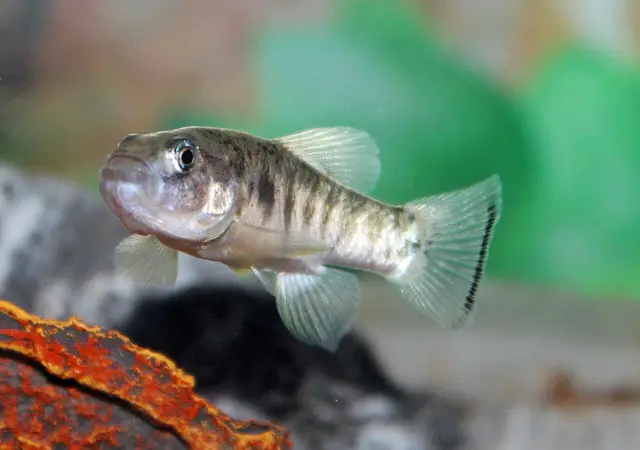
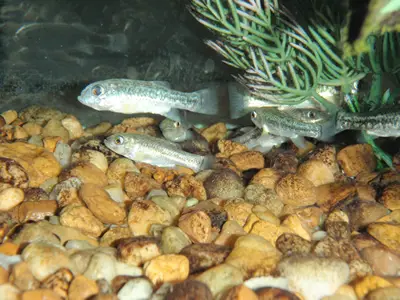
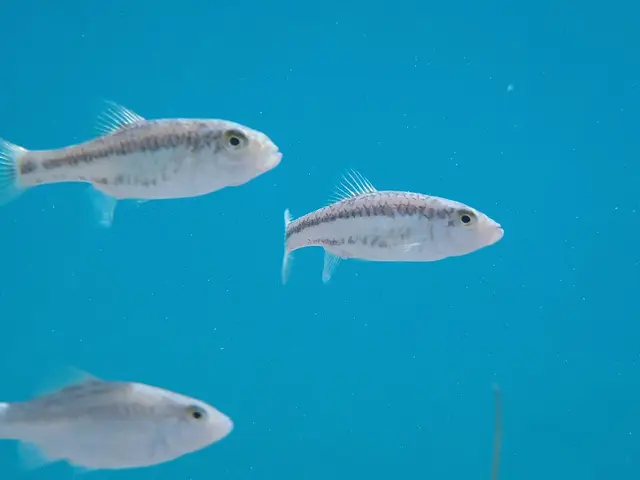
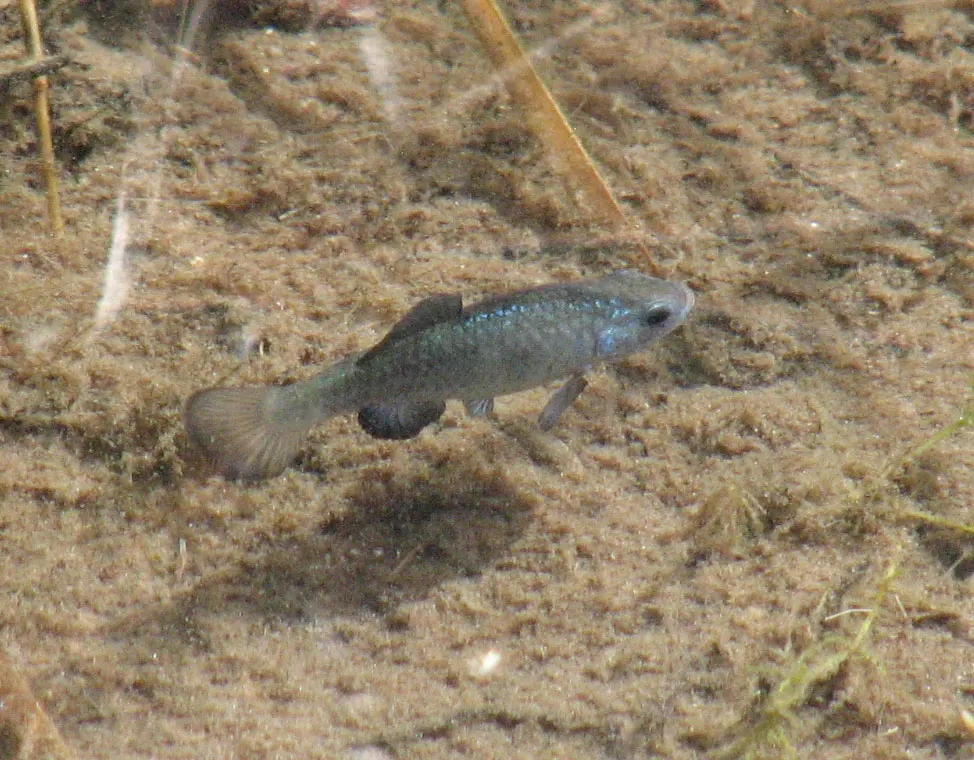
It's a small fish, under 7.6 centimetres (3 inches) long, with a chubby body, an upturned mouth and three-pointed teeth. Females and juveniles are silvery with narrow dark vertical bars and mostly clear fins, apart from an eye-like spot on the dorsal fin.
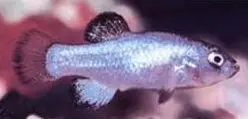
Breeding males are iridescent light to sky blue, with a yellow to olive-yellow tail fin. Compared with the closely related desert pupfish, it has a broader head, body and mouth, shorter fins and a shorter tail stalk. It was first described in 1987 as a subspecies of the desert pupfish and raised to a full species in 2000 on genetic evidence.
Where it lives
Only two natural populations remain. One is at Quitobaquito Springs, inside Organ Pipe Cactus National Monument in Arizona, at about 325 metres elevation. This is the only place it lives in the United States. The other is in the Río Sonoyta in Sonora, Mexico, where a 2024 study in Biotecnia described the only perennial flow as about one kilometre long.
The Red List counts three locations, an extent of occurrence of about 11 square kilometres and an area of occupancy of about 12. Habitats include springs, brackish and freshwater pools, marshes and streams. At Quitobaquito it prefers shallow water.
Pins are Wikidata “endemic to” fields. Orange dots, when present, are GBIF occurrence tiles — survey bias included.
How it lives
Pupfish handle conditions that kill most fish. Arizona wildlife biologists note that the desert pupfish group tolerates more heat, salt and low oxygen than other freshwater fishes. This species is reportedly able to stand salinity up to three times that of seawater and temperatures above 35 degrees Celsius. It's an omnivore, eating small invertebrates, mosquito larvae, algae and bits of plant material.
Males hold territories and colour up in the breeding season. Spawning runs from spring through autumn. Females lay 50 to 800 eggs a season, depending on size, and the eggs hatch in 7 to 13 days. Young fish grow fast and may breed at six weeks under good conditions. Numbers swell and shrink with rainfall.
Why it is in trouble
The Red List scores groundwater pumping for farming and an unspecified invasive species threat as medium-level across the whole range, with pesticides a lower one. Arizona's wildlife agency also lists drought, soil erosion and predation and competition from non-native fish and frogs. Between 2005 and 2009 the water level at Quitobaquito Pond fell to unprecedented lows.
The Quitobaquito population is described as fairly stable, ranging from 3,000 to 8,000 fish through the seasons, in the state abstract. A 2022 news report quoted monitors at about 10,000 fish in the pond. The Río Sonoyta population is declining.
What is being done
When the pond dropped, fish were evacuated while its collection system and berm were repaired and the bottom relined. In 2022 crews were replacing a failing 1960s clay lining with plastic, with fish held in temporary refuge pools. Park staff monitor the fish on a set protocol.
Breeding populations are kept at institutions in Arizona including the Arizona-Sonora Desert Museum and Cabeza Prieta National Wildlife Refuge. A refuge set up in 1988 at the Centro Ecológico de Sonora in Hermosillo is the most populated in Mexico, with over 1,000 fish.
Refuges bring their own problem. A 2024 study in Biotecnia found refuge fish differed in body shape from wild fish after 29 years of isolation, and a 2023 genetic study found lower variety in the Hermosillo refuge. Researchers recommend moving wild fish in and making refuge habitats more natural.
Sources
Written for this catalog in our own words from the sources below, checked against them on 12 November 2026. Population figures are estimates and carry the year they were made. Status and assessment year: IUCN. 2026. The IUCN Red List of Threatened Species. Version 2026-1. iucnredlist.org.