Critically Endangered
Smalltail shark
Carcharhinus porosus
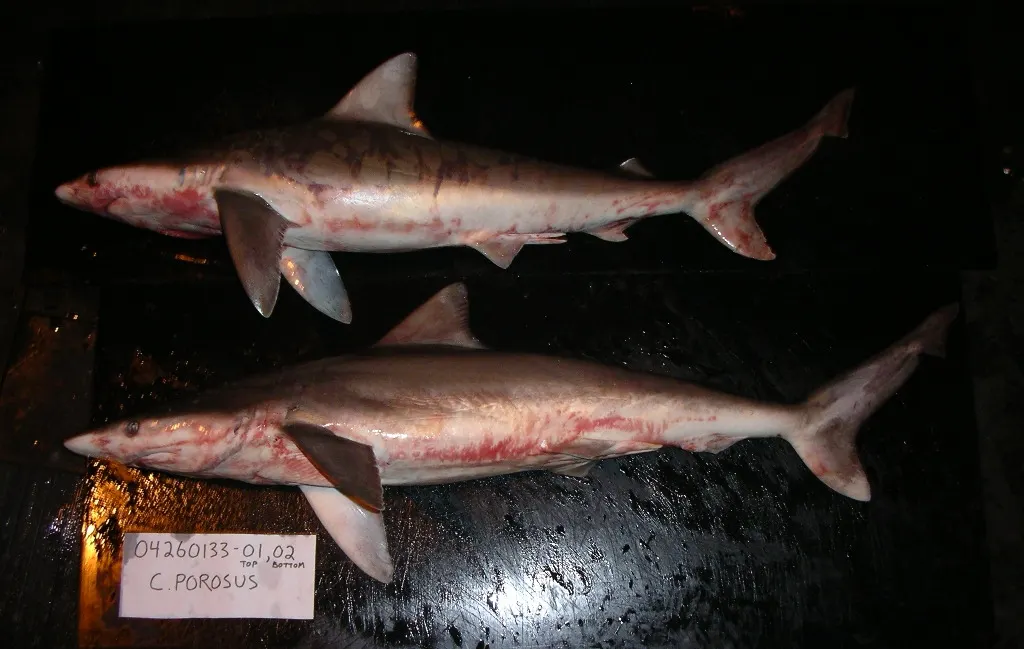
The smalltail shark is a slim, grey requiem shark of muddy estuaries and shallow coastal water along the western Atlantic, from the Gulf of Mexico to southern Brazil. The IUCN Red List assessed it as Critically Endangered in 2020, after heavy fishing cut numbers off northern Brazil, where it was the most abundant shark in the 1980s.
How to recognise it
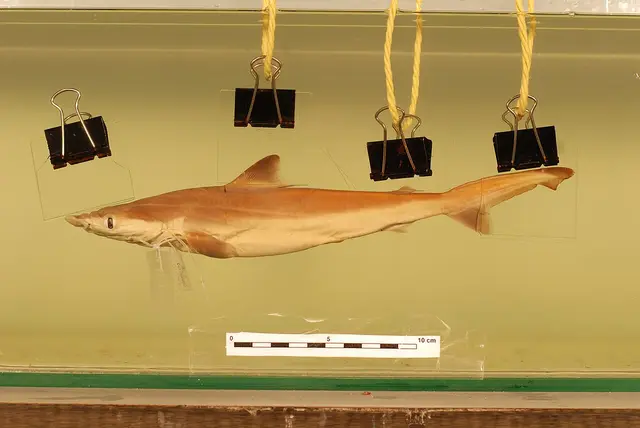
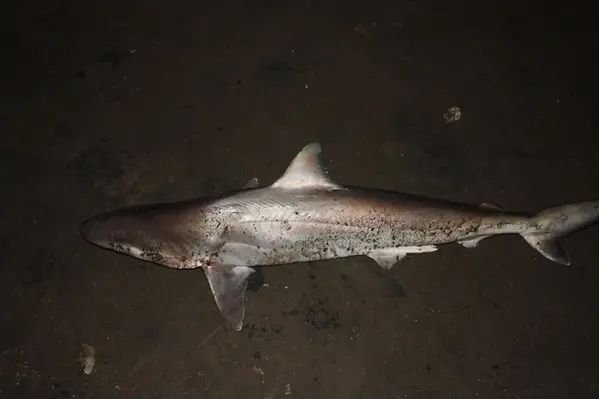
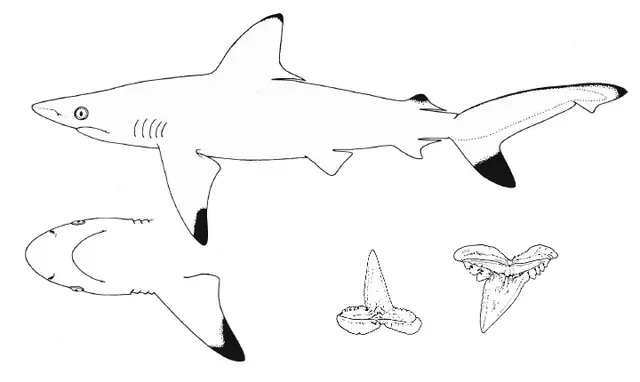
It's a small shark. Most adults measure 0.9 to 1.1 metres, and the largest known was about 1.5 metres, with females growing bigger than males. The body is slender, the snout long and pointed, and the first dorsal fin broad and nearly triangular.
The colour is plain grey. The scientific name porosus comes from the Greek word for pore, after the pores behind the eyes. In Trinidad it's known as the puppy shark.
Where it lives
The IUCN lists it from the United States and Mexico through Central America to Colombia, Venezuela, the Guianas and Brazil. It stays close to the bottom in shallow inshore water, usually no deeper than about 36 metres (the IUCN gives a depth limit of 84 metres), and favours muddy estuaries, brackish lagoons and tidal coasts.
In Brazil it is now mostly restricted to the northern coast, between Maranhao and Amapa. It hasn't been reported east of the Mississippi River in about 50 years, despite older evidence of a nursery off Louisiana.
Pins are Wikidata “endemic to” fields. Orange dots, when present, are GBIF occurrence tiles — survey bias included.
How it lives
Smalltail sharks gather in large groups separated by sex, with males generally found deeper than females. They eat mostly bony fishes such as croakers, sea catfish, jacks and grunts, plus shrimp, crabs and squid. Adults sometimes take young sharpnose sharks, hammerheads and stingrays.
Females give birth to live young. Litters hold 2 to 9 pups, typically 4 to 6, and females breed every other year after a gestation of about 12 months. Pups are 30 to 33 centimetres at birth. Females mature at about six years old, which makes the species slow to bounce back from losses.
Why it is in trouble
Fishing is the main cause. Smalltail sharks are taken in gillnets and as shrimp-trawl bycatch, and the meat, fins, liver oil and cartilage are used. A 2020 PLOS ONE study analysed 937 sharks netted in Maranhao between 1984 and 1987 and found that 90.6 percent were juveniles under six years old. Its model suggested a population fall of more than 90 percent over about ten years, and it judged the species overexploited.
Later records back this up. Catch rates off northern Brazil dropped from 2.87 kilograms per hour in 1990 to 0.43 in the early 2000s. One account puts the species at about 43 percent of shark and ray catches there in the 1980s and about 17 percent since. The 2020 study also reports local disappearances in parts of north-eastern and south-eastern Brazil.
The IUCN's 2020 assessment estimates an 80 percent reduction over three generations (a generation is about 9 years) and records that the cause has not ceased.
What is being done
Brazil listed the shark as threatened in 2004 and banned catching it, but the management plans that should have followed were never carried out, and fishing remains largely unmanaged. The IUCN lists harvest management, trade management and species recovery as needed actions, and records no recovery plan, monitoring scheme or harvest plan in place. The 2020 study calls for better inspection of landings and more data on trawl fisheries.
Sources
Written for this catalog in our own words from the sources below, checked against them on 12 November 2026. Population figures are estimates and carry the year they were made. Status and assessment year: IUCN. 2026. The IUCN Red List of Threatened Species. Version 2026-1. iucnredlist.org.