Endangered
Brasilia Lyrefin
Simpsonichthys boitonei
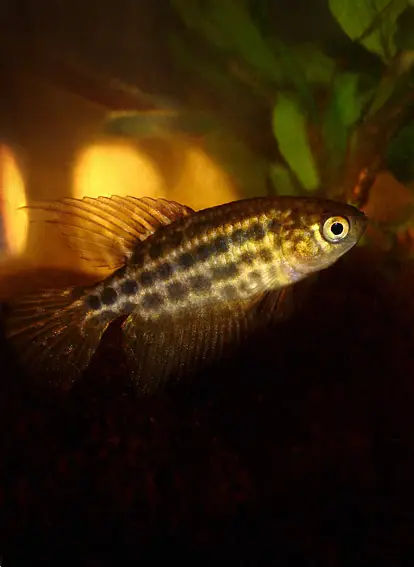
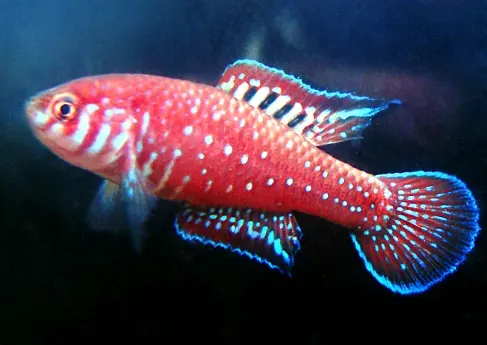
The Brasilia lyrefin (Simpsonichthys boitonei) is a small seasonal killifish known only from rain-filled pools on the highland around Brazil's capital. It was first collected while Brasilia was being built. The IUCN Red List raised it from Vulnerable to Endangered in its 2023 assessment.
How to recognise it
It belongs to Simpsonichthys, a genus of small annual killifish that reach up to about 5.5 cm, and it is the genus's type species. The first specimens, found in 1959, were seven juveniles of 17 to 19 mm (five males and two females).
A redescription by Wilson Costa and Gilberto Brasil in 2006, based on a recent collection from the type locality's drainage, covers fin shape, scales, the lateral-line system, contact organs and life colour patterns.
Where it lives
The fish is endemic to Brazil and has only been recorded in the Distrito Federal, the territory around Brasilia, on the central plateau at roughly 800 to 1,100 m. The original pool lay in the area of the future Brasilia Zoo, in the Riacho Fundo drainage of the Rio Sao Bartolomeu, part of the upper Parana basin. Later records come from a stream near Planaltina in 1965 and the IBGE ecological reserve in 1986 and 1997.
The IUCN counts just three locations and an extent of occurrence of about 61 square km. Its habitat is seasonal freshwater marshes and pools, in the IUCN's class for wetlands under 8 hectares.
Pins are Wikidata “endemic to” fields. Orange dots, when present, are GBIF occurrence tiles — survey bias included.
How it lives
It is a seasonal or annual killifish, meaning it lives in pools that fill during the rains and dry out later. The IUCN lists its population trend as unknown.
Why it is in trouble
Brasilia was founded in 1961 and soon became a large city. Costa and Brasil noted that most of the seasonal swamps in the area disappeared as the city grew. The IUCN's 2023 assessment lists housing and urban development as an ongoing, low impact threat, records a continuing decline in the area it occupies and in its subpopulations, and mentions past harvesting that could return.
The IUCN rated it Vulnerable in 1996 and Endangered in 2023.
What is being done
The IUCN records a recovery plan as in place, and the fish occurs in at least one protected area. The assessment lists habitat restoration, captive breeding, benign introduction (moving fish to suitable new sites) and site and habitat protection as actions needed.
Sources
Written for this catalog in our own words from the sources below, checked against them on 12 November 2026. Population figures are estimates and carry the year they were made. Status and assessment year: IUCN. 2026. The IUCN Red List of Threatened Species. Version 2026-1. iucnredlist.org.
- IUCN Red List assessment, Simpsonichthys boitonei (2023)
- Costa and Brasil (2006), Ichthyological Exploration of Freshwaters 17(3), redescription (first page)
- Practical Fishkeeping, Simpsonichthys boitonei redescribed
- GBIF, Simpsonichthys boitonei (species record and occurrences)
- Wikipedia, Simpsonichthys