Critically Endangered
Shiny pigtoe
Fusconaia cor
The shiny pigtoe (Fusconaia cor) is a small freshwater mussel that survives only in a few clean rivers of the upper Tennessee River system in Virginia, Tennessee and Alabama. The IUCN Red List rated it Critically Endangered in 2012, and it has been federally listed as endangered in the United States since 1976.
How to recognise it
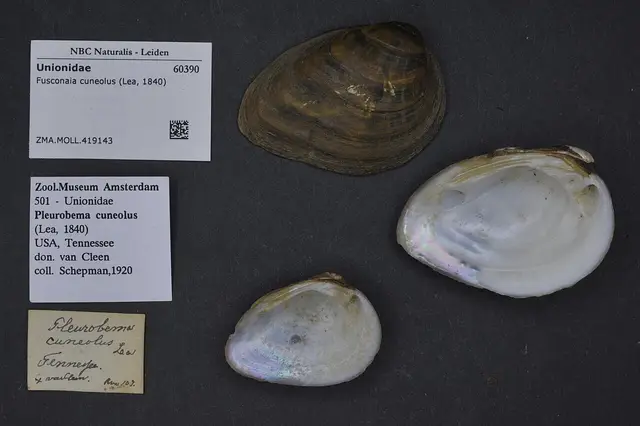
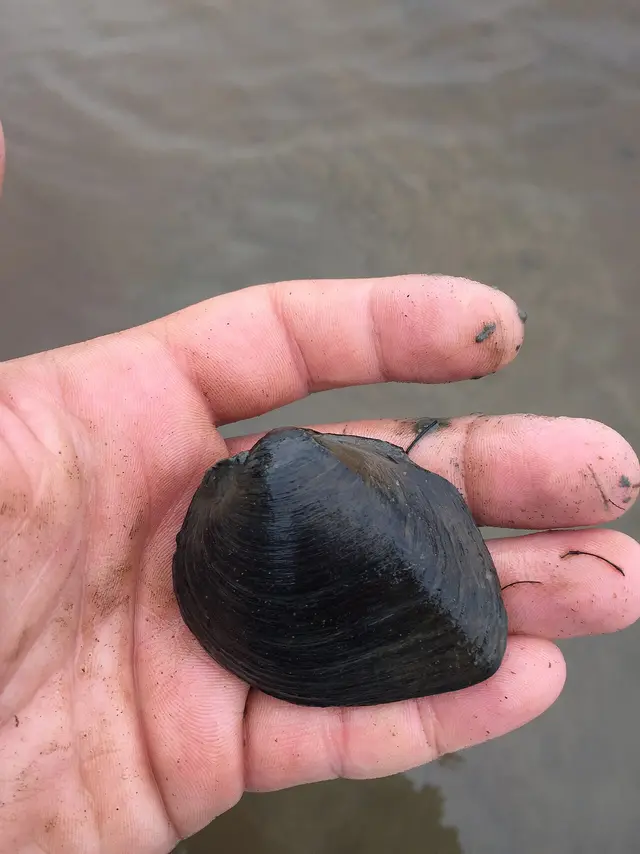
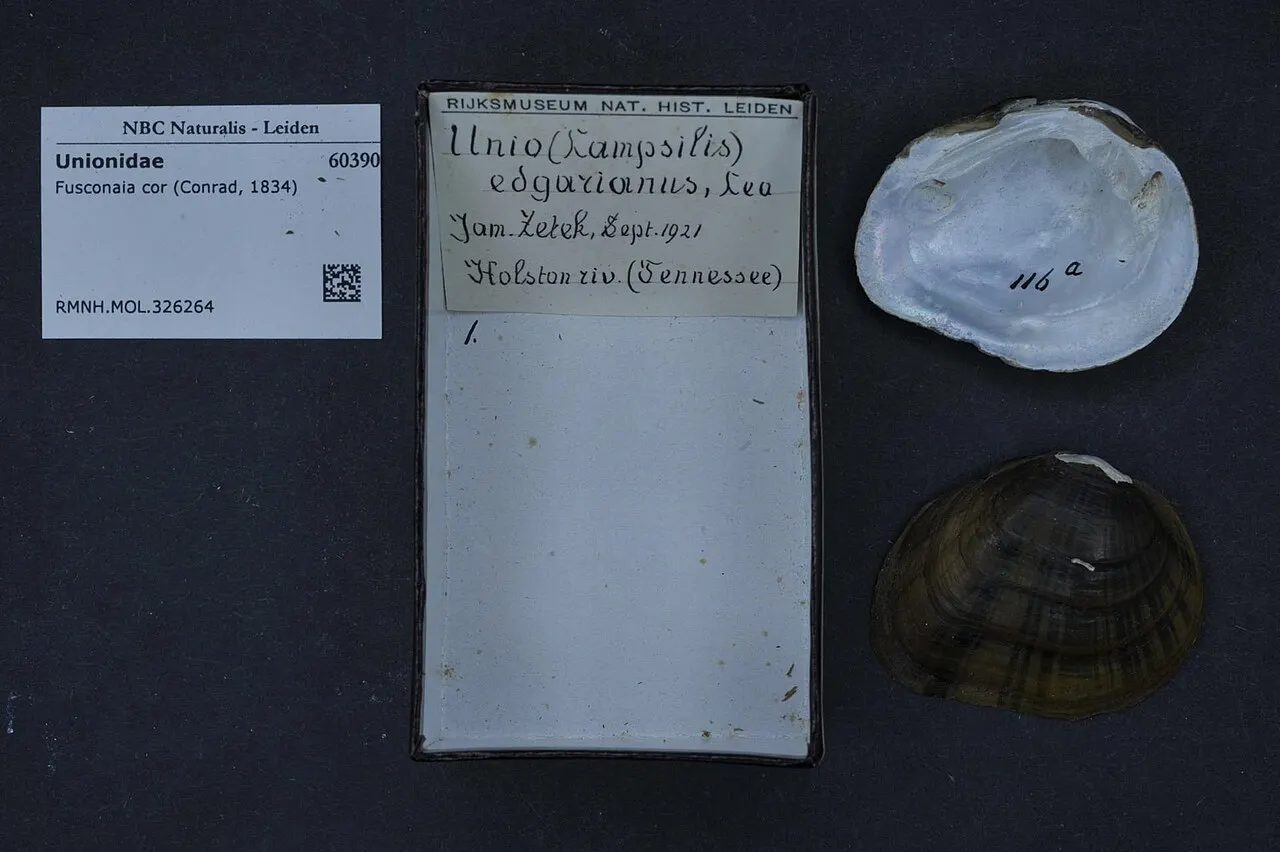
It's a medium-sized mussel, around 2.5 inches (64 mm) long, with a smooth, glossy, oval shell. The shell is yellow to brown with dark green to blackish rays, and the inside is white. Young mussels have bolder rays. Older ones turn duller brown and the rays fade.
Where it lives
Historically it ranged across the middle and upper Tennessee River drainage, including the Clinch, Powell, Holston, Elk, Flint and Paint Rock rivers, and about 32 km of the Tennessee River below Knoxville. Today the North Fork Holston, Clinch, Powell and Paint Rock systems hold populations. The Red List counts five locations, with an extent of occurrence of 1,000 to 5,000 and an area of occupancy of 500 to 2,000 (square kilometres, 2012 figures).
The U.S. Fish and Wildlife Service reports that the Elk River in Tennessee yielded the species again in 2021, after about 35 years without records, though the same page elsewhere lists that river's population as lost. The animal needs clean, fast water over stable cobble, gravel and sand without silt. It's usually buried in shallow riffles, fords and shoals.
Pins are Wikidata “endemic to” fields. Orange dots, when present, are GBIF occurrence tiles — survey bias included.
How it lives
Males release sperm into the water, and females downstream catch it as they filter-feed. The eggs are fertilised and brooded in the female's gills, where they develop into larvae called glochidia. The shiny pigtoe breeds in spring and early summer and releases glochidia in mid to late summer.
The larvae must latch onto a fish to develop. Reported hosts are the common, warpaint, telescope and whitetail shiners. After several weeks the young drop off and settle on the river bed.
Why it is in trouble
Tennessee Valley Authority dams blocked and redirected all the major rivers in its historic range, and hydroelectric operations still affect flow. Silt and pollution add to the damage, including runoff from ground-disturbing work, wastewater, mine seepage, sewage and solid waste. Competition from non-native species also threatens it. The Red List describes the invasion of the Asian clam and the possible arrival of the zebra mussel as threats, and lists the population trend as decreasing.
The U.S. Fish and Wildlife Service describes the species as always rare, and an encyclopedia entry notes that no recent population figures were available as of 2000.
What is being done
A federal recovery plan dates from 1984. Because restoring most of its former habitat is considered unlikely, the focus is on protecting the stretches where it still lives. The Red List records monitoring, protected sites across its whole range, captive breeding, and reintroduction. The U.S. Fish and Wildlife Service reports early steps to bring it back to the Tennessee River in Alabama and the lower Holston and French Broad rivers in Tennessee.
Sources
Written for this catalog in our own words from the sources below, checked against them on 12 November 2026. Population figures are estimates and carry the year they were made. Status and assessment year: IUCN. 2026. The IUCN Red List of Threatened Species. Version 2026-1. iucnredlist.org.