Endangered
Fine-rayed pigtoe pearly mussel
Fusconaia cuneolus
The fine-rayed pigtoe (Fusconaia cuneolus) is a medium-sized freshwater mussel from the upper Tennessee River system in Virginia, Tennessee and Alabama. The IUCN Red List rates it Endangered (2012 assessment) with a decreasing trend. It has been federally protected in the United States since 1976.
How to recognise it
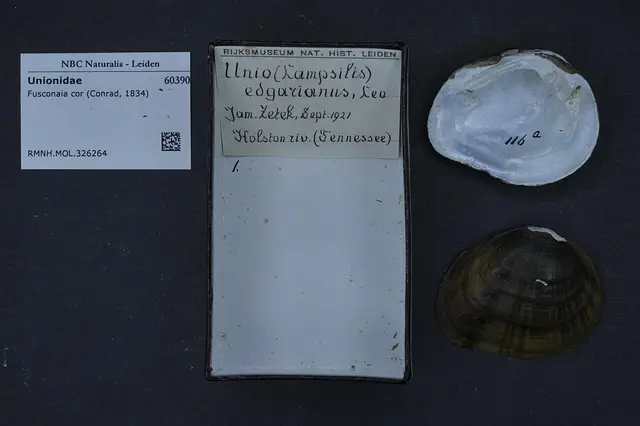
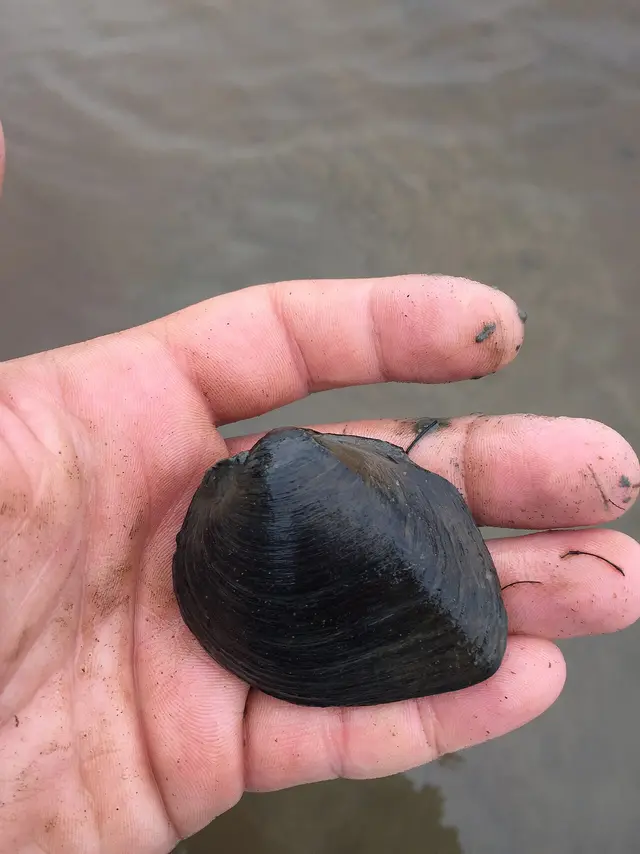
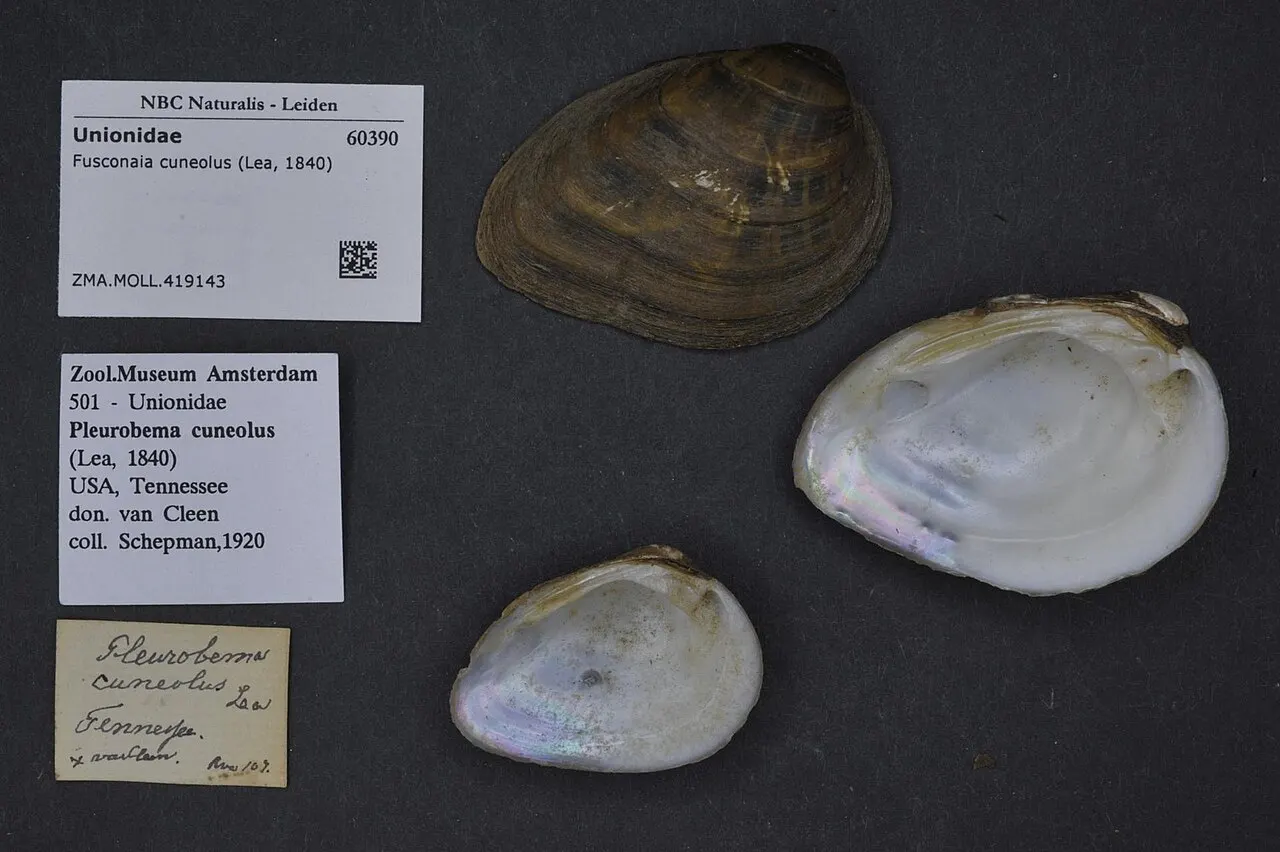
It's a medium-sized mussel, usually up to about 6.4 cm (2.5 inches). Shells recovered from muskrat middens in the Clinch River reached about 90 mm, and a 1989 thesis estimated a lifespan of roughly 35 years, with growth slowing after about age 10. The shell is ovoid, with a rounded hinge end and a straight front edge. The outside is greenish yellow to light brown, marked with faint green rays and growth lines, and the inside is white.
Where it lives
It belongs to the Cumberlandian mussel fauna, a group of species native to the Tennessee and Cumberland river basins, and it's restricted to tributaries above Muscle Shoals, Alabama. The US Fish and Wildlife Service recognises five populations: the North Fork Holston River in Virginia, the Clinch River and the Powell River (both crossing the Virginia and Tennessee line), the Little River in Tennessee, and the Paint Rock River in Alabama. The Clinch population extends into Copper Creek and into a Little River in Virginia.
It prefers clean, fast water over stable cobble, gravel and sand without much silt, and usually sits buried in shallow riffles, fords and shoals. It has long been rare. It was first described from the North Fork Holston River in 1840 and was recorded in the Tennessee River near Knoxville in the early 1900s. In 1982, four freshly dead specimens turned up at Cloud Ford on the Holston in Tennessee, and no live ones have been reported there since.
Pins are Wikidata “endemic to” fields. Orange dots, when present, are GBIF occurrence tiles — survey bias included.
How it lives
Like other river mussels, it filters small particles from the water. Females hold developing larvae (glochidia) in their gills. A 1989 study in the Clinch River found females carrying larvae from mid-May to late July, with most released in mid-June, and the larvae drifted most thickly in the water in early morning.
The larvae have to latch onto a fish for several weeks before they drop to the river bed as juvenile mussels. In laboratory tests they transformed on seven minnow species (including the fathead minnow, river chub, stoneroller and several shiners) and on the mottled sculpin. They failed to develop on sunfishes, catfishes and darters. So the mussel depends on healthy minnow populations as well as clean water.
Why it is in trouble
The IUCN lists sewage, mining and quarrying, soil erosion and silt, oil spills and dams among the threats, and records a continuing decline in the area it occupies, with an area of occupancy of about 500 square kilometres. The Fish and Wildlife Service adds water withdrawal and competition from non-native species. Dams chop the river into pieces, change temperature and oxygen, and cut off populations from one another.
Silt can clog a mussel's gills and harms the fish its larvae depend on. The species was assessed Critically Endangered in 1996 and was moved to Endangered in 2012.
What is being done
The IUCN records that the species is monitored, occurs in at least one protected area, has conservation sites identified across its whole range, and has been held in captivity for propagation. It also notes a successful reintroduction. The Fish and Wildlife Service says initial steps have been taken to reintroduce it to the Tennessee River in Alabama and to the lower Holston and French Broad rivers in Tennessee.
Sources
Written for this catalog in our own words from the sources below, checked against them on 12 November 2026. Population figures are estimates and carry the year they were made. Status and assessment year: IUCN. 2026. The IUCN Red List of Threatened Species. Version 2026-1. iucnredlist.org.