Critically Endangered
Scolymia lacera
Scolymia lacera
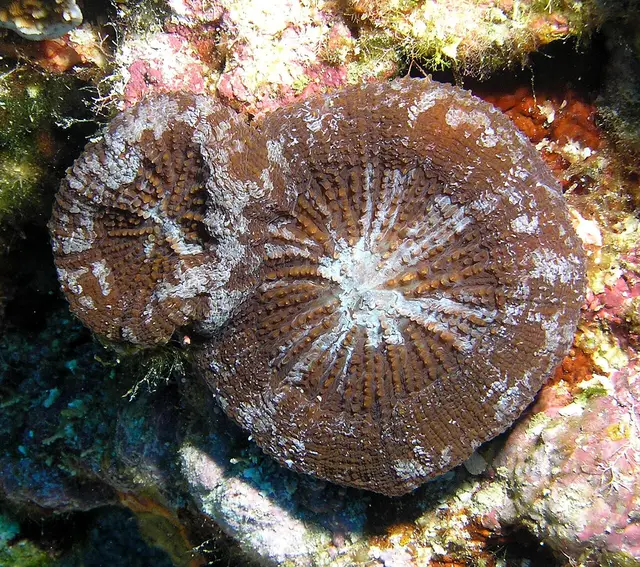
The fleshy disk coral (Scolymia lacera), also called the Atlantic mushroom coral, is a stony coral made of a single large polyp. It lives on reefs across the Caribbean, the Bahamas and southern Florida. The IUCN Red List assessed it as Critically Endangered in 2022, with a decreasing trend.
How to recognise it
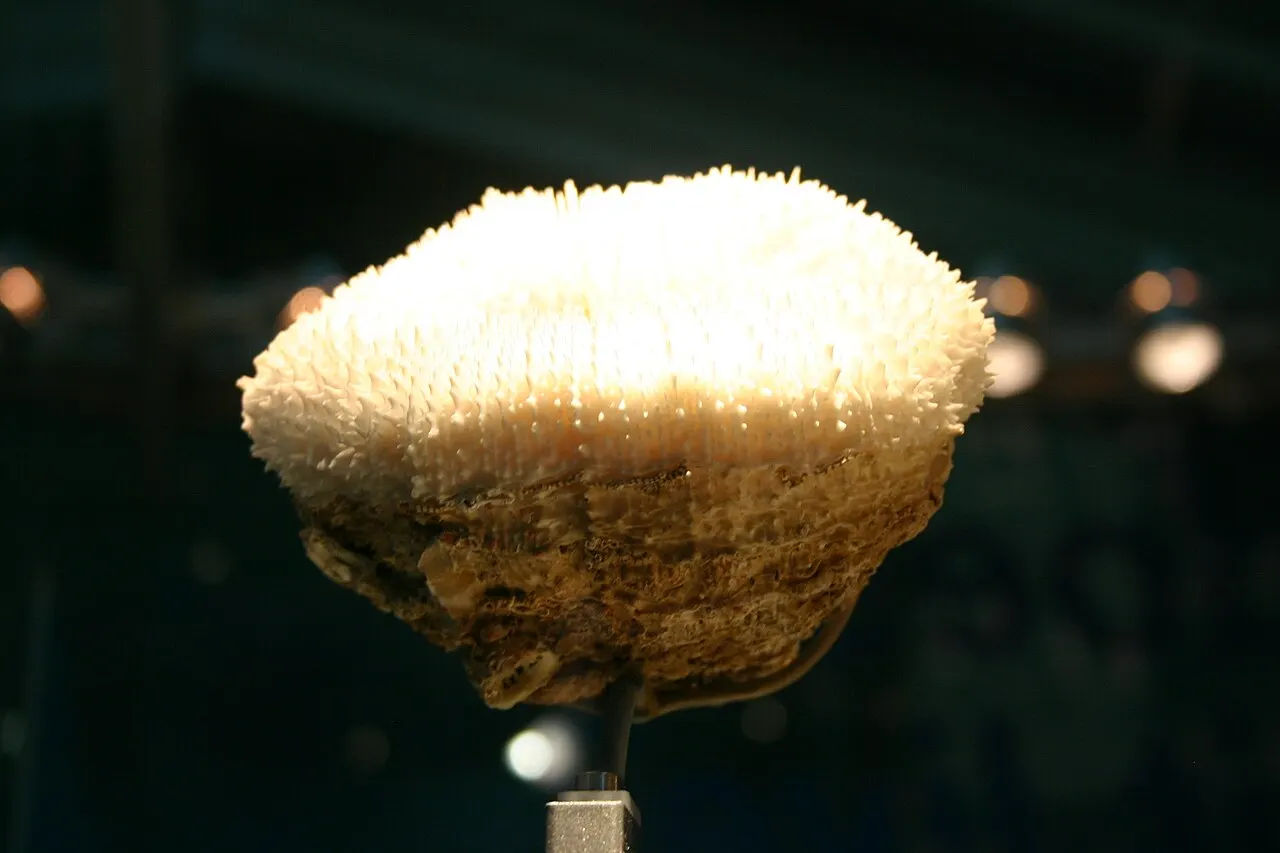
Most corals are colonies of many small polyps. This one is a single, solitary polyp that doesn't bud, so it looks like a fleshy disk or mushroom sitting on the reef. Sources give its width as up to 6 cm in one account and about 15 cm in others. One diving writer calls it the biggest single-polyp coral in the Caribbean.
Colour varies a lot, with blues, greens, purples and reds in no predictable pattern. In ordinary light it often looks brownish green, because of the algae living in its tissue. Under blue or UV light fluorescent proteins glow in bright colours.
It looks much like its relative Scolymia cubensis. Size is the easiest clue, since S. cubensis is smaller, at 2 to 7 cm. For small colonies, the lines of skeletal teeth radiating from the centre help, and the arrangement of the internal ridges (septa) is the formal difference.
Where it lives
The range covers the Caribbean Sea, the southern Gulf of Mexico, the Bahamas and southern Florida. The IUCN lists dozens of countries and territories, from Mexico and Belize down through Central America to Colombia and Venezuela, and across the island chains from Cuba and the Bahamas to Trinidad and Tobago.
It occurs on coral reefs between about 10 and 80 m deep, including reef slopes and rocky outcrops. One diver photographed a specimen at 18 m on a silty reef off Honduras, and others have photographed it in Bonaire and Nassau. It tends to favour better-lit spots than S. cubensis.
Pins are Wikidata “endemic to” fields. Orange dots, when present, are GBIF occurrence tiles — survey bias included.
How it lives
Like most reef-building corals, it hosts photosynthetic algae (zooxanthellae) that supply much of its energy. It also catches plankton with short tentacles, mostly at night.
It's an aggressive neighbour. If another coral threatens to shade it, it pushes out digestive filaments several centimetres long, and enzymes break down the rival's soft tissue over some hours. Small corals can die. Bigger ones lose the tissue within reach and are left with bare skeleton. The IUCN gives its generation length as about 10 years.
Why it is in trouble
Caribbean reefs have been declining for decades, and the listing reflects that. The 2022 assessment projects a population reduction of about 80 percent, based on a decline in area, extent and quality of habitat. The IUCN threat list includes coastal housing, tourism and commercial development, shipping lanes, soil erosion and sedimentation, storms and flooding, and temperature extremes. Rising sea temperatures and bleaching, stronger storms, ocean acidification and coral disease are also cited as pressures on reef corals in the region.
Subsistence-scale harvesting is also listed among the threats.
What is being done
It occurs in at least one protected area. The IUCN lists site protection and management, habitat restoration, species recovery, captive breeding and a genome resource bank among the conservation actions for the species. These are listed actions rather than a described programme for this coral.
Sources
Written for this catalog in our own words from the sources below, checked against them on 12 November 2026. Population figures are estimates and carry the year they were made. Status and assessment year: IUCN. 2026. The IUCN Red List of Threatened Species. Version 2026-1. iucnredlist.org.