Critically Endangered
Scolymia cubensis
Scolymia cubensis
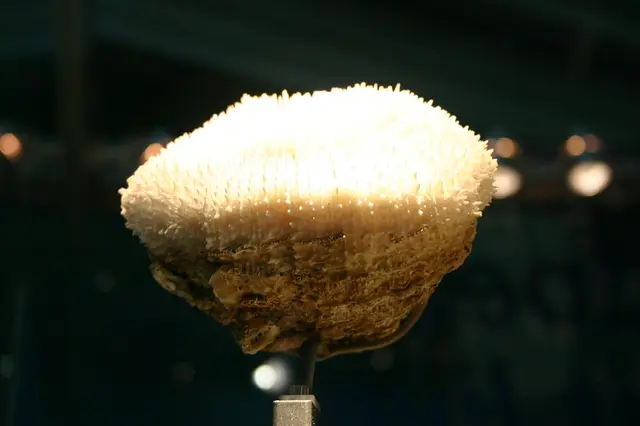
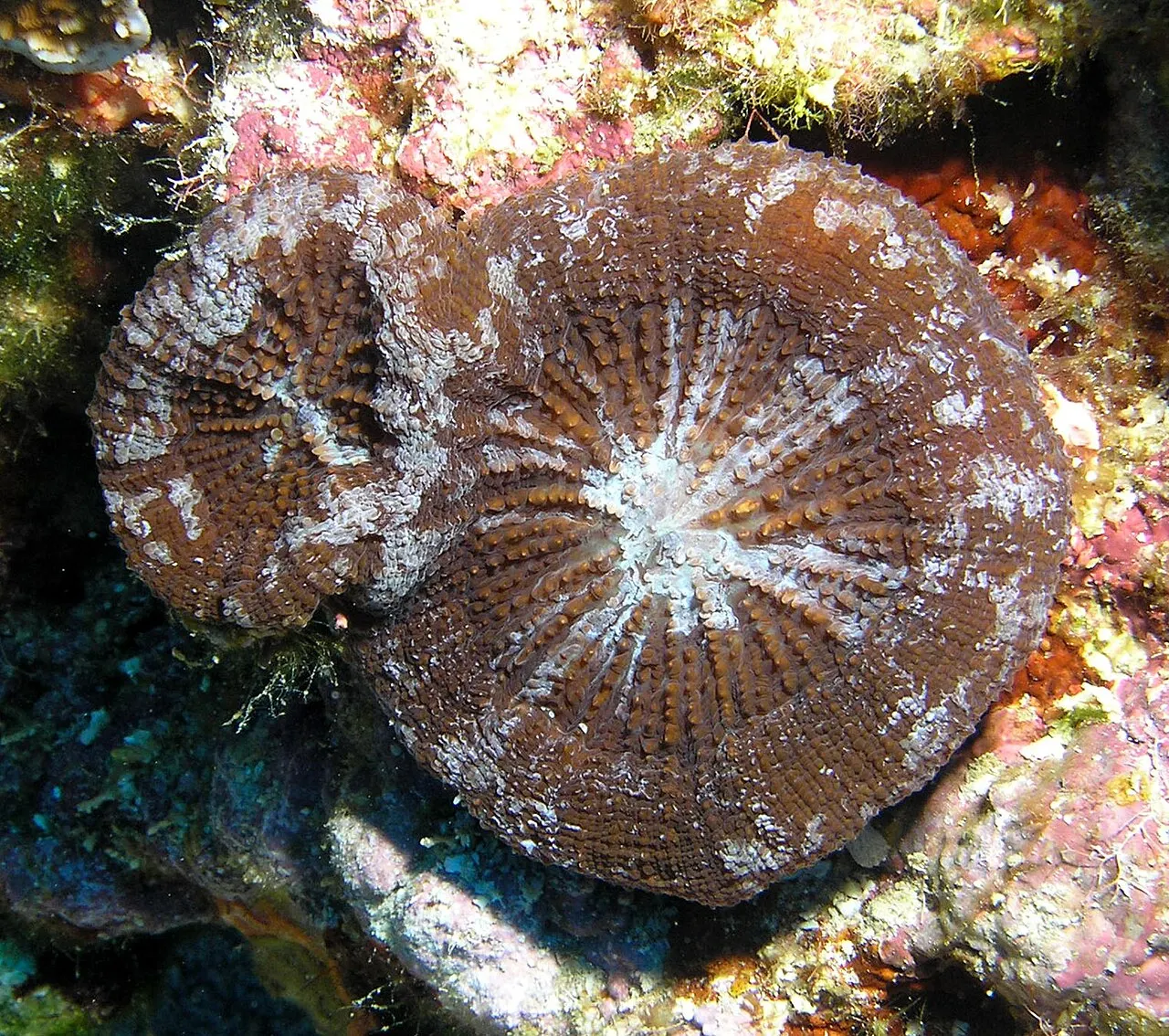
Scolymia cubensis, the artichoke coral, is a solitary stony coral of the western Atlantic and Caribbean. The IUCN Red List classed it as Critically Endangered in 2022 and lists its population as decreasing. It grows as a single disc up to 10 cm across, in light green, beige or rusty red.
How to recognise it
This is not a branching or boulder coral. Each one is a single large polyp in a hard skeleton, usually shaped like a flat, slightly dished disc or an upturned cone, and sometimes a cylinder. The largest reach about 10 cm across, and reef guides give a size range of roughly 2.5 to 10 cm.
Colour varies. Light green and light beige are reported, and deep rusty red also occurs. The skeleton has radiating plates, called septa, which number between about 104 and 112 in total.
Where it lives
The artichoke coral occurs in the western Atlantic, from Florida and the Bahamas through the Caribbean and, according to the Red List, down to Brazil. The IUCN range lists 40 countries and territories, including Bermuda.
The Red List gives a depth range of 10 to 92 m, though a reef guide gives 10 to 80 m. In Bermuda it has been recorded on reefs and platforms from 6 to 62 m. In Jamaica it has turned up on sandy channels between reefs and on muddy slopes near river mouths. It is reported to favour shaded spots.
Pins are Wikidata “endemic to” fields. Orange dots, when present, are GBIF occurrence tiles — survey bias included.
How it lives
Like most reef-building corals it hosts symbiotic algae (zooxanthellae) in its tissue, but it does not build reefs of its own. It reproduces by broadcast spawning, and the larvae drift in open water before settling on a reef. A larva that settles beside an adult can fuse with it, producing linked double or triple coral units.
It is reported to prefer steep reef surfaces, where sediment slides off more easily, and it clears silt with mucus and water movement. In Jamaica, a close relative, Scolymia lacera, competes with it for space and light and can kill its tissue through external digestion. The Red List gives a generation length of about 10 years.
Why it is in trouble
The 2022 assessment classes it as Critically Endangered under criterion A3c, which covers projected population loss linked to declining habitat. The Red List records a continuing decline in the area, extent and quality of its habitat, and the population trend is decreasing.
The recorded threats cover a broad range. They include coastal and urban development, tourism and recreation, shipping lanes, harvesting of aquatic resources, invasive and native problem species, several kinds of pollution including waste water and farm runoff, temperature extremes, and storms and flooding. The assessment does not rank them for this species.
The Red List also notes use as a pet or display animal at national scale, but no figures are given.
What is being done
The Red List records that the species occurs in at least one protected area. No recovery programme aimed only at this species is described.
Sources
Written for this catalog in our own words from the sources below, checked against them on 12 November 2026. Population figures are estimates and carry the year they were made. Status and assessment year: IUCN. 2026. The IUCN Red List of Threatened Species. Version 2026-1. iucnredlist.org.