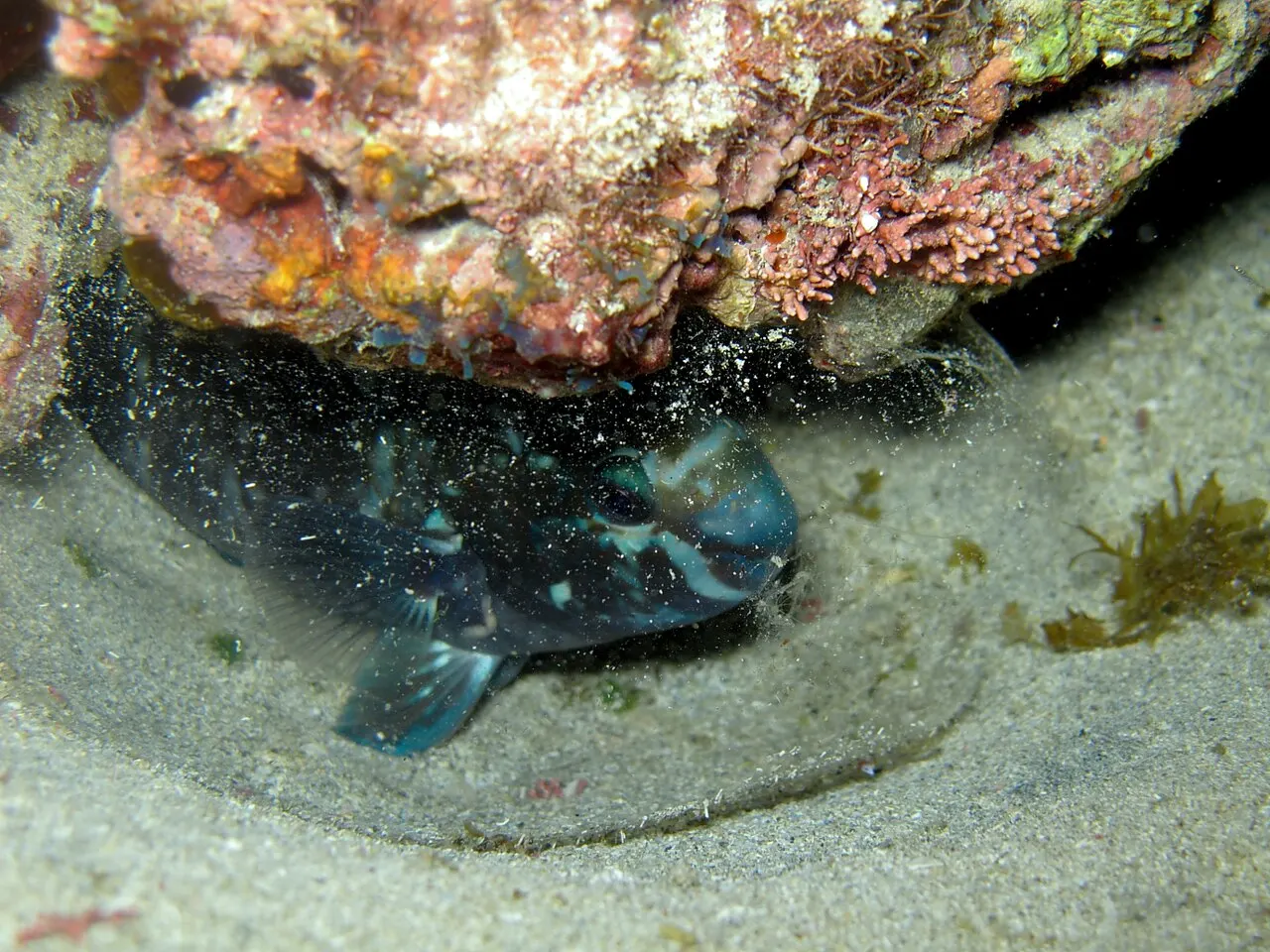
Endangered
Greenback Parrotfish
Scarus trispinosus
The greenback parrotfish, also called the greenbeak parrotfish, is the largest parrotfish of the southwestern Atlantic and lives only on Brazilian reefs. The IUCN Red List assessed it as Endangered in 2012, with a decreasing population, after fishing cut its numbers sharply.
How to recognise it
Size is the clearest clue. It is the biggest parrotfish in the region, and sources disagree on how big it gets: a 2025 review gives a maximum of 91 cm total length for Rio Grande do Norte, a study on the Abrolhos Bank lists 60 cm, and a conservation article puts it above 80 cm.
Like other parrotfishes, it starts life as a female and some fish later become male. Males are usually larger and less common than females. In Rio Grande do Norte the population has been counted at roughly eight females to every male.
Where it lives
It is endemic to Brazil, found from Maranhao (about 0 degrees S) to Santa Catarina (about 27 degrees S) and most common in tropical water between 0 and 18 degrees S. The Red List gives a depth range of 1 to 45 m and names seagrass beds, coral reefs, rocky reefs and macroalgal beds as habitat.
Young and small fish mostly use shallow inshore reefs as nurseries. Bigger, older fish tend to move to deeper offshore reefs, and large fish of 70 to 80 cm have reportedly been seen at about 70 m off Rio Grande do Norte.
Pins are Wikidata “endemic to” fields. Orange dots, when present, are GBIF occurrence tiles — survey bias included.
How it lives
It grazes mainly on the film of algae growing on rock and on crusty coralline algae. Less than 1 percent of its bites are taken from live coral. Fish above roughly 40 cm excavate the reef surface as they feed, while smaller ones mostly scrape it and take more bites per minute.
It matures late for a parrotfish. In Rio Grande do Norte, half the fish are mature at about 39 cm and 4.2 years old. Maximum ages recorded range from 22 years there to 7 years on the Abrolhos Bank, and the Red List gives a generation length of 7 to 10 years.
Why it is in trouble
The Red List names harvest by small-scale and subsistence fishing as the threat. Small-scale fishers use nets and spearguns, and the fish is mostly sold as fillets in local and regional markets. Recreational spearfishers go after the largest fish. At Rio do Fogo, the landings were mostly immature fish of about 38 cm, taken from inshore reefs.
Overall numbers are estimated to have fallen by at least 50 percent since the late 1980s. In the Costa dos Corais region, fishers reported a 64 percent drop in the number of fish caught and a 67 percent drop in the weight of the largest ones between the 1980s and the 2010s. The fish is regarded as ecologically extinct at Arraial do Cabo in Rio de Janeiro.
What is being done
Brazil placed the species on its national Red List in 2014. Abundance and biomass are much higher inside no-take marine protected areas, yet both juveniles and adults declined between 2003 and 2008 even inside no-take areas on the Abrolhos Bank, so reserves alone are not enough.
A 2018 national recovery plan limits fishing to authorized artisanal fishers in multiple-use protected areas, with a size window of 39 to 63 cm and spearguns as the only permitted gear. Nets and recreational fishing are banned, and implementation began in some regions only in 2021. Fishers can easily hide where a catch came from, and authors of a Global Seafood Alliance article say the situation is the worst of both worlds. The 2025 review calls a fishing moratorium the most effective option, and the article argues a live fish may be worth more to dive tourism.
Sources
Written for this catalog in our own words from the sources below, checked against them on 12 November 2026. Population figures are estimates and carry the year they were made. Status and assessment year: IUCN. 2026. The IUCN Red List of Threatened Species. Version 2026-1. iucnredlist.org.



