Endangered
Ryukyu tube-nosed bat
Murina ryukyuana
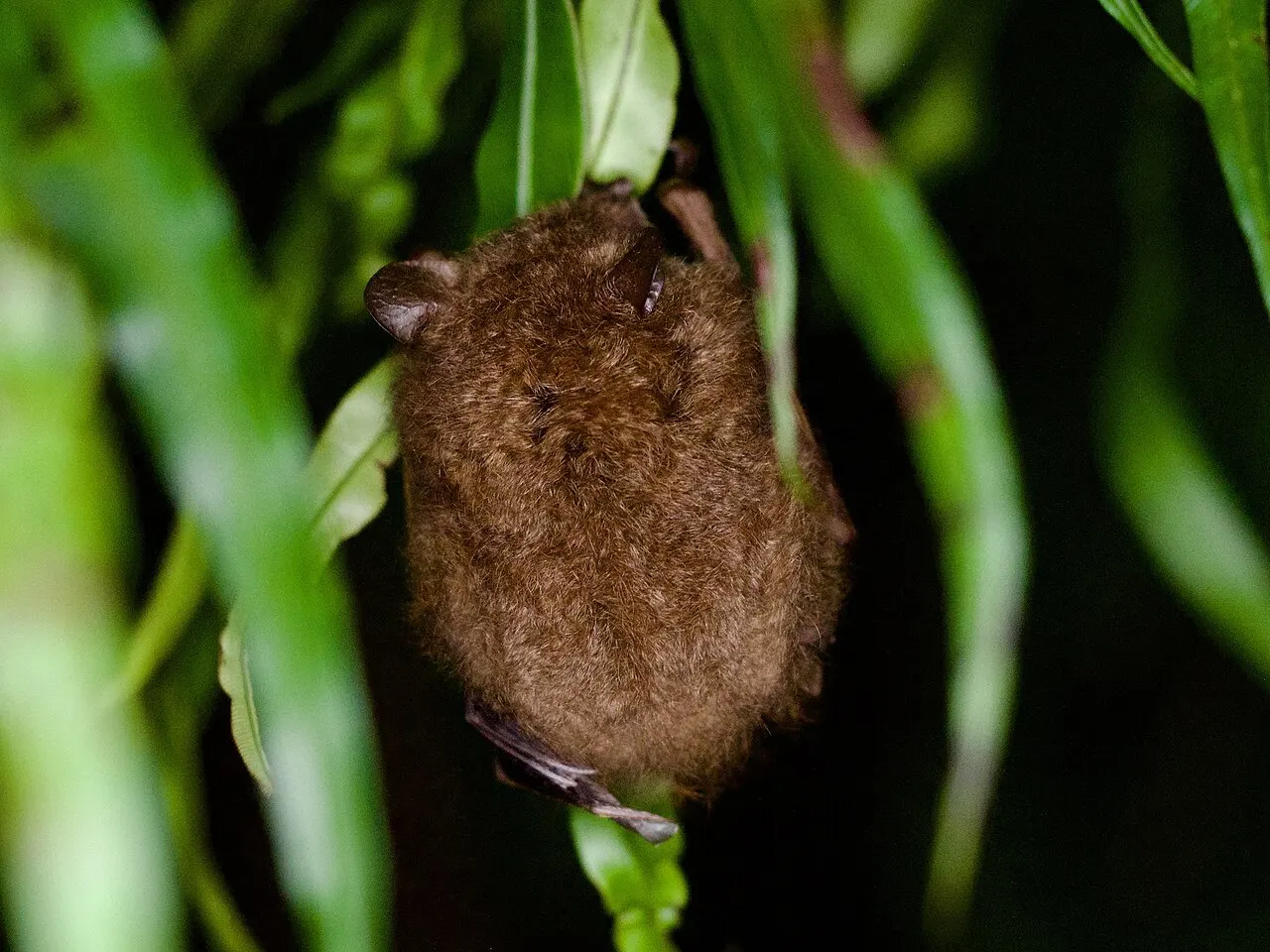
The Ryukyu tube-nosed bat (Murina ryukyuana) is a small brown forest bat found on just three islands in Japan's central Ryukyu chain. The IUCN Red List rated it Endangered in 2019, mainly because it depends on older evergreen forest in a very small area.
How to recognise it
It's a small vesper bat in the genus Murina, with straight brown fur and rounded ears about 36 mm long. Body weight isn't well documented in the sources available. Maeda and Matsumura described it as a species in 1998 from specimens collected in northern Okinawa.
Where it lives
The bat is endemic to three islands, Okinawa, Tokunoshima and Amami-Oshima, where it lives only in subtropical evergreen broad-leaf forest. The Red List puts its extent of occurrence at about 5,251 square kilometres and the area it actually occupies at about 310 square kilometres, split between three locations.
The population is described as severely fragmented, and the area it occupies is still shrinking.
Pins are Wikidata “endemic to” fields. Orange dots, when present, are GBIF occurrence tiles — survey bias included.
How it lives
A radio-tracking study published in Ecology and Evolution in 2021 followed 17 of these bats (8 males, 9 females) in Kunigami Village, Okinawa, between September 2017 and September 2019. It found they roost in plants all year, rather than in caves or buildings.
Bats outside the breeding season roosted alone, usually in understory foliage, and 55 percent of those roosts were in two plants, a fern and a ginger relative. Maternity roosts were different. About 41 percent were in tree cavities, nearly all in one kind of oak-like tree, and most of the rest in foliage. Maternity groups held 2 to 15 bats, averaging about 6, and sat higher up (about 4.3 m on average, against 2.3 m for other roosts).
They also stood in older forest. Other roosts averaged about 52 years of stand age, while maternity roosts were in stands at least 57 to 61 years old. Pregnant or nursing bats were recorded from mid-April to late July, and maternity roosts were recorded from early May to mid-November. Individuals changed roost often, staying about 1.6 days on average, and the longest moves averaged under 200 m. Their diet hasn't been studied.
Why it is in trouble
Forest loss is the main concern. The 2021 study treats forest degradation as the likely greatest threat, and notes heavy logging of secondary forest on Okinawa in the 1950s, with mature trees targeted from the 1960s to the 1990s. Because the bats roost low in the understory and nurse young in older stands, removing undergrowth or old trees can strip out roosts directly.
There is no population count. The species is listed as Endangered by the IUCN and by Japan's Ministry of the Environment.
What is being done
The Red List records that conservation sites have been identified across the whole range, and lists site protection and management as actions. The 2021 study recommends keeping understory plants, leaving trees along streams, preserving old forest (especially over 70 years old) with some snags and mature trees, and avoiding tree or understory removal between April and mid-July, when young are being raised.
Sources
Written for this catalog in our own words from the sources below, checked against them on 12 November 2026. Population figures are estimates and carry the year they were made. Status and assessment year: IUCN. 2026. The IUCN Red List of Threatened Species. Version 2026-1. iucnredlist.org.




