Endangered
Rhionaeschna galapagoensis
Rhionaeschna galapagoensis
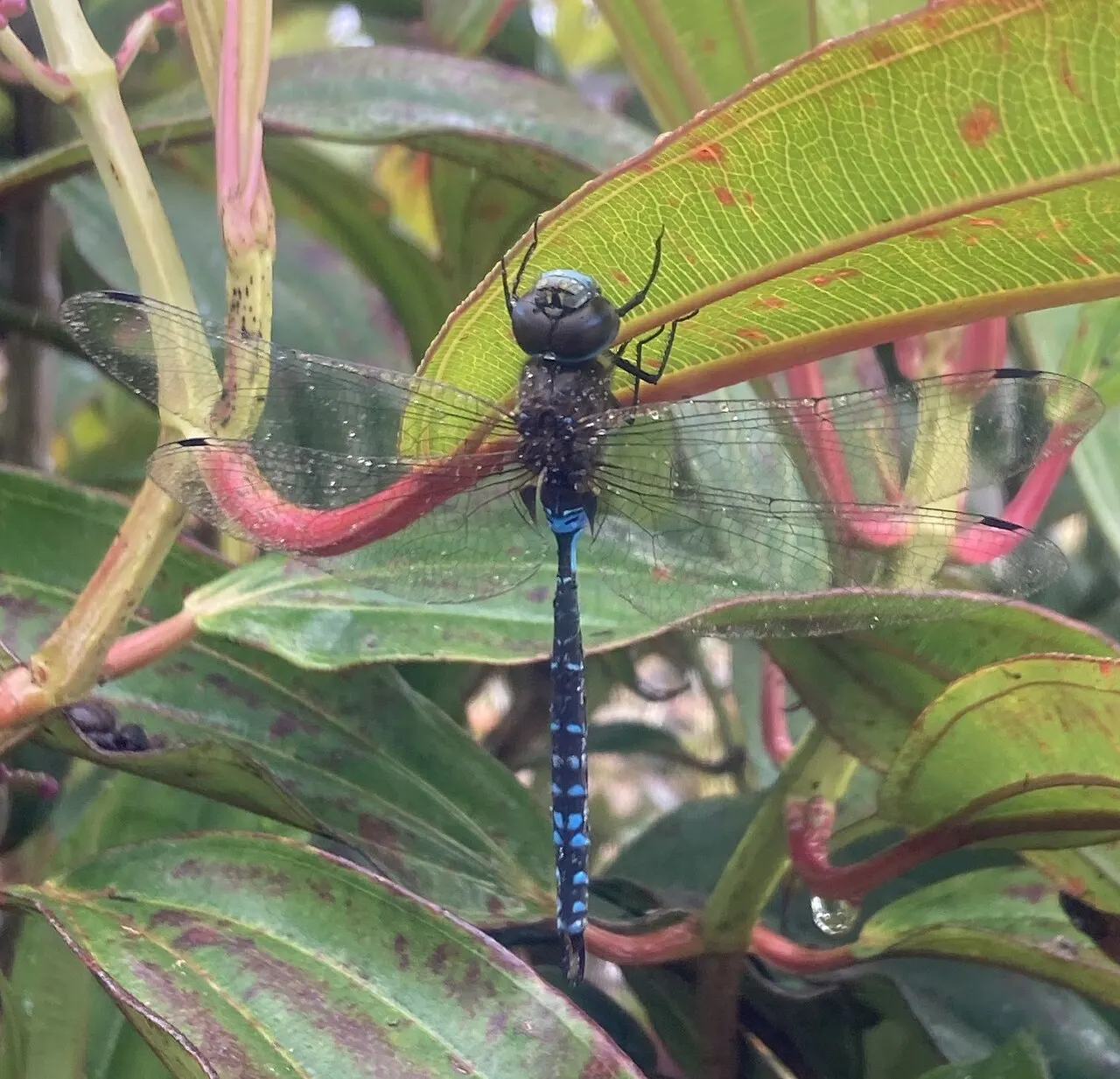
Rhionaeschna galapagoensis is a darner dragonfly found only in the Galápagos Islands. The IUCN Red List rated it Endangered in 2009, based on a tiny range and a handful of sites. A 2016 field study on San Cristóbal found larvae very common there, so the picture is less clear than the listing suggests.
What it is
It belongs to the darner family (Aeshnidae) and was described by Currie in 1901. Its closest relative is Rhionaeschna elsia. A 2016 study by Cordero-Rivera and colleagues used molecular data to show that the two are sister species with a very small genetic distance. The two are parapatric, meaning their ranges meet without overlapping, and the young age of the islands is offered as the reason they are so alike.
Several adult features once used to tell the two apart turned out to vary too much to rely on. A black band over the fronto-clypeal suture, the seam on the face between the plates above the mouth, proved a dependable marker. The same study gave the first description of the final-stage larva.
Where it lives
The species is endemic to the Galápagos, which belong to Ecuador. The Red List counts three locations, puts the extent of its range at about 400 square kilometres and gives an elevation of 143 to 600 m.
The 2016 work was based on San Cristóbal Island. There, larvae were very common and widespread in mountain streams and a pond in the south-west of the island.
Pins are Wikidata “endemic to” fields. Orange dots, when present, are GBIF occurrence tiles — survey bias included.
How it lives
Adults gather in swarms of tens of individuals at sunrise in coastal vegetation, hunting small flying insects. On San Cristóbal they fed alongside adults of a different dragonfly, Tramea cf. cophysa.
Males patrol short stretches of stream and the pond. Females lay eggs alone on floating vegetation, in both running and still water. Researchers watched one mating, which lasted 10 minutes.
Why it is in trouble
The 2009 assessment lists housing and urban areas, tourism and recreation areas, recreational activities, problematic native species and other changes to ecosystems as threats, along with several named species. It rated the population trend as unknown.
The 2016 study found large populations on San Cristóbal that appeared not to be threatened. The Endangered listing therefore rests mainly on how small the known range is and how few sites it covers, not on measured declines.
What is being done
Part of its range lies inside a protected area, and the assessment records awareness programmes, training, and site protection and management. No species-specific recovery plan is described.
Sources
Written for this catalog in our own words from the sources below, checked against them on 12 November 2026. Population figures are estimates and carry the year they were made. Status and assessment year: IUCN. 2026. The IUCN Red List of Threatened Species. Version 2026-1. iucnredlist.org.




