Critically Endangered
Red ruffed lemur
Varecia rubra
The red ruffed lemur is one of two species in the genus Varecia, the ruffed lemurs.
Appearance
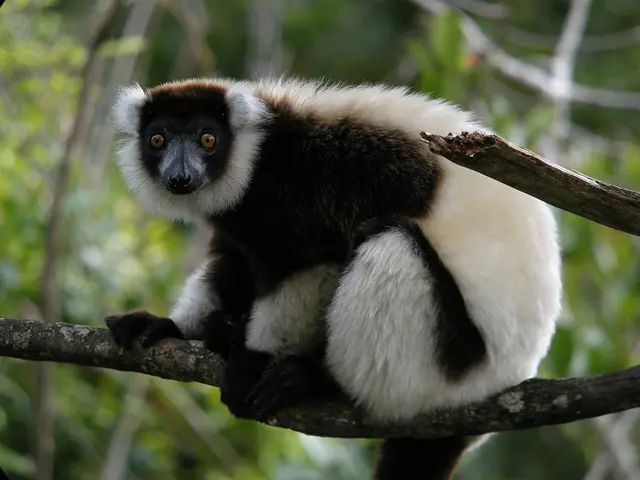
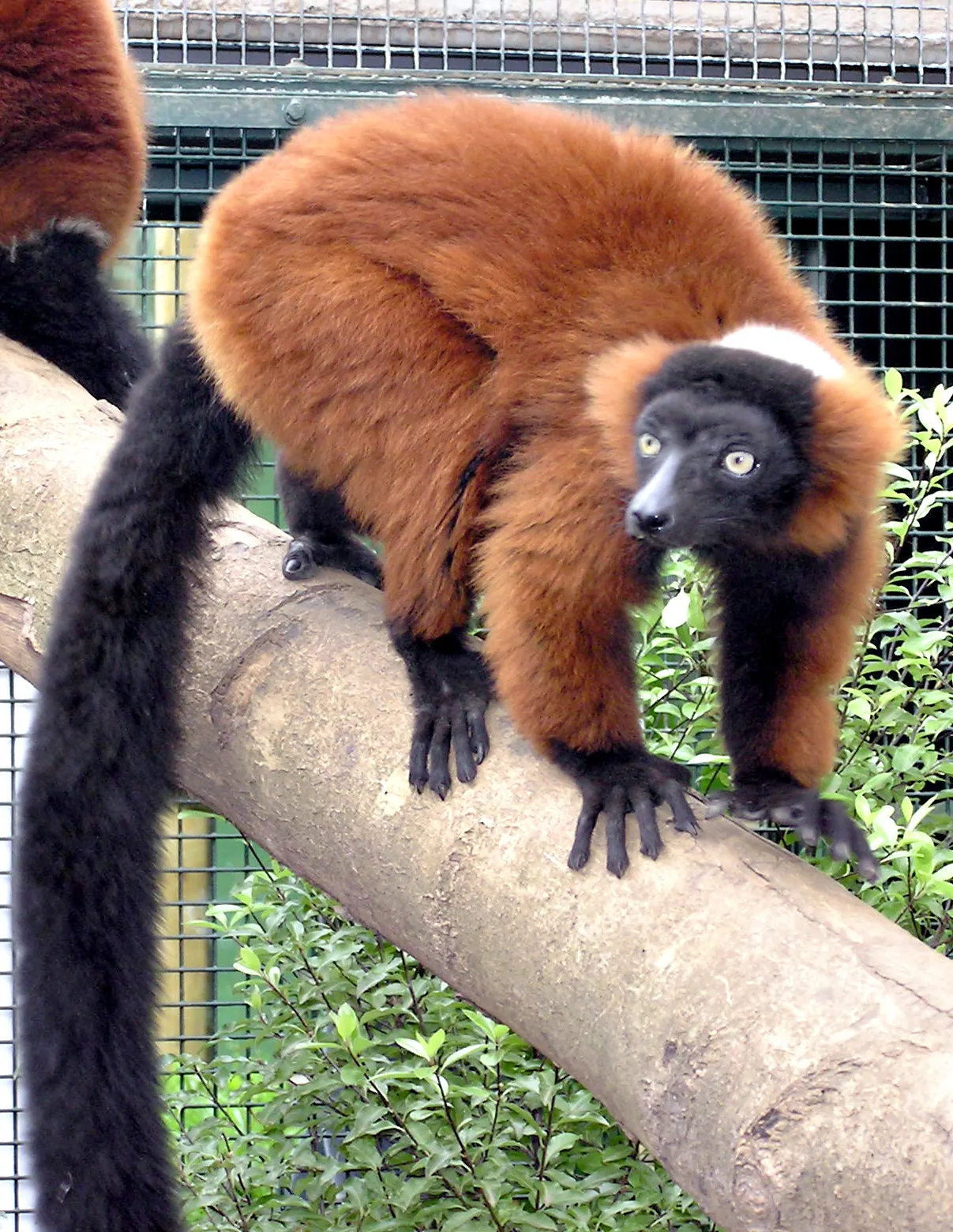
Red ruffed lemurs have a narrow snout with small back ears that are sometimes hidden by their long fur. As their name would suggest, they have a rust-coloured ruff and body. The red ruffed lemur is one of two species in the genus Varecia, the ruffed lemurs. The other is the black-and-white ruffed lemur (Varecia variegata).
It is one of the largest primates of Madagascar with a body length of 53 cm, a tail length of 60 cm and a weight of 3.3–3.6 kg.
Range and habitat
Like all lemurs, it is native to Madagascar. It occurs only in the rainforests of Masoala, in the northeast of the island.
Pins are Wikidata “endemic to” fields. Orange dots, when present, are GBIF occurrence tiles — survey bias included.
Diet and breeding
It is a diurnal animal, and most active in the morning and evening. The red ruffed lemur are herbivores and are primarily frugivorous, though it is known to eat leaves and shoots.
Unlike all other diurnal primates, females keep their infants in nests 10–20 m (33–66 ft) above the forest floor, made with twigs, leaves, vines, and fur. Like all lemurs, and many Madagascar mammals, it has a fixed breeding season that takes place towards the end of the dry season (May to July). Newborns have fur and can see, but as they cannot move, the female leaves them in the nest until they are seven weeks old.
In crisis
The IUCN Red List states that the red ruffed lemur is critically endangered. Logging, burning of habitat, cyclones, mining, hunting, and the illegal pet trade are primary threats. Recent studies show that they are critically endangered with a declining wild population.
Illegal logging for valuable tropic hardwoods, such as rosewood, is a particular threat, and linked to political instability. The captive population of red ruffed lemurs stands at 590 animals.
CITES lists this taxon on Appendix I. Confirm the current appendix on the CITES checklist.
Red ruffed lemur is Critically Endangered on the IUCN Red List (assessed 2020, criteria A4cd). Confirm the official criteria and any later count on the assessment page.
Sources
Adapted from the English Wikipedia article on Red ruffed lemur (CC BY-SA 4.0; authors are listed in the article history; changes were made), Wikidata item Q516703. Family and order context is original field-guide writing about the group, not a copied assessment of this one species. Not an IUCN assessment. Counts, when quoted, can change — confirm them on the recovery programme and on iucnredlist.org. Status and assessment year: IUCN. 2026. The IUCN Red List of Threatened Species. Version 2026-1. iucnredlist.org.