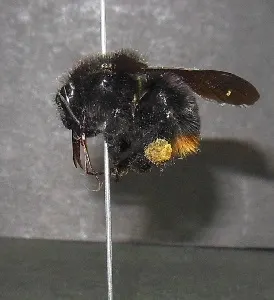
Endangered
Bombus brachycephalus
Bombus brachycephalus
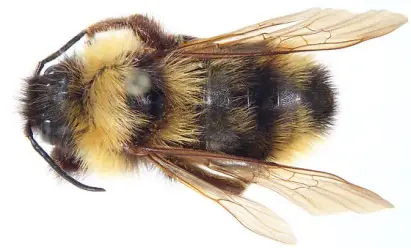
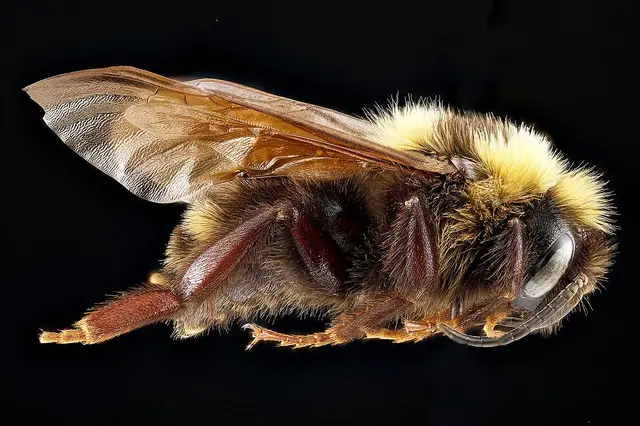
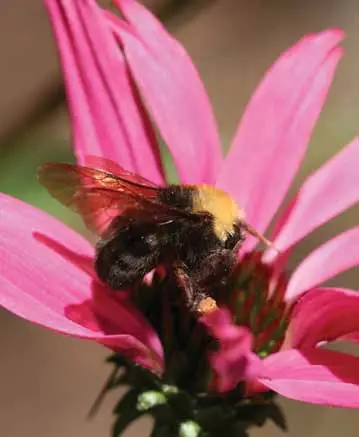
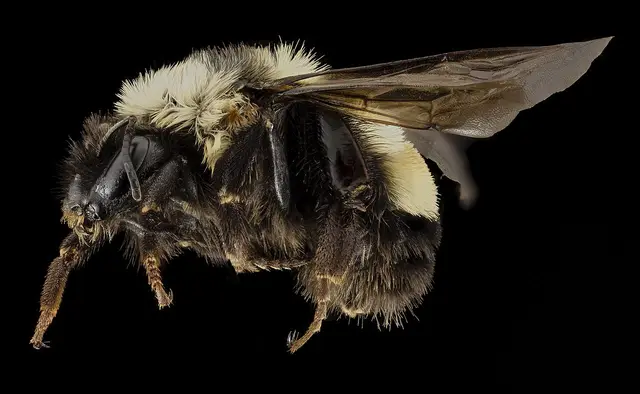
Bombus brachycephalus is a bumblebee of the highlands of Mexico and northern Central America, with no widely used common name. The IUCN assessed it as Endangered in 2015, with a decreasing population, after its range shrank sharply as forests and scrub gave way to farms, ranches, towns and mines.
What kind of bee it is
It is a bumblebee in the family Apidae, described by the Austrian entomologist Anton Handlirsch in 1888. Its type locality is given only as Mexico. Taxonomists place it in the genus Bombus, though the subgenus varies between sources (Cullumanobombus in some, Brachycephalibombus in the Moure bee catalogue). Other names listed under it include Bombus krusemani, from near Antigua in Guatemala, and Bremus neotropicus, from Guatemala City.
Bumblebees of Mexico and Central America are poorly documented, and for this species there is little published detail on its appearance, nests or favourite flowers.
Where it lives
It is a Neotropical species recorded from Mexico, Guatemala, Honduras and El Salvador. In Mexico it has been recorded from Chiapas, Guerrero, Jalisco, Michoacan, Morelos, Nayarit, Oaxaca, Puebla, San Luis Potosi and Veracruz. The IUCN puts its extent of occurrence at about 109,000 square kilometres, at elevations from roughly 300 to 2,800 m.
It is mainly a mountain and highland bee. The IUCN lists tropical dry forest, moist and dry shrubland, heavily degraded former forest and rural gardens as habitat, and pine-oak forest and tropical forest are also named. Specimens have been collected in January, February and July to December, which suggests adults are on the wing through much of the year.
Pins are Wikidata “endemic to” fields. Orange dots, when present, are GBIF occurrence tiles — survey bias included.
Why it is in trouble
The Red List entry names a long list of pressures. Ongoing ones include large-scale and small-holder farming, grazing and ranching, shifting agriculture, housing, mining and quarrying, more frequent or intense fire, and herbicides and pesticides. Loss of the wild flowering plants it feeds on at forest edges is another worry. Drought is listed as a future threat, as is the common eastern bumblebee (Bombus impatiens), a North American species brought into Mexico.
The 2015 assessment compared about 26,000 bumblebee records, from museum collections (1867 to 2004) and recent sampling (2005 to 2014). It found the species' current range is only about 28 percent of its historical size, and its relative abundance about 24 percent of the historical level. Averaging the two gave a decline of about 65 percent, enough for Endangered status under criterion A2bc, and the extent of occurrence is still shrinking.
What is being done
The assessment lists several conservation actions as needed: managing and protecting sites, protecting habitat, policies and regulations, restoring habitat, and raising awareness. No species-specific recovery programme is documented.
The records behind the assessment came from collaborative sampling by ECOSUR (El Colegio de la Frontera Sur) in Mexico and the University of San Carlos in Guatemala, which is the main source of modern data on Mesoamerican bumblebees.
Sources
Written for this catalog in our own words from the sources below, checked against them on 12 November 2026. Population figures are estimates and carry the year they were made. Status and assessment year: IUCN. 2026. The IUCN Red List of Threatened Species. Version 2026-1. iucnredlist.org.