Critically Endangered
Bombus variabilis
Bombus variabilis
The variable cuckoo bumble bee (Bombus variabilis) is a parasitic bumble bee with records from the eastern and central United States south through Mexico to Guatemala. The IUCN Red List rated it Critically Endangered in 2016. It has reportedly not been seen in the United States for at least 20 years and may be gone there.
How to recognise it
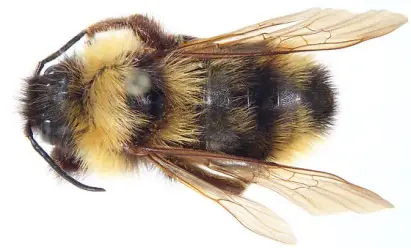
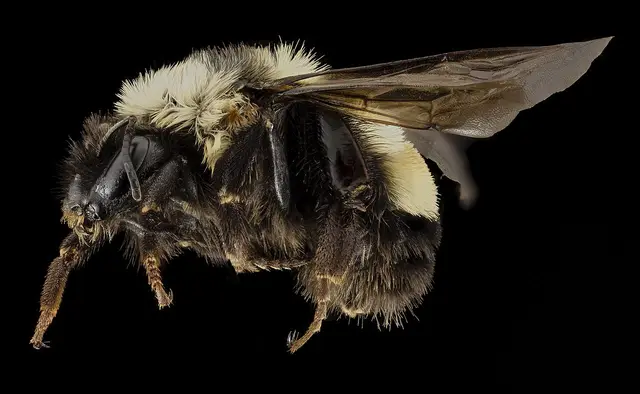
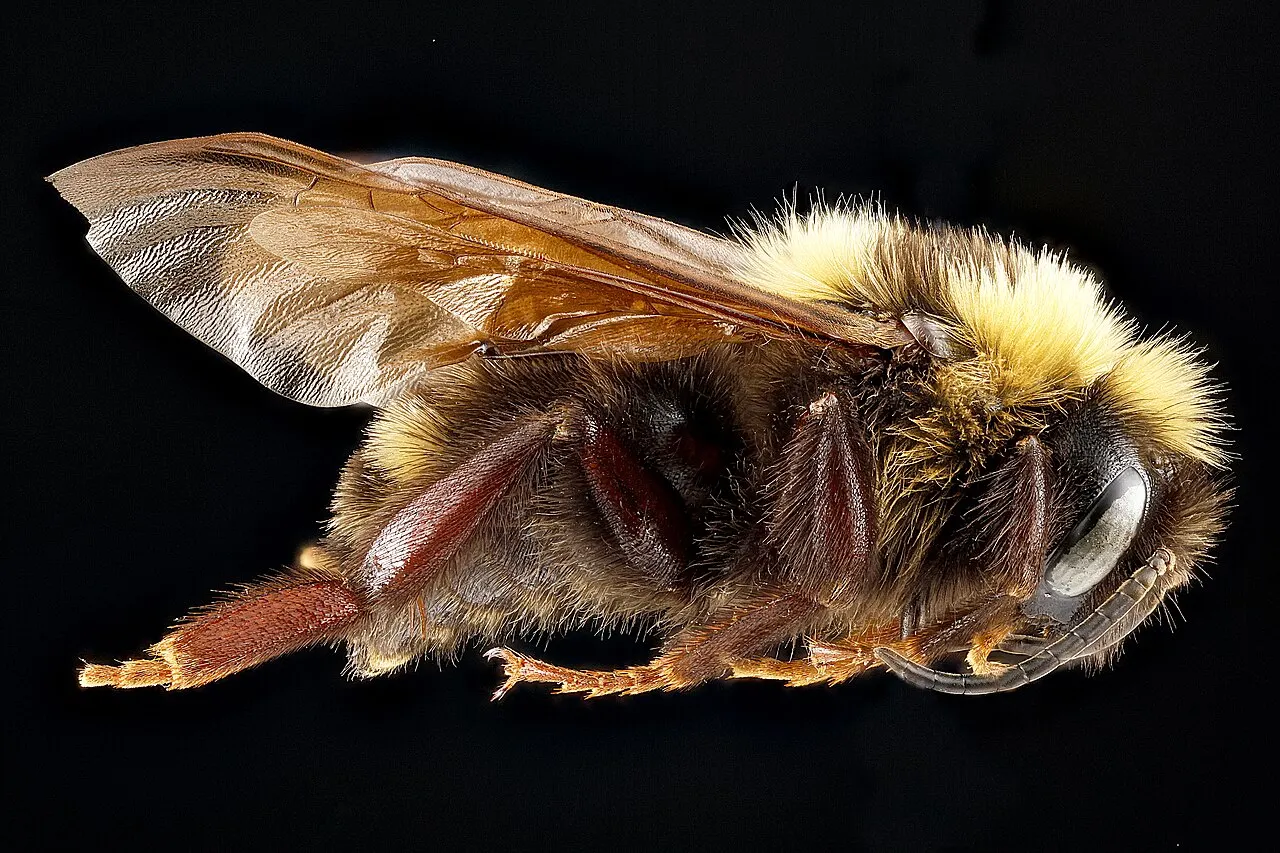
It's a cuckoo bumble bee, a group (the subgenus Psithyrus) whose members have lost the ability to collect or store pollen. One sign is the hind legs: there are no pollen baskets, the structures ordinary bumble bees use to carry pollen home.
The face is dark, with yellow hair on top of the head, and the wings are dark brown. The thorax is variable, marked by black spots or patches, which is where the name comes from. Females have an entirely black abdomen. Males differ more in their hair colour patterns. Cresson described the species in 1872.
How it lives
Cuckoo bumble bees can't raise their own young. A female of this species finds a nest of the American bumble bee (Bombus pensylvanicus), kills the queen, and takes over the colony, so the host's workers end up raising her offspring. The American bumble bee is the only host known.
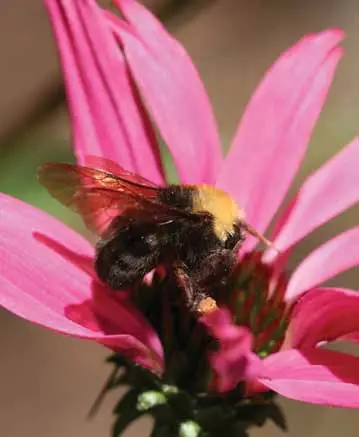
Adults forage at flowers such as asters, tickseeds (Bidens) and coneflowers (Echinacea). The Red List gives temperate grassland, pasture and temperate forest as its habitats.
Pins are Wikidata “endemic to” fields. Orange dots, when present, are GBIF occurrence tiles — survey bias included.
Where it lives
Records are concentrated in the eastern temperate forests and the Great Plains of North America. The Red List names more than 20 US states, from Arizona and Texas to New Hampshire and New York, plus Quebec in Canada and, in the south, Chiapas, Guerrero, Jalisco, Oaxaca and Veracruz in Mexico, and Guatemala.
Recent confirmed sightings are scarce. Texas Parks and Wildlife lists it, with the American bumble bee and the Sonoran bumble bee, among three Texas bumble bees of greatest conservation need. The US Fish and Wildlife Service calls it one of the rarest bumble bees in North America, confirmed only a handful of times in recent decades.
Why it is in trouble
Its fate is tied to its host. The American bumble bee has declined in recent years, and a cuckoo can't survive without the colonies it invades.
The 2016 assessment judged the species to be decreasing. Its threat list is broad: housing, commercial and industrial development, mining and quarrying, farming and grazing, herbicides and pesticides, changes in fire frequency, storms, drought, temperature extremes and diseases. The US Fish and Wildlife Service names pesticides, habitat loss or degradation, climate change and diseases carried by non-native bees.
The Red List treats the species as Critically Endangered rather than extinct, so it has not been declared lost.
What is being done
The assessment lists habitat restoration, resource and habitat protection, species recovery, and education and awareness among the conservation actions it calls for. The Fish and Wildlife Service says conserving this cuckoo depends heavily on conserving its host. It supports pollinator habitat projects for native bumble bees, including the New England Pollinator Partnership, run with the USDA Natural Resources Conservation Service and the Xerces Society.
Sources
Written for this catalog in our own words from the sources below, checked against them on 12 November 2026. Population figures are estimates and carry the year they were made. Status and assessment year: IUCN. 2026. The IUCN Red List of Threatened Species. Version 2026-1. iucnredlist.org.