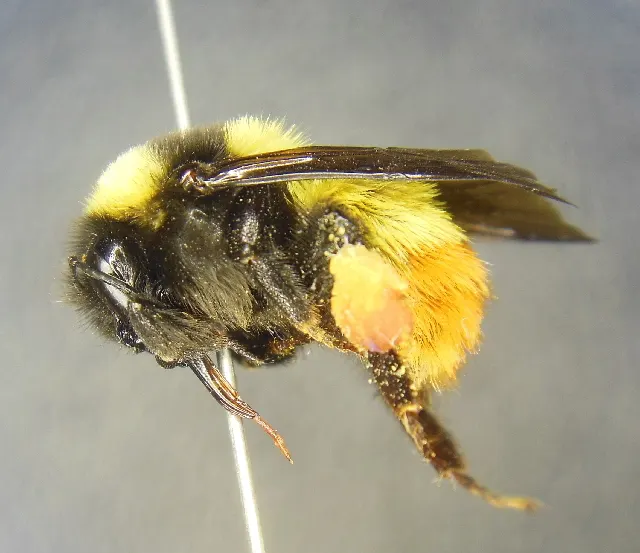
Endangered
Bombus haueri
Bombus haueri
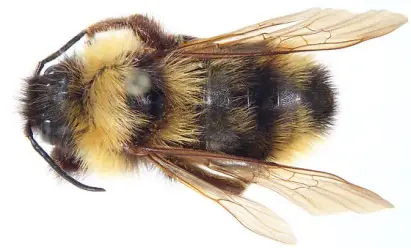
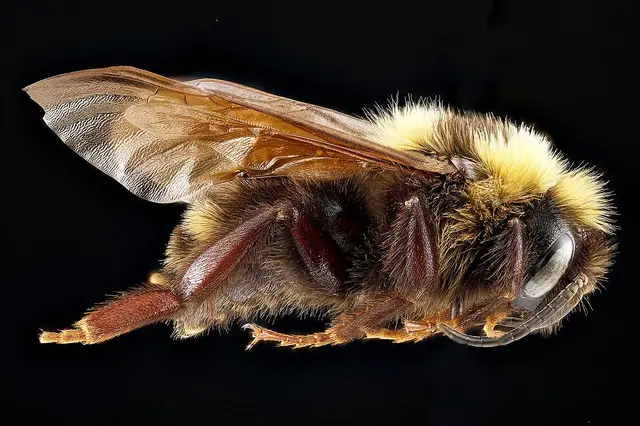
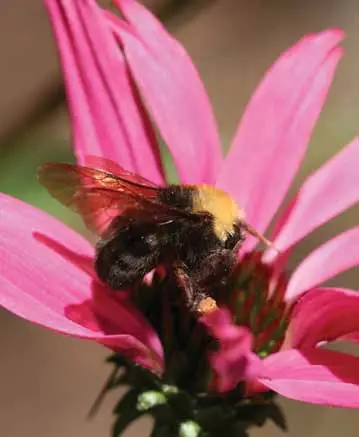
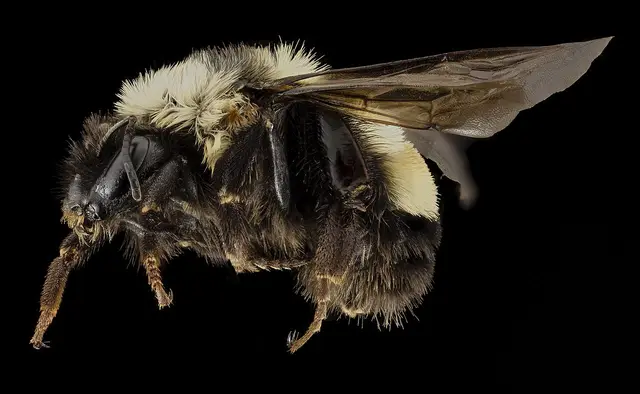
Bombus haueri is a Mexican bumblebee of the mountains and volcanic highlands. Once recorded across much of the north and centre of the country, it is now rare. The IUCN Red List rated it Endangered in 2015, with an estimated average decline of about 74 percent between historical and recent records.
Where it lives
Bombus haueri is endemic to Mexico and was described in 1888 by Handlirsch. The IUCN assessment lists records from a dozen areas: Aguascalientes, Chihuahua, Coahuila, Durango, Guanajuato, Jalisco, Mexico City, the State of Mexico, Michoacan, Morelos, Nuevo Leon and Puebla.
It is a highland bee. The assessment gives an elevation range of about 1,025 to 2,700 m and names temperate forest and temperate shrubland as its habitats. A 2004 study of how Neotropical and Andean bumblebees are distributed placed it among the species of a track it calls the Mexican Mountain.
Pins are Wikidata “endemic to” fields. Orange dots, when present, are GBIF occurrence tiles — survey bias included.
A bee that went missing
Museum specimens date from 1887 onward, and a large share were collected in 1991. After that the bee dropped out of the record. According to the IUCN assessment, it was not seen for 22 years, from 1991 to 2013, and since then it has been collected only in the State of Mexico and Durango.
GBIF holds a cluster of Durango specimens from 2014, so the bee still exists. It also lists one photo observation from the State of Mexico in 2020. The assessment puts its current range at roughly 10 percent of its historical range.
Why it is in trouble
The assessment lists a long run of pressures. Farmland, both industrial and small-holder, has replaced highland habitat. Herbicides and pesticides, fertiliser runoff and soil erosion add to the damage. Grazing, housing, commercial development and shifting agriculture are also named.
Natural hazards matter more than usual for a species with a shrinking range. Drought, temperature extremes, storms and flooding are on the list, and so are volcanoes, since the bee reportedly lives in volcanic highlands. The Red List records the population trend as decreasing.
What is being done
The conservation actions recommended are protection of habitat and resources, protection of sites, restoration of habitat, species recovery and public awareness. As of the 2015 assessment there was no recovery plan and no monitoring scheme, and no population estimate exists.
Sources
Written for this catalog in our own words from the sources below, checked against them on 12 November 2026. Population figures are estimates and carry the year they were made. Status and assessment year: IUCN. 2026. The IUCN Red List of Threatened Species. Version 2026-1. iucnredlist.org.