Critically Endangered
Pygmy three-toed sloth
Bradypus pygmaeus
Pygmy three-toed sloth is a mammal in the family Bradypodidae (order Pilosa) — Bradypus pygmaeus, recorded as Critically Endangered.
Appearance
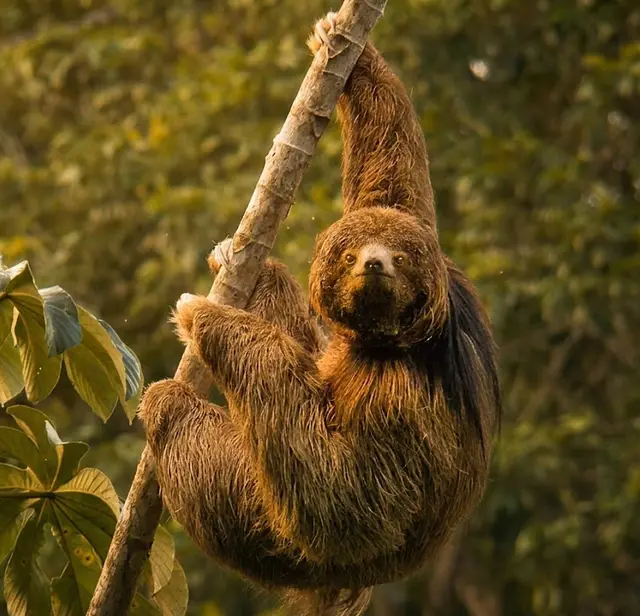
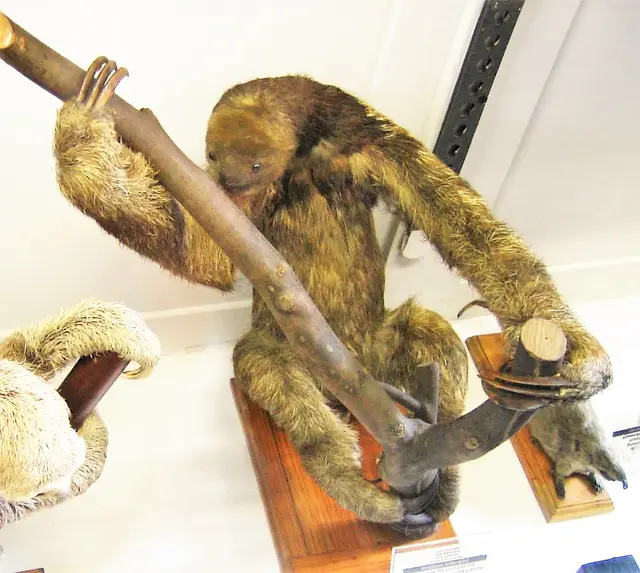
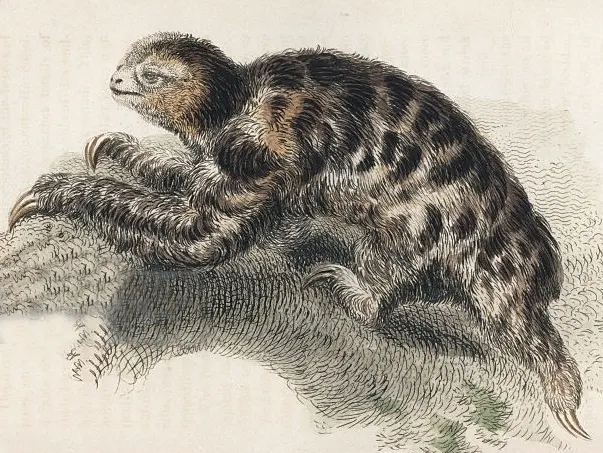
The pygmy three-toed sloth is significantly smaller than the other members of its genus, but otherwise resembles the brown-throated sloth. The brown-throated sloth is nearly 40% heavier and 15% smaller in head-and-body length than the pygmy three-toed sloth. Moreover, the brown-throated sloth is lighter on the crown.
According to Anderson and Handley Jr., the head-and-body length is between 48 and 53 centimetres (19 and 21 in), and the body mass ranges from 2.5 to 3.5 kg (5.5 to 7.7 lb).
The species was first described by Robert P.
Range and habitat
The pygmy three-toed sloth is unique in that it is found exclusively in the red mangroves of Isla Escudo de Veraguas. The island has a small area of approximately 4.3 square kilometres (1.7 sq mi). A 2012 census of pygmy three-toed sloths estimated the total population at 79 – of that 70 occurred on mangroves and 9 in the surroundings. The total area occupied by mangroves on the island was estimated to be around 10.67 hectares (0.0412 sq mi).
The species is endemic to Isla Escudo de Veraguas, a small island off the Caribbean coast of Panama. A 2012 census restricted to the coastal mangroves of the island initially found a population of around 79 individuals, nonetheless a 2015 study suggests this estimate fell considerably short.
Pins are Wikidata “endemic to” fields. Orange dots, when present, are GBIF occurrence tiles — survey bias included.
In crisis
The actual population is estimated to be between 500 and 1500 with a high-end estimate of 3200 individuals, many of whom were found further inland. The IUCN lists the pygmy three-toed sloth as critically endangered and they are listed on the world's 100 most threatened species.
CITES lists this taxon on Appendix II. Confirm the current appendix on the CITES checklist.
Pygmy three-toed sloth is Critically Endangered on the IUCN Red List (assessed 2022, criteria B1ab(ii,iii)+2ab(ii,iii)). Confirm the official criteria and any later count on the assessment page.
Sources
Adapted from the English Wikipedia article on Pygmy three-toed sloth (CC BY-SA 4.0; authors are listed in the article history; changes were made), Wikidata item Q244121. Family and order context is original field-guide writing about the group, not a copied assessment of this one species. Not an IUCN assessment. Counts, when quoted, can change — confirm them on the recovery programme and on iucnredlist.org. Status and assessment year: IUCN. 2026. The IUCN Red List of Threatened Species. Version 2026-1. iucnredlist.org.