Endangered
Puntius kelumi
Puntius kelumi
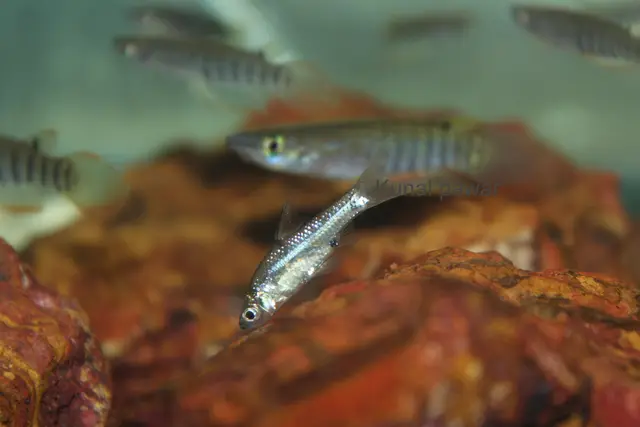
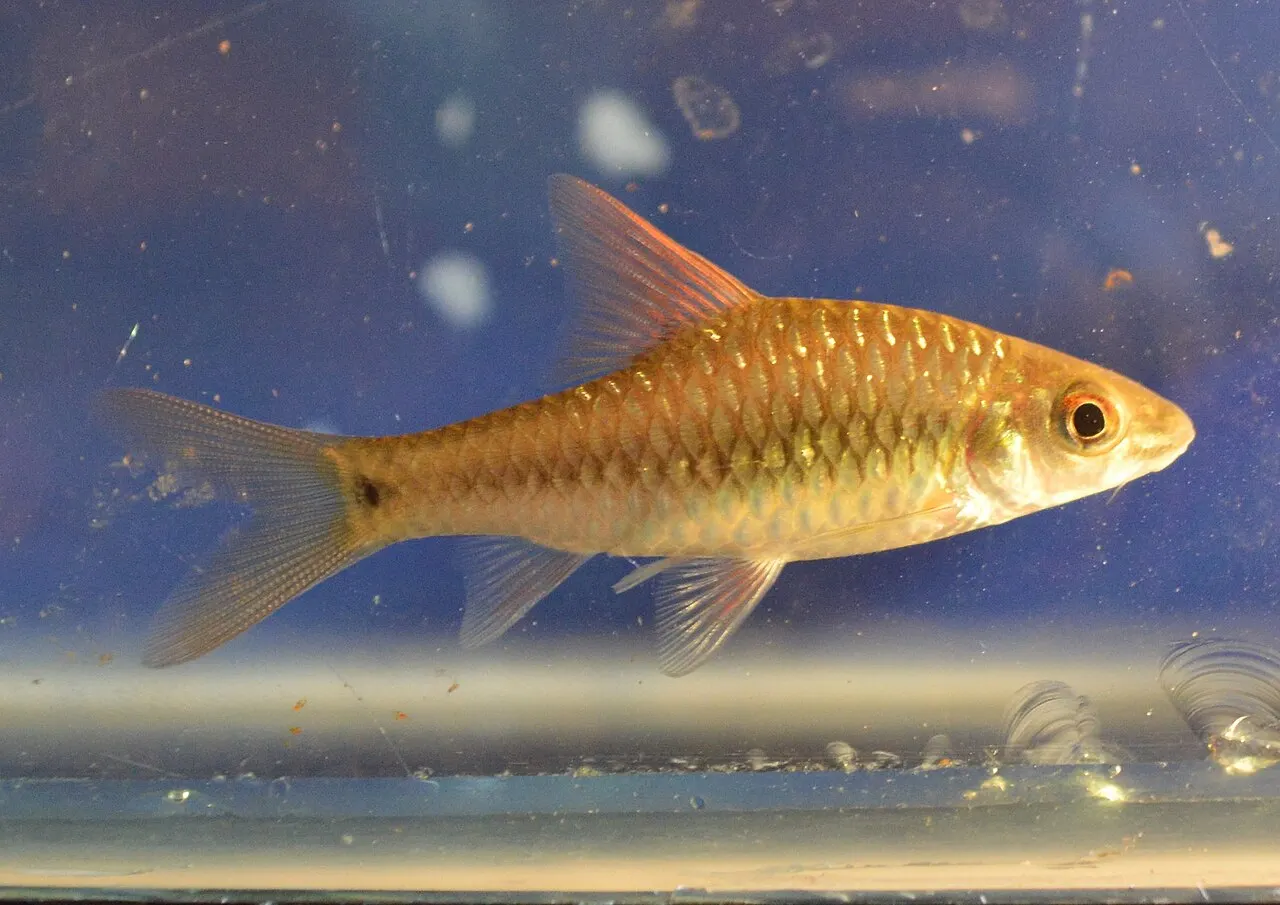
Kelum's long-snouted barb (Puntius kelumi) is a small freshwater fish found only in south-western Sri Lanka, mostly in clear hill streams. It was described as new to science in 2008 and was rated Endangered by the IUCN Red List in 2019, with a decreasing population.
How to recognise it
It's a barb, a member of the carp family (Cyprinidae). The scientists who described it in 2008 told it apart from other Sri Lankan and peninsular Indian Puntius by a few precise features. The last unbranched ray of the dorsal fin is smooth. There are no barbels on the snout, but there is a pair at the corners of the mouth, about as long as the eye is wide. The lateral line has 20 to 23 scales, and the body depth is about 29 to 36 percent of the length without the tail fin.
Breeding males develop rough skin on the sides of the head and body, covered in small tubercles. The species is named for Sri Lankan naturalist Kelum Manamendra-Arachchi. Its Sinhala name is Katu Pethiya.
Where it lives
Reports on the original description place it mainly in large, clear-water streams flowing off mountains, over granite, pebble or sand and often strewn with boulders. The Red List gives its habitat as permanent rivers and streams, and the fish is not a migrant.
Sri Lanka is its only country. The assessment records five locations at elevations of about 96 to 457 m. The area it occupies is estimated at 180 square kilometres, within an extent of occurrence of about 4,682 square kilometres, and the area it uses is recorded as still shrinking. It is known to occur in at least one protected area.
Pins are Wikidata “endemic to” fields. Orange dots, when present, are GBIF occurrence tiles — survey bias included.
Why it is in trouble
The Red List counts the population as decreasing and names three threats, all connected with water quality and each rated medium impact: nutrient loads, soil erosion and sedimentation, and herbicides and pesticides. A fish of clear, boulder-strewn streams is likely to feel all three.
No population estimate has been published, and little is recorded about its diet or spawning season.
What is being done
The assessment's checklist shows no recovery plan, no systematic monitoring and no captive population, and its only protective factor is the protected area where some fish live. Actions the assessment lists as relevant include site and area protection, awareness work, policy and regulation, national-level measures, and habitat restoration.
Sources
Written for this catalog in our own words from the sources below, checked against them on 12 November 2026. Population figures are estimates and carry the year they were made. Status and assessment year: IUCN. 2026. The IUCN Red List of Threatened Species. Version 2026-1. iucnredlist.org.
- IUCN Red List assessment (Fernando, Kotagama and Goonatilake, 2019)
- Pethiyagoda, Silva, Maduwage and Meegaskumbura 2008, Puntius kelumi, a new species of cyprinid fish from Sri Lanka (Ichthyol. Explor. Freshwaters 19)
- Practical Fishkeeping, New Puntius described from Sri Lanka
- Wikipedia, Puntius kelumi