Critically Endangered
Provanna segonzaci
Provanna segonzaci
Provanna segonzaci is a small deep-sea snail from hydrothermal vents near the Valu Fa Ridge, southeast of Fiji, in Tongan waters. It is known from a single location at about 1,750 to 1,900 metres depth, and the IUCN rated it Critically Endangered in 2021.
What kind of animal it is
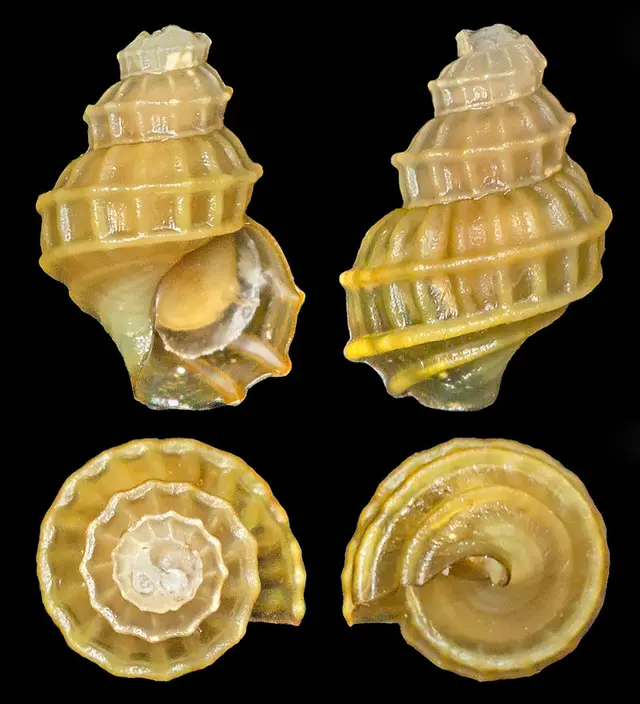
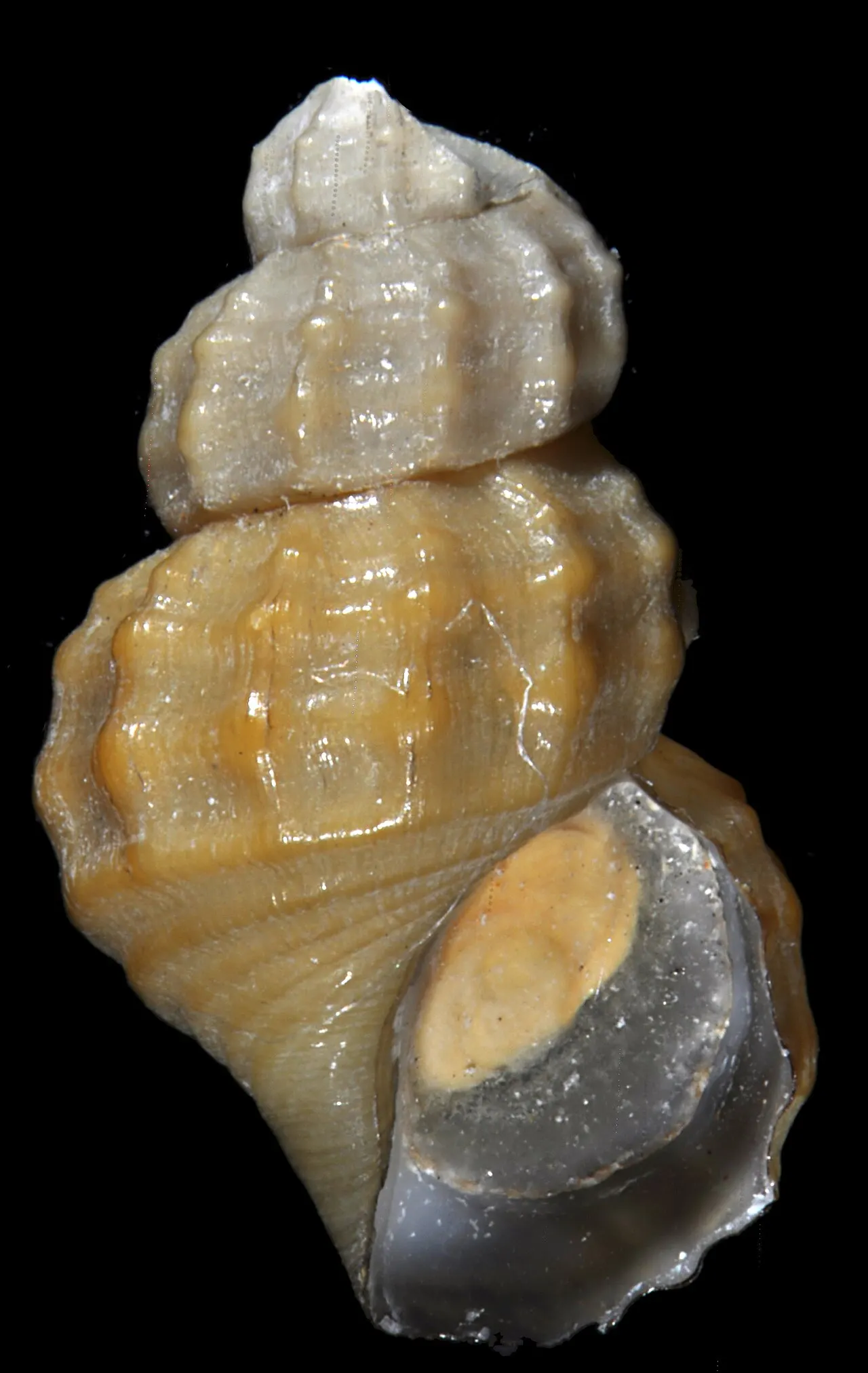
Provanna segonzaci is a marine gastropod, a sea snail, in the family Provannidae. It was described by Warén and Ponder in 1991, and the original specimen (the holotype) is held at the national natural history museum in Paris. Little has been published about its appearance or behaviour.
Descriptions of the genus Provanna as a whole, not of this species, give an idea of the group. Its snails have ovate, spindle-shaped shells with curved ribs crossed by spiral cords. In shells that have lost the tip, the opening is sealed with a chalky plug. The genus is ancient, with fossil species from seep deposits in Japan dated to roughly 93 to 100 million years ago.
Where it lives
The species is recorded from hydrothermal vents off the Valu Fa Ridge, southeast of Fiji. The IUCN lists it as endemic to Tonga, resident (not migratory), and living at about 1,750 to 1,900 metres. The assessment counts one location, estimates the extent of occurrence at about 76 square kilometres and the area occupied at about 8 square kilometres, and calls the range restricted.
Across the genus, members are common at hydrothermal vents and at cold seeps, where hydrocarbons leak from the sea floor. Most graze filamentous bacteria and a few eat detritus. How this particular species feeds has not been documented.
Pins are Wikidata “endemic to” fields. Orange dots, when present, are GBIF occurrence tiles — survey bias included.
Why it is in trouble
No one has counted this snail, and the assessment records its population trend as unknown. The Critically Endangered listing (criteria B1ab(iii)+2ab(iii)) rests on its tiny range and single location, plus a future threat: mining and quarrying of the sea floor, which could affect 50 to 90 percent of its range. The severity of that threat is listed as unknown.
The stresses named are degradation of the vent ecosystem, deaths of animals and disturbance.
What is being done
At the time of the 2021 assessment, nothing specific was in place. None of the population is within a protected area, and there is no monitoring scheme, recovery plan, education programme or captive population. The assessment suggests resource and habitat protection and policy action at international and national levels.
Sources
Written for this catalog in our own words from the sources below, checked against them on 12 November 2026. Population figures are estimates and carry the year they were made. Status and assessment year: IUCN. 2026. The IUCN Red List of Threatened Species. Version 2026-1. iucnredlist.org.