Critically Endangered
Sibillini Mountain Grasshopper
Podisma silvestrii
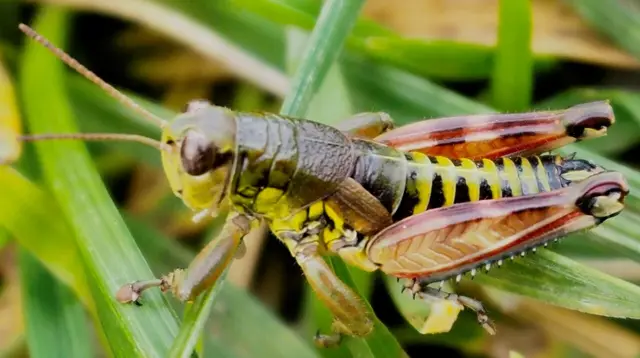
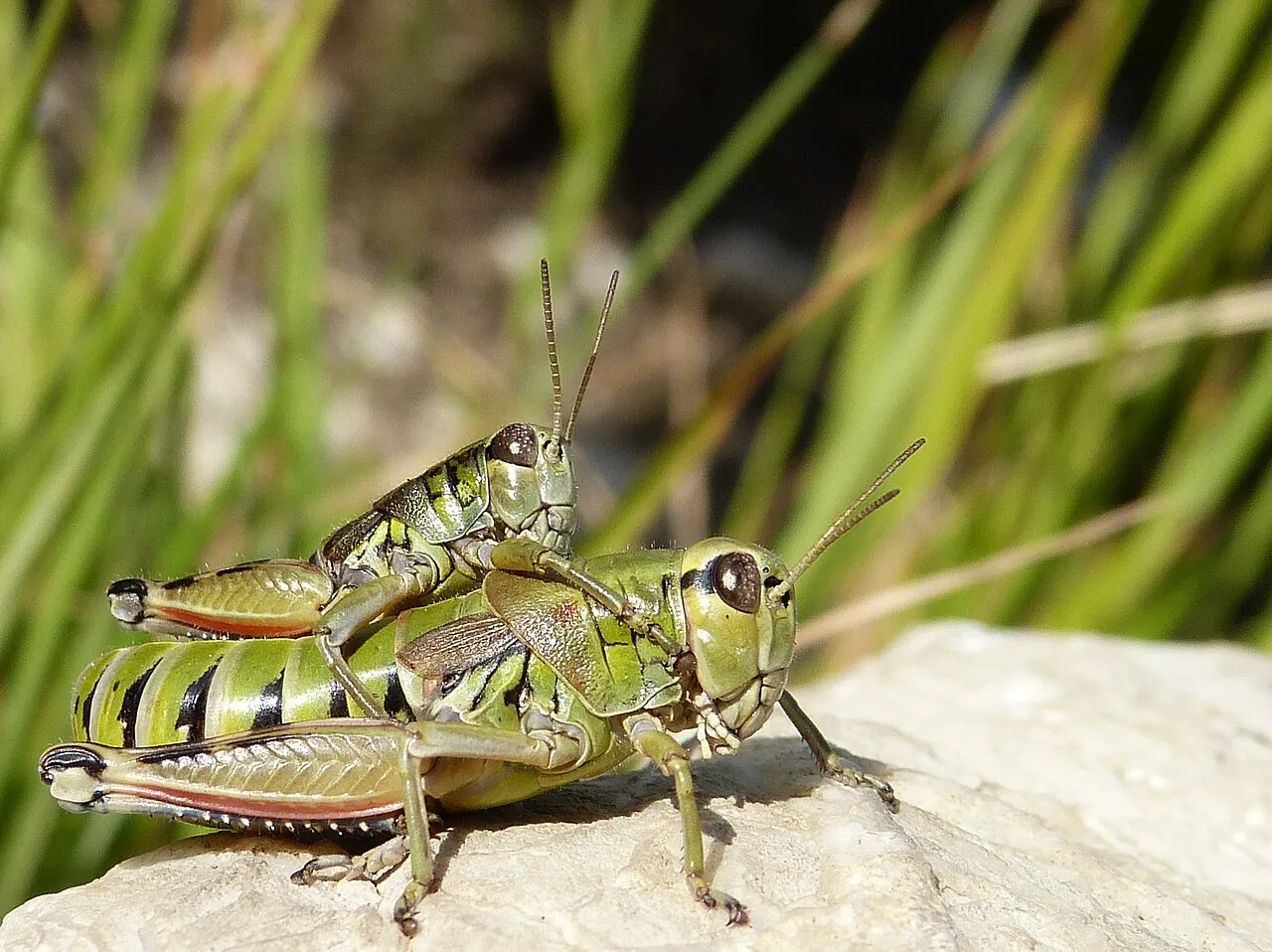
The Sibillini mountain grasshopper (Podisma silvestrii) is a short-horned grasshopper known only from the high Monti Sibillini of central Italy. It lives among rocks and mountain pasture in a few colonies. The IUCN assessed it as Critically Endangered in 2016, with a decreasing population.
What kind of insect it is
Podisma silvestrii is a member of the short-horned grasshopper family, Acrididae, in the order Orthoptera. It was named by Salfi in 1935. Published descriptions of its appearance are scarce, and little else about its biology is documented.
Where it lives
The species is endemic to Italy, and its home is the Monti Sibillini. The IUCN assessment counts four locations and gives an elevation range of 1,680 to 2,250 m. Its most important habitat is rocky ground such as cliffs and mountain peaks, and it also uses temperate grassland. It is not a migrant.
Adults are on the wing in summer and autumn. A photo site reports that they may be abundant within the few colonies, which were photographed at Monte Sibilla in late September 2023.
Pins are Wikidata “endemic to” fields. Orange dots, when present, are GBIF occurrence tiles — survey bias included.
Why it is in trouble
A species confined to four mountain sites has little room for error. The IUCN lists four pressures. Tourism and recreation areas are an ongoing problem for part of the range, and the assessment scores their effect as medium impact with rapid declines. Nomadic grazing also affects a minority of the population at present, and is rated low impact.
Two threats are listed as future ones that would cover the whole population: temperature extremes, which the assessment scores as medium impact with rapid declines, and shifts or alteration of habitat, scored low impact. The population trend is recorded as decreasing.
What is being done
At least part of its range lies inside a protected area. Beyond that, formal action is thin. The assessment records no recovery plan, no systematic monitoring scheme, no captive population, no education programme and no international legal listing. The measures it calls for are restoring habitat and managing the sites where the grasshopper lives.
Sources
Written for this catalog in our own words from the sources below, checked against them on 12 November 2026. Population figures are estimates and carry the year they were made. Status and assessment year: IUCN. 2026. The IUCN Red List of Threatened Species. Version 2026-1. iucnredlist.org.