Endangered
Cauliflower coral
Cauliflower coral
Cauliflower coral is a small, bushy reef-building coral found across the Indo-Pacific and eastern Pacific, from the western Indian Ocean to Central America. It is still abundant, but the IUCN Red List moved it to Endangered in 2024 because warming seas keep bleaching and killing colonies.
How to recognise it
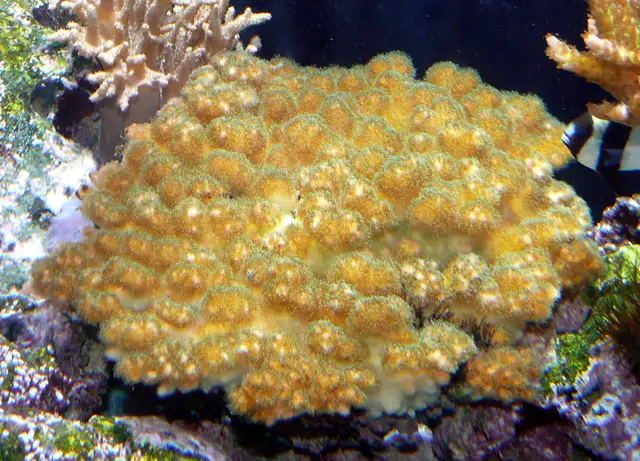
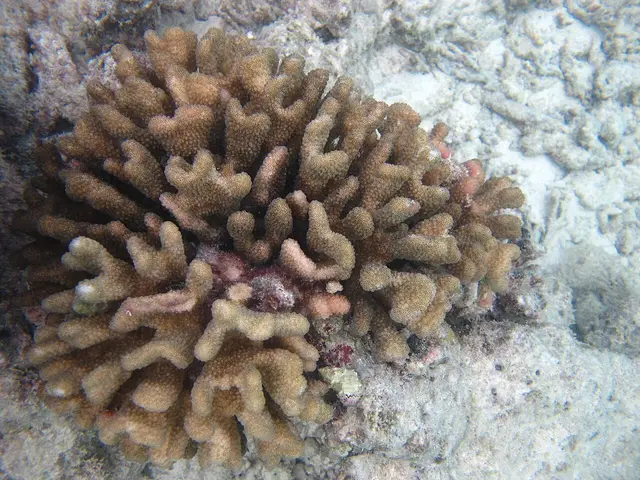
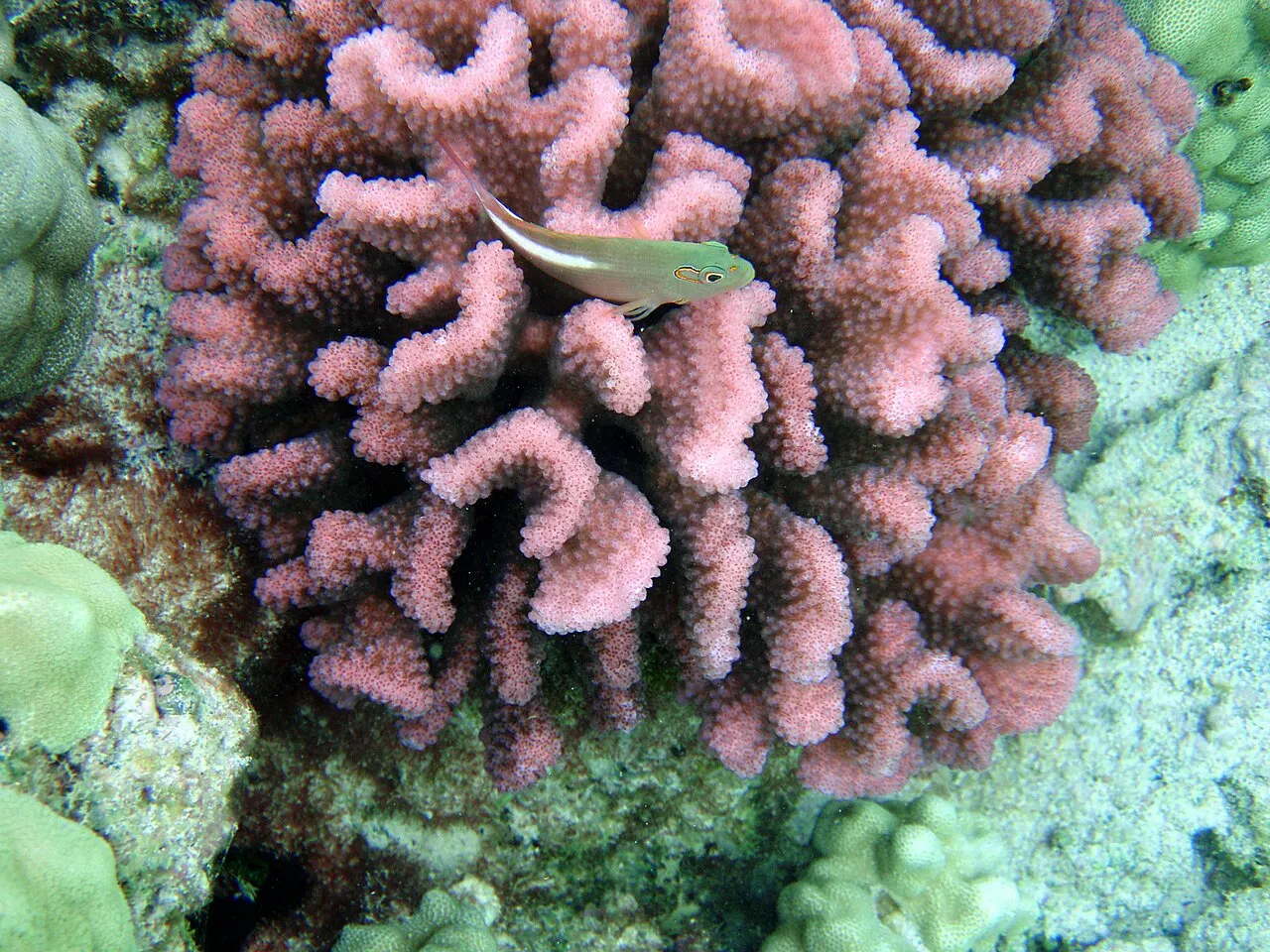
Cauliflower coral grows as a compact bush. Branches fan out from the point where the colony started, and they are often flattened and ridged. Some colonies are more dome-shaped or tightly convoluted. The whole surface is covered in small wart-like bumps called verrucae, which is the quickest field clue for the genus.
Colour runs from cream and brown to pink, and occasionally green. The polyps put out their tentacles mostly at night, so by day a colony looks like bare, bumpy skeleton. Typical colonies are about 20 to 40 cm across and stop growing at roughly that size. The American geologist James Dwight Dana described the species in 1846.
Telling Pocillopora species apart by shape alone is unreliable. A 2024 genetic survey around Mo'orea, French Polynesia, found six look-alike Pocillopora species living side by side, most of which can't be identified by form. Cauliflower coral was the most common of the six (about 43 percent of colonies sampled).
Where it lives
It occurs on most coral reefs of the Indo-Pacific and eastern Pacific, from the Seychelles in the west to the Pacific coast of Central America. The IUCN lists more than 60 countries and territories, including Australia, Japan, the Philippines, Indonesia, Fiji, French Polynesia, Hawaii, Mexico, Panama and Ecuador.
Cauliflower coral favours shallow reefs exposed to strong waves. In Hawaii it dominates such zones so strongly that one is named after it. Depth limits differ by source. NOAA's species profile gives 1 to 27 m, a 2020 federal review reports colonies down to at least 34 m, and the IUCN records a range of 1 to 110 m. It is usually most common in the top 5 m.
Pins are Wikidata “endemic to” fields. Orange dots, when present, are GBIF occurrence tiles — survey bias included.
How it lives
Like other reef-building corals, it hosts symbiotic algae in its tissue. It reproduces sexually by broadcast spawning, releasing eggs and sperm into the water, and also by fragmentation, when broken pieces reattach and grow.
Larvae can drift, swim or raft to new reefs. In Hawaii, studies in the 1970s found it was the most successful coral at colonising fresh lava flows. Growth is fast compared with most Indo-Pacific reef corals, but lifespan is relatively short. That fast turnover is one reason it can rebuild quickly after a disturbance. Strong recoveries have been recorded on the Great Barrier Reef and in the Society Islands.
Why it is in trouble
This is an unusual Endangered species: there are very many colonies. A 2020 NOAA review put the total at at least several tens of billions, and found it in 95 of 133 Indo-Pacific ecoregions. The concern is the trend. The 2024 assessment uses criterion A3ce, a projected population decline linked to loss of habitat quality and to pathogens, with a projected reduction of 62 percent. It lists the population as decreasing. Earlier assessments, in 2008 and 2014, rated the coral Least Concern.
Heat is the main driver. A rise of about 1 to 2 degrees C above the usual local summer maximum can trigger bleaching, and documented bleaching events include 1998 and 2014 to 2017. The federal review also rated ocean acidification a high vulnerability, because it reduces the coral's ability to build skeleton. Some local declines are steep. The review reports a fall of more than 90 percent since 1975 in the Chagos Archipelago and about 70 percent since 1999 in the main Hawaiian Islands.
Smaller colonies bleach more often. A study of Hawaiian colonies after the 2015 bleaching found that small colonies lost more of their reproductive output for longer, and that bleached colonies made smaller eggs the following year. The IUCN also names storms and flooding, sediment, coastal development, tourism, shipping and small-scale harvest as threats.
What is being done
The species is on CITES Appendix II, which means international trade in it is regulated. In 2020 NOAA Fisheries concluded that listing it under the US Endangered Species Act was not warranted, after a 2018 petition from the Center for Biological Diversity.
The IUCN assessment lists habitat restoration, site protection and management, captive breeding or propagation, species recovery and a genome resource bank among relevant actions. Whether the coral occurs inside a protected area is recorded as unknown in the global assessment. The 2020 federal review found that nearly all of 68 countries it examined have managed areas that include coral reefs.
Sources
Written for this catalog in our own words from the sources below, checked against them on 12 November 2026. Population figures are estimates and carry the year they were made. Status and assessment year: IUCN. 2026. The IUCN Red List of Threatened Species. Version 2026-1. iucnredlist.org.
- IUCN Red List assessment, Cauliflower coral (2024)
- NOAA Fisheries species profile, Cauliflower coral
- Federal Register, 12-month finding on Cauliflower coral, 6 July 2020
- Dryad dataset, Hawaii 2015 bleaching and reproduction in Cauliflower coral
- Burgess, Turner and Johnston 2024, Evolutionary Applications
- Cauliflower coral, encyclopedia entry