Critically Endangered
Alta Floresta titi monkey
Plecturocebus grovesi
The Alta Floresta titi monkey (Plecturocebus grovesi), also called Groves's titi, is a small grey-backed primate with a bright red-brown belly and a black, white-tipped tail. It lives only in northern Mato Grosso, Brazil. Described as a new species in a paper published in 2019, it was rated Critically Endangered by the IUCN in 2020.
How to recognise it
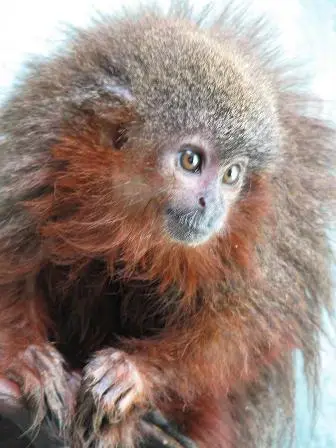
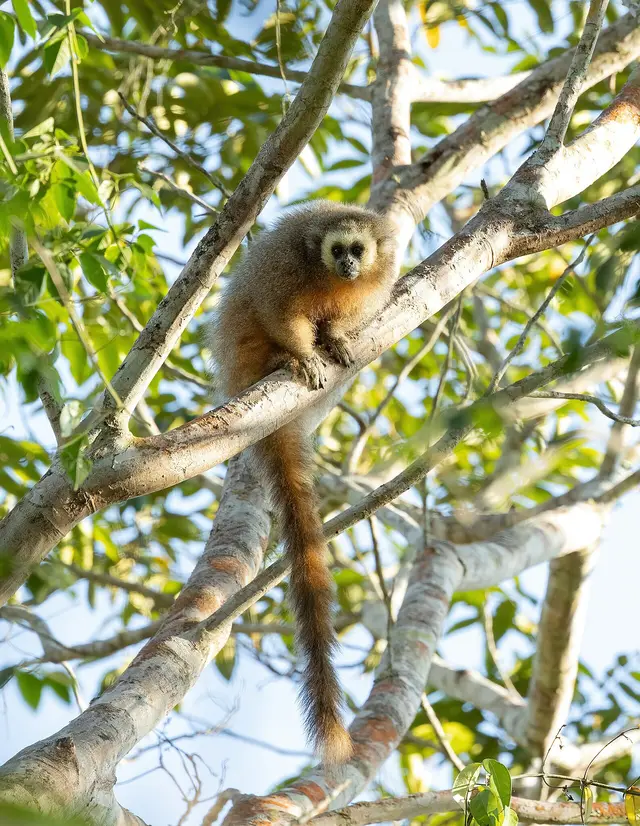
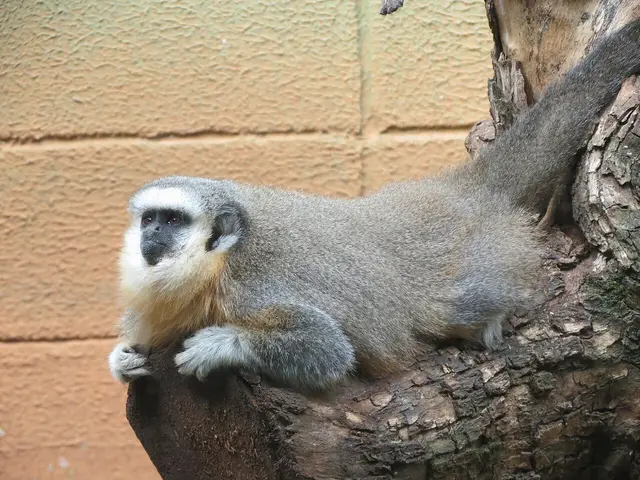
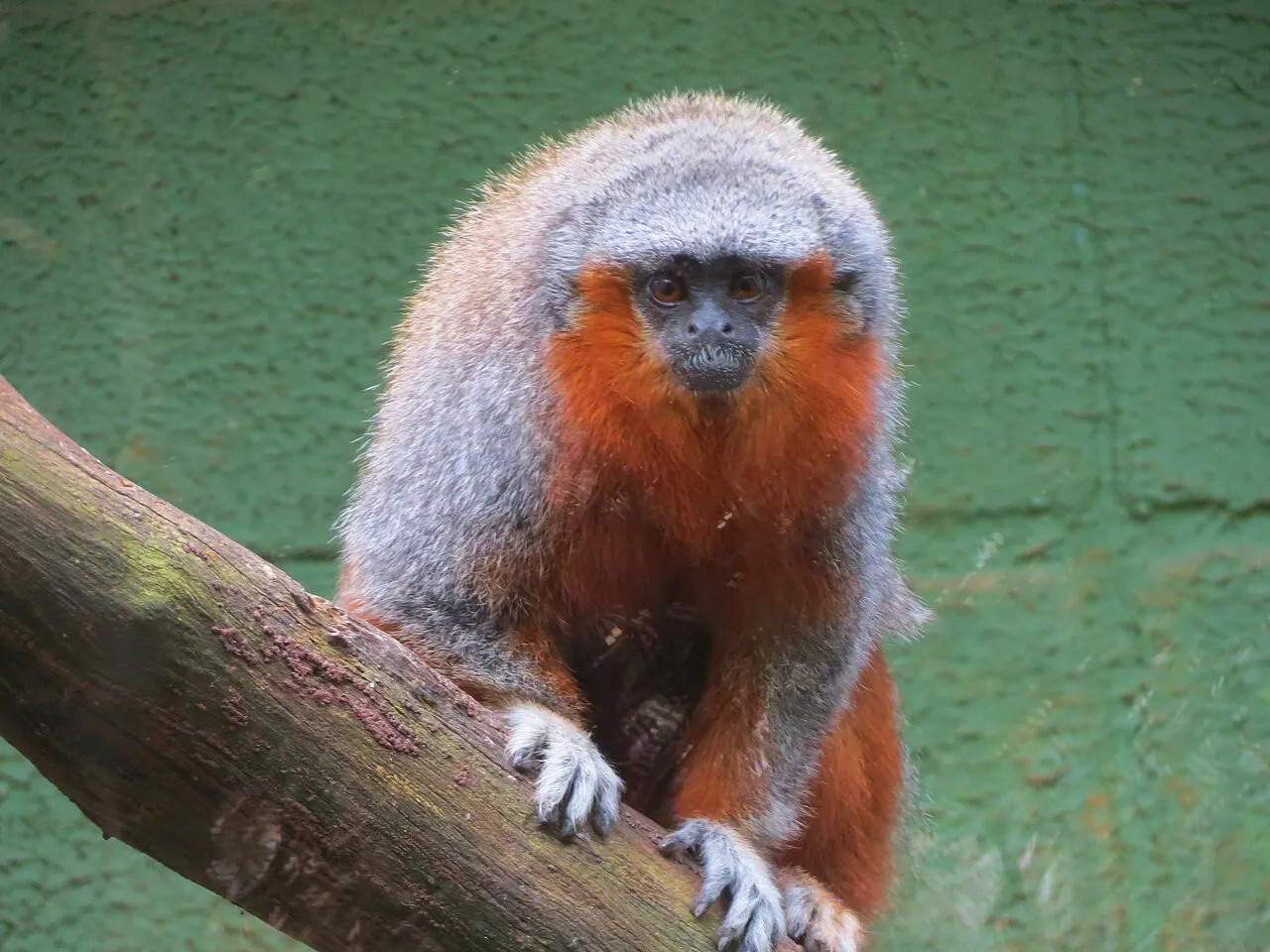
Four features set it apart from other titis in the red-bellied group. The crown and back are grey agouti, meaning each hair is banded so the coat looks speckled. The underside, from neck to belly, is bright red-brown. The tail is almost entirely black with a pale tip. The cheeks carry light yellow hair that contrasts with red-brown fur on the sides of the face.
The black tail is unusual among titis in the southern and southeastern Amazon. Genetic work places this species as the sister of a pair that contains the red-bellied titi (Plecturocebus moloch) and Vieira's titi (Plecturocebus vieirai).
Where it lives
The species is endemic to Brazil and has been recorded only in the state of Mato Grosso. Its range lies between the Juruena and Arinos rivers to the west and the Teles Pires river to the east. The southernmost record is at about 10 degrees south. The describers suggested the transition from Amazon forest to Cerrado near 13 degrees south may set its limit, but more surveys are needed to confirm that.
The extent of occurrence is about 101,667 square km. The IUCN assessment lists lowland and montane moist forest as the habitat, at roughly 100 to 200 m elevation, and notes that the forest is severely fragmented.
Pins are Wikidata “endemic to” fields. Orange dots, when present, are GBIF occurrence tiles — survey bias included.
A recent discovery
Researchers first saw the animal in 2012 in forest near the town of Alta Floresta, which straddles the Teles Pires. A team led by Jean Boubli of the University of Salford described it as a new species in Molecular Phylogenetics and Evolution (online in November 2018, in the March 2019 issue), using genome-wide DNA data, coat colour and locality records. It was named after the primatologist Colin Groves. No population count has been published.
Why it is in trouble
Alta Floresta sits inside the Arc of Deforestation, the southern edge of the Amazon where agriculture has pushed into forest. Cattle ranching in Mato Grosso grew by 62.4 percent between 2000 and 2016. The 2019 description estimated that the species had already lost 42 percent of its forest habitat.
The team modelled future losses over 24 years, about three generations. Under a governance scenario the loss was 50 percent, and under business as usual it was 86 percent. They judged the second more likely, partly because of planned hydroelectric dams on the Juruena, Arinos and Teles Pires and the downgrading of protected areas, and on that basis proposed Critically Endangered under criterion A3c. The IUCN assessment also lists farming, roads, renewable energy, mining and intentional capture or hunting as ongoing threats, though the scale of each is unknown, and records a decreasing population.
What is being done
Protection is thin. The only protected area in the region is Juruena National Park, in the far northern corner of the range. The describers argued that new reserves alone won't be enough, and that pasture will need to be restored in key places to reconnect forest patches. The IUCN assessment lists site and area protection, resource and habitat protection, harvest management, awareness work and conservation payments as measures that apply.
Sources
Written for this catalog in our own words from the sources below, checked against them on 12 November 2026. Population figures are estimates and carry the year they were made. Status and assessment year: IUCN. 2026. The IUCN Red List of Threatened Species. Version 2026-1. iucnredlist.org.