Critically Endangered
Paretroplus menarambo
Paretroplus menarambo
The pinstripe damba or pinstripe menarambo (Paretroplus menarambo) is a large cichlid fish from northwestern Madagascar. It has not been seen in the wild in the lake where it was first known since the late 1990s, and a population survives in Lake Tseny. The IUCN Red List rated it Critically Endangered in 2016. Hobbyists and aquariums keep it.
How to recognise it
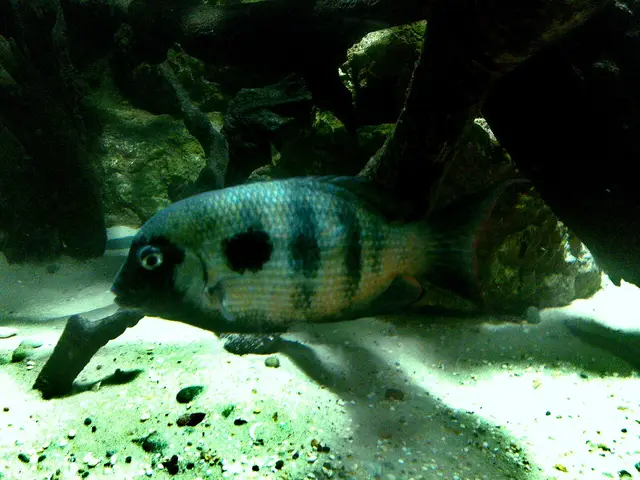
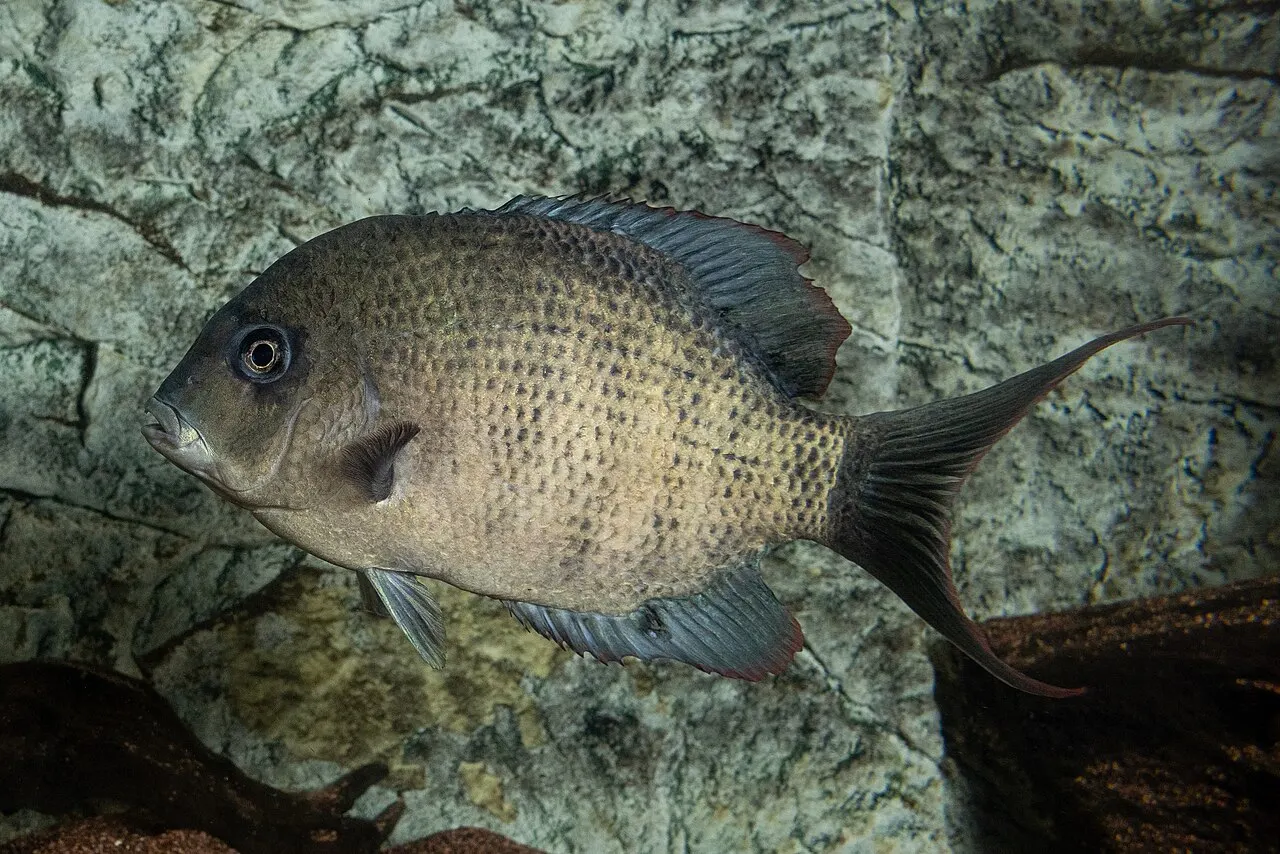
It is a deep-bodied fish, strongly flattened from side to side, with a crescent-shaped tail fin. The body is brown-grey with darker vertical bands, and the fins are grey with reddish-brown edges. Adults are usually reported at about 20 to 25 cm, though some references give a range starting at 12.8 cm. A 2008 Practical Fishkeeping feature said mature fish look rather like a marine fish.
Where it lives
It belongs to the Paretroplus group of cichlids, found only in Madagascar, and has been reported from floodplain lakes in the Sofia River system in the northwest. The species was described by Allgayer in 1996 and was originally known from Lake Sarodrano in the Sofia basin.
It has not been seen there in the wild since the late 1990s, and aquarium accounts from 2008 listed it as extinct in the wild. Then a survey team working at Lake Tseny in October 2010 confirmed that it survives there.
Pins are Wikidata “endemic to” fields. Orange dots, when present, are GBIF occurrence tiles — survey bias included.
How it lives
Fishers at Lake Tseny told the 2010 survey team that the species is tied to submerged trees along the western shore, which serve as feeding and breeding areas. The trees make netting hard, which limits fishing pressure on the fish.
Its single-cusped teeth suggest it ate snails in the wild, but nobody has described its diet there. In aquariums it accepts most foods. It is slow growing and takes nearly two years to reach breeding age.
Why it is in trouble
Invasive species and overfishing are reportedly threats. The 2010 Lake Tseny survey found that commercial fishing there depends on introduced tilapia and a native herring. The three native Paretroplus cichlids are not targeted, but small numbers caught in nets are kept for the household pot.
The survey report warned that if commercial catches fell, pressure could swing onto the endemic fish and open the submerged-tree areas to fishing. Local people also reported illegal small-mesh nets, immigration and fishing in the closed season.
What is being done
Captive breeding is the main safety net. Members of the British Cichlid Association have bred the fish, and Blue Planet Aquarium in Cheshire reported raising about 50 young. London Zoo and Bolton Museum are also reported to have bred it, though that claim rests on a single uncited source.
Practical Fishkeeping said the hope is that captive-bred fish could one day return to protected lakes. The Lake Tseny survey team recommended further studies and continued work with fishing communities and authorities.
Sources
Written for this catalog in our own words from the sources below, checked against them on 12 November 2026. Population figures are estimates and carry the year they were made. Status and assessment year: IUCN. 2026. The IUCN Red List of Threatened Species. Version 2026-1. iucnredlist.org.