Critically Endangered
Damba mipentina
Paretroplus maculatus
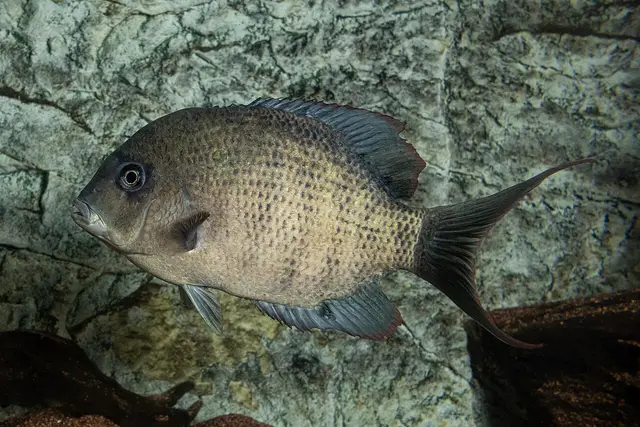
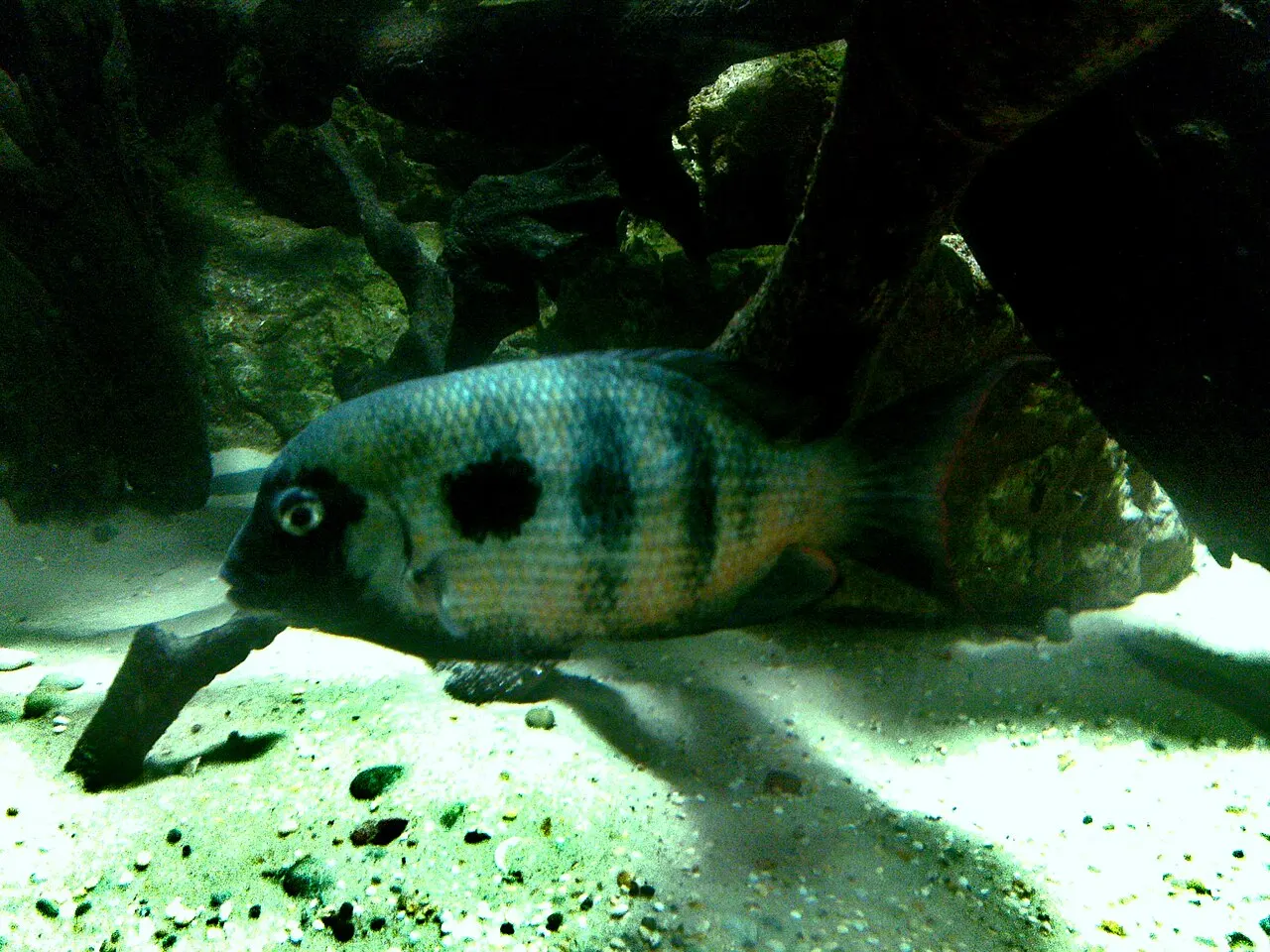
The damba mipentina (Paretroplus maculatus) is a deep-bodied cichlid fish from the shallow lakes, rivers and marshes of northwestern Madagascar. The IUCN Red List has rated it Critically Endangered since its 2016 assessment. A large black patch above and behind the pectoral fin sets it apart from its relatives.
How to recognise it
This is a tall, laterally flattened cichlid, one of the deep-bodied group within the genus Paretroplus. Its best field mark is a large, squarish to rounded solid black patch above and just behind the base of the pectoral fin. No other member of the genus carries a patch quite like it.
Reported sizes differ. One general reference gives a maximum of about 30 centimetres, while FishBase lists 14.8 centimetres in standard length. It was formally described in 1966, and a 2008 revision of the genus is the taxonomic basis FishBase follows.
Where it lives
The species is found only in Madagascar, in the northwest. Accounts place it in the Betsiboka River system, and some also name the Ikopa basin. The Red List records it as native, extant and endemic to the island.
It uses permanent freshwater lakes, permanent rivers and streams, and small freshwater marshes and pools, and it does not migrate. The 2016 assessment estimated that it occupies about 10 square kilometres, within a total range of roughly 100 square kilometres. Both figures are still shrinking, and the population is severely fragmented.
Pins are Wikidata “endemic to” fields. Orange dots, when present, are GBIF occurrence tiles — survey bias included.
Why it is in trouble
The assessment lists ongoing ecosystem degradation, competition from other species, and small-scale harvest for food. Harvesting is scored as a low-impact threat, so habitat damage and competing species look more serious. Habitat loss, overfishing and invasive species are also reportedly behind a sharp drop in numbers.
The Red List population trend is decreasing. A database of possibly extinct species says the fish has not been recorded in the wild since before 2011, but the 2016 assessment still treats it as extant.
What is being done
The species occurs in at least one protected area. Conservation actions listed in the assessment include site management, habitat restoration, national-level measures, and awareness and communications work.
Because the wild status is uncertain, captive groups matter. Public institutions such as London Zoo reportedly breed it, and hobbyists keep it too. A 2022 review of threatened Malagasy freshwater fishes in zoos and aquariums (Zoo Biology) is cited as the source for its presence in captivity.
Sources
Written for this catalog in our own words from the sources below, checked against them on 12 November 2026. Population figures are estimates and carry the year they were made. Status and assessment year: IUCN. 2026. The IUCN Red List of Threatened Species. Version 2026-1. iucnredlist.org.