Endangered
Parathelphusa pantherina
Parathelphusa pantherina
Parathelphusa pantherina, the panther or Matano leopard crab, is a freshwater crab found only on the Indonesian island of Sulawesi, in and around Lake Matano. The IUCN Red List moved it from Vulnerable to Endangered in 2018. It is also sold to aquarium keepers.
How to recognise it
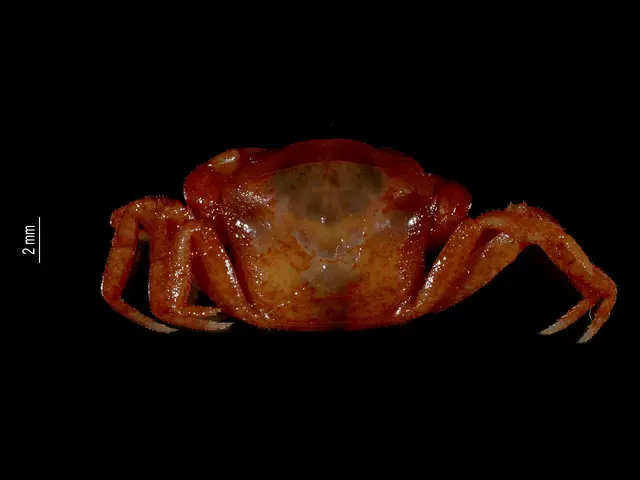
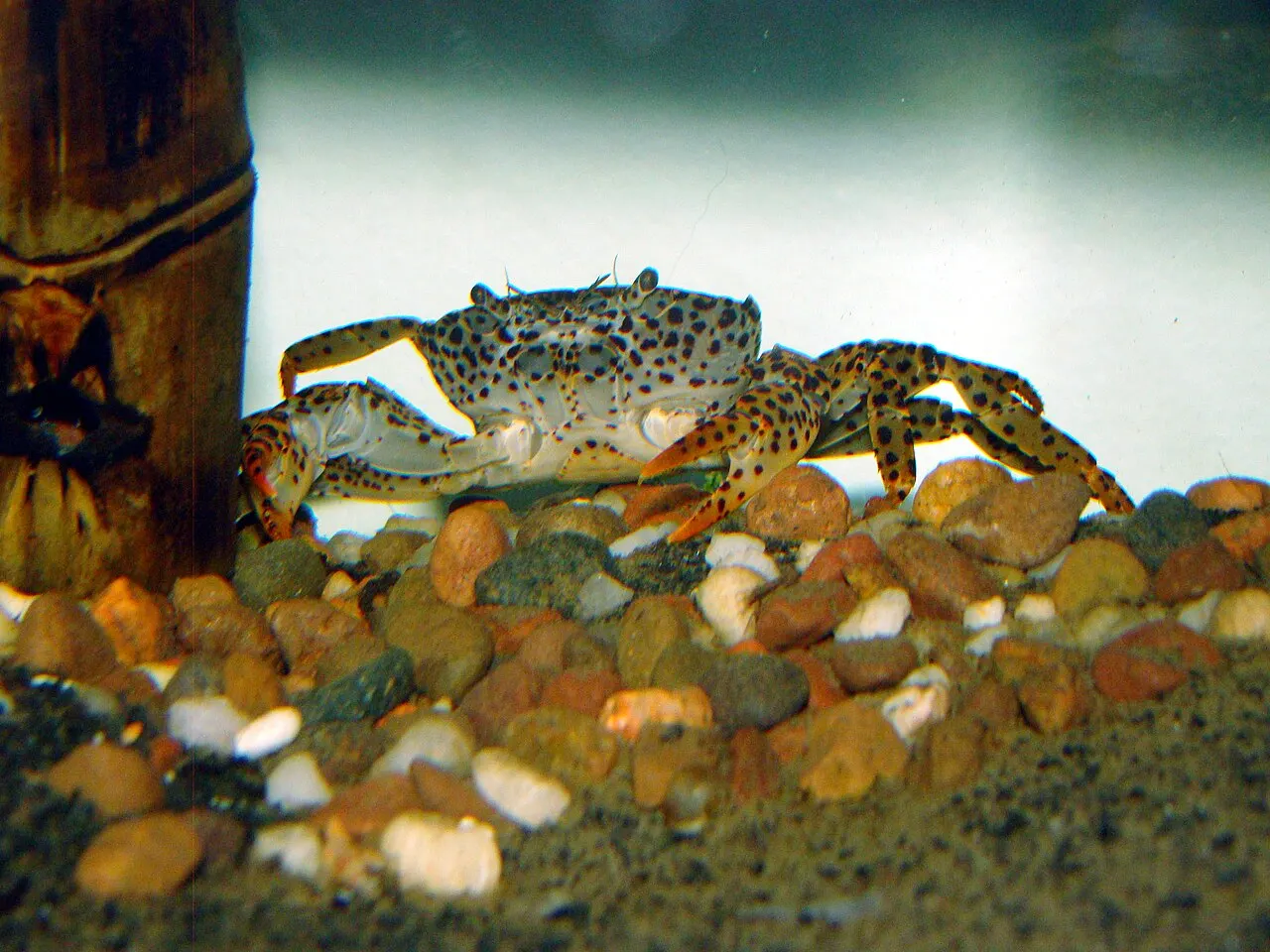
The crab is yellow to light orange, with dark red rosettes spreading from the flat carapace onto the walking legs. Many animals have red-tipped claws and legs, though some do not. Schenkel described it in 1902.
A 2017 field study in Lake Matano measured an average carapace width of about 4 cm (3 to 6 cm), with males somewhat bigger than females. Aquarium sources quote maximum sizes of 4 to 6 cm in one case and about 10 cm in another.
Where it lives
It is endemic to Sulawesi and is known from Lake Matano and the area south of it. The IUCN counts two locations and estimates its extent of occurrence at 120 to 220 square kilometres. Its habitats are permanent freshwater lakes and rivers or streams.
Lake Matano is an ancient tectonic lake of about 16,400 hectares, thought to have formed 2 to 4 million years ago. It belongs to the Malili lake complex, a group of connected lakes with many species found nowhere else. A 2017 survey sampled ten stations along the shore in May, October and November 2015 and found three endemic crab species, mostly in the southern part of the lake. The panther crab made up about 68 percent of the catch.
Pins are Wikidata “endemic to” fields. Orange dots, when present, are GBIF occurrence tiles — survey bias included.
How it lives
In the wild it shelters among rocks, waterlogged wood and leaf litter, and hides under roots and logs. Aquarium keepers report that it is omnivorous, most active at night, and fond of hunting snails. Both sexes are territorial. Females carry eggs that hatch straight into small crabs rather than swimming larvae, and adults will eat any young they catch.
Why it is in trouble
The 2018 assessment uses criterion B1ab(iii)+2ab(iii) and records a continuing decline in the area it occupies. Its population trend is unknown. The IUCN lists mining and quarrying, seepage from mining, housing and commercial development, and harvesting among the threats, each scored as low impact. Nickel mining on the lake shore has reportedly harmed water quality.
People use the crab in two ways. The 2017 study says Matano's endemic crabs are caught by local people as food, and the IUCN lists use as pets and display animals. The earlier IUCN assessment, in 2008, rated the crab Vulnerable under a different criterion.
What is being done
The IUCN records no protected-area coverage for the crab and lists no conservation actions. The 2017 paper says the Malili lake complex was designated a nature tourism park in 1979, so the two sources differ on how far the crab's habitat is formally protected.
Sources
Written for this catalog in our own words from the sources below, checked against them on 12 November 2026. Population figures are estimates and carry the year they were made. Status and assessment year: IUCN. 2026. The IUCN Red List of Threatened Species. Version 2026-1. iucnredlist.org.