Endangered
Van Loach
Oxynoemacheilus ercisianus
The Van loach (Oxynoemacheilus ercisianus) is a small stone loach found only in the Lake Van basin of eastern Turkey, in a few tributary streams and in the lake itself, where one population lives among rock-like microbial growths. The IUCN Red List rated it Endangered in 2014.
How to recognise it
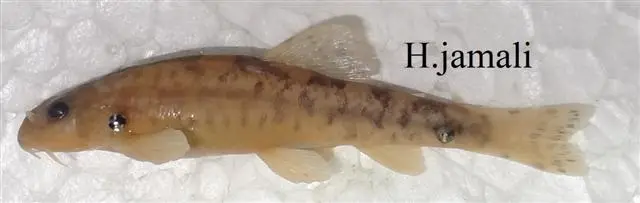
It's a slim, bottom-dwelling loach that grows to about 82 mm in standard length. The flanks are marbled or marked with large, irregular, closely spaced dark-brown bars or blotches, usually stronger behind the base of the dorsal fin. The base of the tail fin is mottled rather than crossed by bold black bars or spots.
Other recorded features are an incomplete lateral line, a slightly notched tail fin, and no groove below the eye in males. It was first described in 1986 as a subspecies of another loach and has since been raised to full species. A 2021 study calls it the only loach native to the freshwater tributaries of the Lake Van basin.
Where it lives
Lake Van is a very large, salty soda lake with no outlet to the sea. The loach is found in the streams that flow into it, including the Zilan, Deli, Bendimahi and Karasu, where it favours moderately flowing water over gravel or rock.
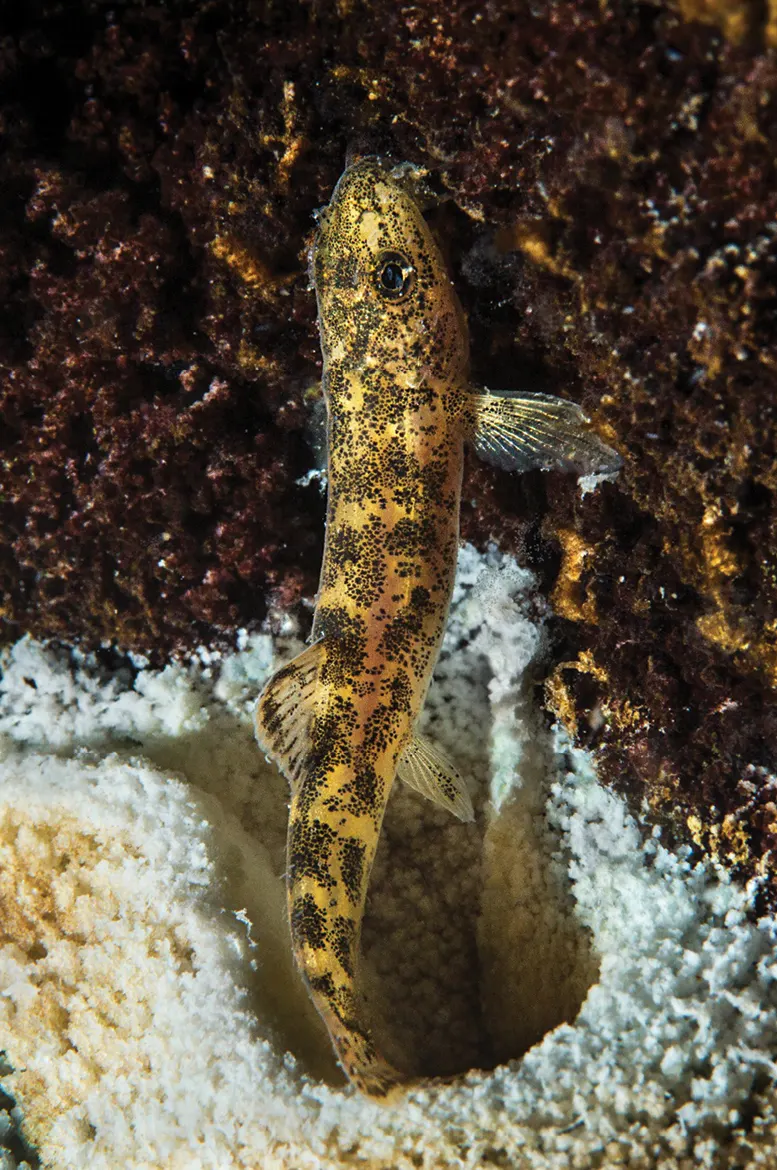
In 2021 Akkus and colleagues reported in Zoosystematics and Evolution an isolated population living in the lake itself, on microbialites, the mineral mounds built by microbes. The fish were found to a depth of 13 m and about 500 m offshore. Their DNA differed from stream fish by only about 0.5% in the barcode gene, and the team suggested the lake fish lost their link to fresh water when the lake level swung up and down in the past.
Pins are Wikidata “endemic to” fields. Orange dots, when present, are GBIF occurrence tiles — survey bias included.
Why it is in trouble
The IUCN assessment gives an area of occupancy of about 230 square km, three locations and a decreasing trend. The only threat it lists is dams, scored as affecting most of the population, and it records ecosystem degradation as the stress.
A 2025 handbook of West Asian freshwater fishes lists the species as Vulnerable and notes it appears to be declining within its small range, so published ratings differ slightly. Almost nothing is recorded about its diet or breeding.
What is being done
The Red List assessment names habitat and natural process restoration, site management, resource and habitat protection, awareness and communications, and formal education as conservation actions. It records none as already in place, and no specific project or monitoring programme turned up in the sources consulted.
Sources
Written for this catalog in our own words from the sources below, checked against them on 12 November 2026. Population figures are estimates and carry the year they were made. Status and assessment year: IUCN. 2026. The IUCN Red List of Threatened Species. Version 2026-1. iucnredlist.org.