Endangered
Orangefin madtom
Noturus gilberti
The orangefin madtom, Noturus gilberti, is a small stream catfish from the Roanoke River system of Virginia and North Carolina. The IUCN Red List assessed it as Endangered in 2013. It lives in rocky riffles and rarely grows longer than a finger.
How to recognise it
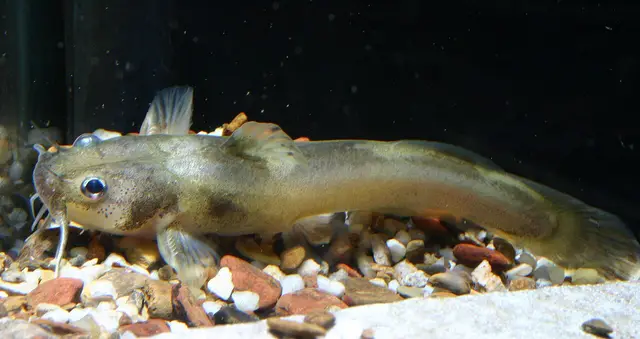
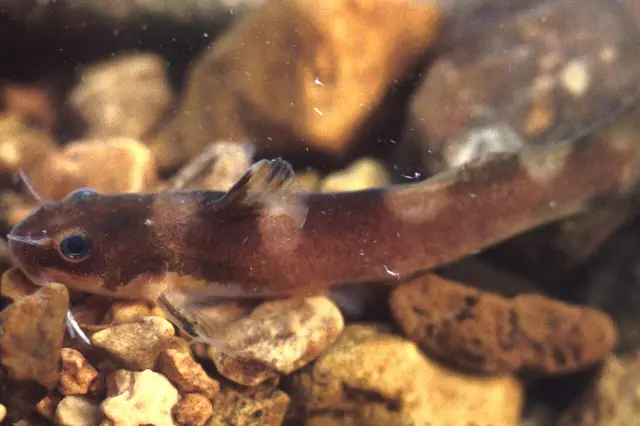
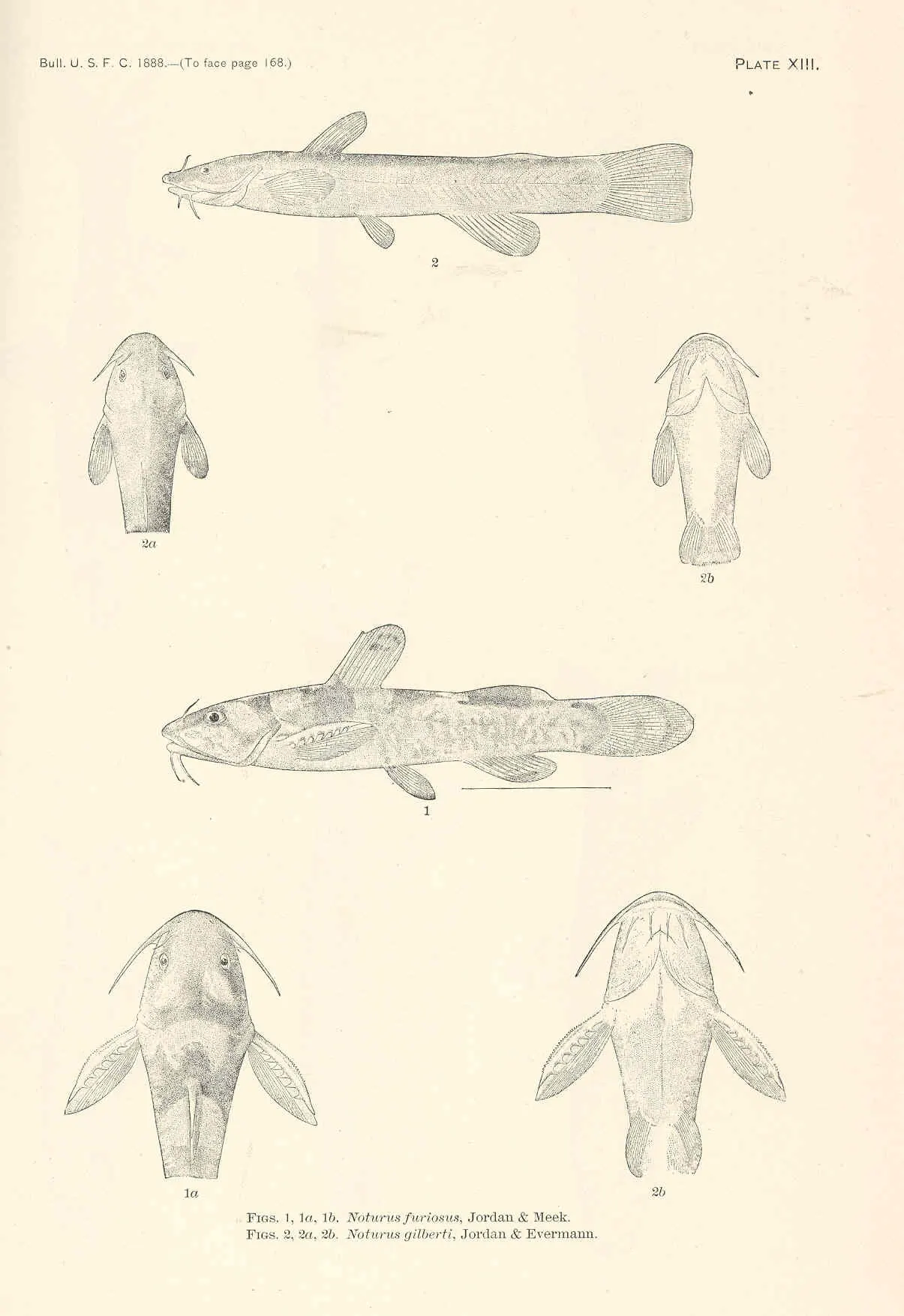
Madtoms are tiny catfish, and this one is typical: an elongate body, a narrow flattened head, a small eye set near the top of the head, an underslung mouth with short barbels and a short pectoral spine. The body is grey or brown, the fins have pale edges, and the upper lobe of the tail has a pale patch. Adults are mostly 60 to 80 mm in standard length, and a maximum of about 10 cm total length has been reported. The freckled madtom and the slender madtom are the species it is most likely to be confused with.
Where it lives
Jordan and Evermann described the species in 1889 from the Roanoke River in Virginia. It is native to the upper Roanoke drainage, including the Dan River, in Virginia and North Carolina. The Red List treats the species as endemic to the United States.
A population in Craig Creek, in the upper James River drainage of Virginia, almost certainly started from fish moved over from the Roanoke system. The Roanoke range is highly fragmented, and the Red List counts five isolated populations there.
The fish favours strong runs and riffles, where it shelters in gaps among cobble, rubble and boulders. It is mostly found in clear streams and generally avoids areas with a lot of sand and silt.
Pins are Wikidata “endemic to” fields. Orange dots, when present, are GBIF occurrence tiles — survey bias included.
How it lives
The diet is aquatic insect larvae. Females mature by age 2 and lay about 32 to 70 eggs in late April and May, when the water is 10 to 20 degrees C. Males are listed as nest guarders. Spawning appears to take place in fast riffles over small cobble.
Lifespans are short. A 1987 master's thesis at Virginia Tech by Timothy Simonson sampled 347 sites and found three age groups in Craig Creek, with most fish apparently dying soon after spawning in their third summer. Sites where the madtom lived had less sand and silt than sites where it did not, along with more small cobble, steeper gradient and deeper water. Attempts to spawn the fish in the laboratory failed because captive fish died at high rates.
How many there are
Simonson found the madtom in 264 stream kilometres across seven river systems, more than twice the range reported before. It turned up at 70 percent of sampled sites in Craig Creek and 33 percent in the Dan River.
The Red List calls the species generally rare to uncommon. Surveys cited there, from the 1990s, found it apparently gone from the heavily silted lower North Fork of the Roanoke and from the lower Roanoke below Salem, and tiny or gone in the Smith and Little Dan rivers. Since 1977 it has apparently spread in Craig Creek, Big Chestnut Creek and the South Mayo River. These records are old, and the current population trend is recorded as unknown.
Why it is in trouble
The 2013 assessment rates it Endangered under criteria B1ab(iii)+2ab(iii). The range is small, with an extent of occurrence under 5,000 square kilometres, no more than five viable locations, and declining habitat quality. Dams and the removal of surface water are scored as medium-impact threats affecting more than 90 percent of the population, as are soil erosion and sedimentation. The Red List also names channelization, chronic pollution, chemical spills and bait collecting, and says a low reproductive rate and short life make these worse.
Listed conservation actions are site management, resource and habitat protection, awareness work and reintroduction. Recommendations include cutting siltation, especially in the upper Dan River, and banning the taking of madtoms in streams where this species lives.
Sources
Written for this catalog in our own words from the sources below, checked against them on 12 November 2026. Population figures are estimates and carry the year they were made. Status and assessment year: IUCN. 2026. The IUCN Red List of Threatened Species. Version 2026-1. iucnredlist.org.