Critically Endangered
Chucky madtom
Noturus crypticus
The chucky madtom (Noturus crypticus) is a small, secretive catfish known only from the French Broad River system of eastern Tennessee, where it was collected in two creeks. The IUCN Red List rated it Critically Endangered in 2013. It was described as a species in 2005, and none has been caught since 2004.
How to recognise it
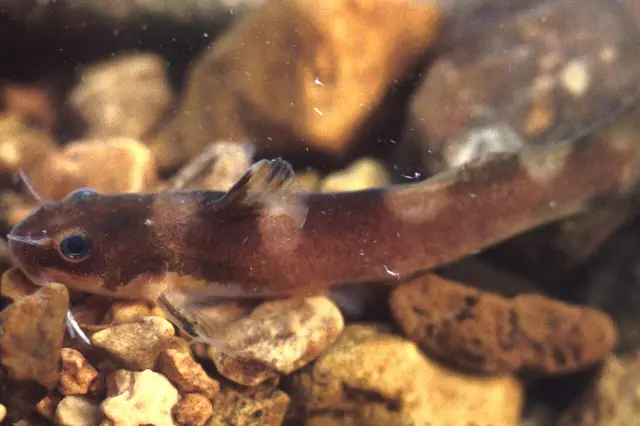
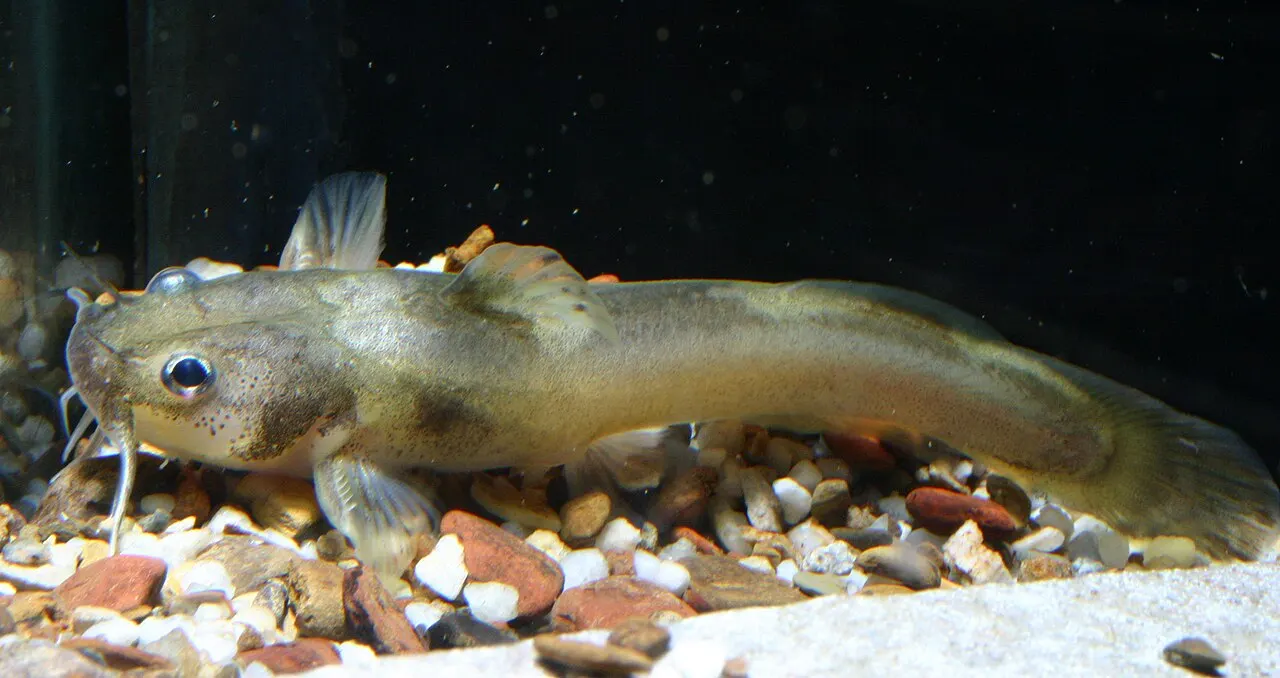
Madtoms are small catfish, and this one reaches about 7.4 cm. Three dark blotches mark the back, each with a pale saddle in front of it. It belongs to the Noturus elegans group of madtoms.
Where it lives
It lives only in Tennessee, in Little Chucky Creek (Greene County) and Dunn Creek, both in the French Broad system. Its habitat is clear, slow to moderately flowing stream runs over gravel, cobble or rock slabs, and the IUCN lists permanent streams as its habitat.
The collection record is slim. One fish was taken from Dunn Creek in 1940 and never again, so that population may be gone. Fourteen were collected from Little Chucky Creek, the last in 2004. The IUCN trend is unknown.
Pins are Wikidata “endemic to” fields. Orange dots, when present, are GBIF occurrence tiles — survey bias included.
How it lives
Its life history is poorly known, and it probably resembles related madtoms. Conservation Fisheries reports that it spawns from late spring into summer, laying clutches of eggs under small to medium flat rocks.
Why it is in trouble
The IUCN lists dams, roads and railroads, housing, agricultural pesticides, water withdrawal, and soil erosion with sediment. The U.S. Fish and Wildlife Service names habitat and water quality degradation as the greatest threats. Two introduced crayfish, abundant in Little Chucky Creek, are considered to compete with the madtom for cover and spawning space.
In 2004 two fish were collected from Little Chucky Creek and taken to Conservation Fisheries in Knoxville to start a captive breeding program. One died that year (the nonprofit says the female, before any spawning), and the other died in 2008. Breeding was never achieved, and finding fish for broodstock has been the main obstacle.
What is being done
The U.S. Fish and Wildlife Service listed the fish as endangered in 2011, and a final recovery plan followed in 2018. A 2019 five-year review recommended no change in status. Its priority actions are surveys to confirm the fish persists, capturing broodstock for an ark population, protecting and restoring habitat in Little Chucky Creek, and life history studies.
Environmental DNA sampling gave an encouraging sign. A 2025 USGS report described detecting the species' DNA in Little Chucky Creek and also in Dunn Creek, where the only fish ever taken was in 1940. That suggests some fish remain, though it doesn't replace actually finding one.
Sources
Written for this catalog in our own words from the sources below, checked against them on 12 November 2026. Population figures are estimates and carry the year they were made. Status and assessment year: IUCN. 2026. The IUCN Red List of Threatened Species. Version 2026-1. iucnredlist.org.