Endangered
Onychostoma alticorpus
Onychostoma alticorpus
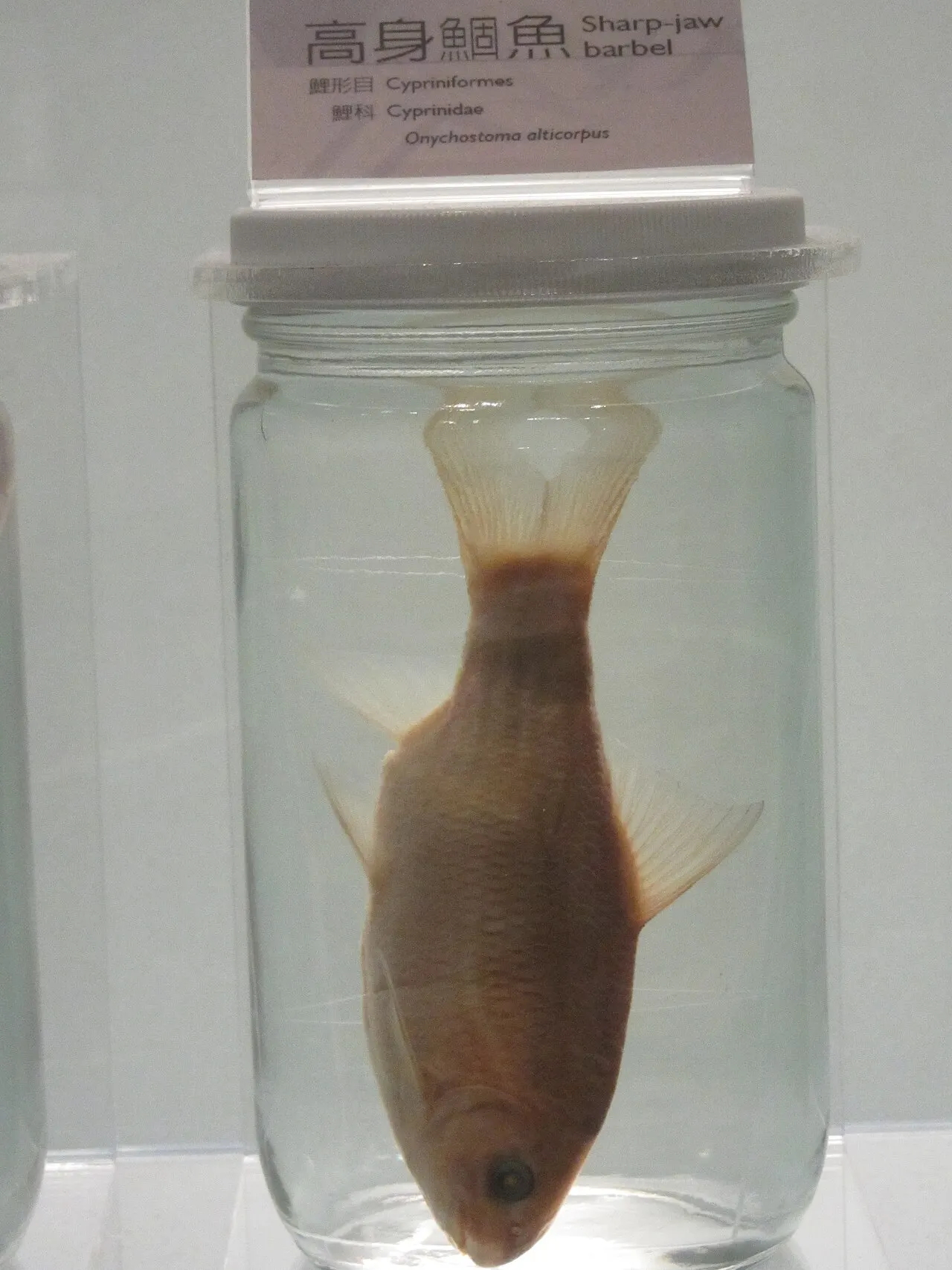
Onychostoma alticorpus, the Taiwan ku fish, is a stream-dwelling carp relative found only in Taiwan, reportedly in five river basins. The IUCN Red List rated it Endangered in 1996, an assessment that has never been updated. It can reach about 50 cm, though most are around half that.
How to recognise it
This is a fairly big minnow, a member of the carp family (Cyprinidae). Fish can reach 50 cm, though around 25 cm is the usual length. The body is short and deep and flattened from side to side. The head is short with a convex top and a short conical snout. The eyes are small and set wide apart, and the dorsal fin has no spine.
Masamitsu Ōshima described the species in 1920. The genus name comes from Greek words for nail and mouth.
Where it lives
It occurs only on the island of Taiwan, in rapidly flowing streams, in the top 10 m or so of water. It is reportedly known from just five river basins. The IUCN record lists it as a freshwater species with Taiwan as its only country.
Pins are Wikidata “endemic to” fields. Orange dots, when present, are GBIF occurrence tiles — survey bias included.
How it lives
It is reportedly herbivorous. FishBase puts its trophic level at 2.6, an estimate drawn from close relatives rather than from measurements on this fish. Breeding and lifespan appear to be undocumented.
Why it is in trouble
Siltation, dam construction and pollution are reported as threats to the fish in Taiwan's rivers. FishBase rates its resilience as low, with a population doubling time of 4.5 to 14 years, and its vulnerability to fishing as moderate to high (55 out of 100). Those scores are model estimates.
What is being done
No conservation measures are recorded for the species, and its Red List entry carries no population estimate. The only current assessment dates from 1996, so the present state of the populations is unclear.
Sources
Written for this catalog in our own words from the sources below, checked against them on 12 November 2026. Population figures are estimates and carry the year they were made. Status and assessment year: IUCN. 2026. The IUCN Red List of Threatened Species. Version 2026-1. iucnredlist.org.




